Key takeaways
- Tooth Count: For trim and finish work, aim for 80–100 teeth. Higher counts produce cleaner surfaces but feed more slowly, so pick the upper end only when surface quality is paramount and you can tolerate a leisureous feed rate.
- Grind Type: ATB (Alternate Top Bevel) and Hi-ATB grinds excel at crosscutting figured hardwoods. A TCT (Tungsten Carbide Tipped) blade with a steep bevel angle will leave the smoothest edge on plywood face veneers and delicate moulding profiles.
- Kerf Thickness: Full-kerf blades (approximately 0.125 inch) resist deflection and deliver steadier cuts on a well-tuned sliding compound saw. Thin-kerf options are lighter on your motor but can wander during long miters on dense stock.
- Arbor Size: Most professional 12-inch miter saws use a 1-inch arbor, but always verify your saw’s spec before ordering. A mismatch means a wasted purchase and a trip to the hardware store.
- Material and Coating: Micro-grain carbide tips stay sharp longer and resist burning on resinous species. Some blades add anti-friction coatings that reduce heat buildup — useful if you spend entire weekends cutting oak casing in a non-climate-controlled garage.
What's inside
Shopping for a 12-inch miter saw blade marketed as “fine finish” can feel like navigating a wall of identical packaging. Every manufacturer promises buttery-smooth cuts and zero tearout, yet tooth count, grind geometry, and carbide quality vary wildly from one blade to the next. If you have ever walked away from a supposedly premium blade with fuzzy edges on your cherry trim, you know the frustration — and the wasted material that comes with it.
This guide cuts through the noise. We evaluated the leading 12-inch fine-cut miter saw blades available in 2026, weighing tooth design, kerf thickness, balance, and real-world cut quality on both softwood and hardwood. Below you will find our curated shortlist, a buyer’s reference section, and detailed mini-reviews so you can match the right blade to your workshop demands and budget.
As an Amazon Associate we earn from qualifying purchases.



How to Choose a 12 Miter Saw Blade For Fine Cuts (2026)
- Tooth Count: For trim and finish work, aim for 80–100 teeth. Higher counts produce cleaner surfaces but feed more slowly, so pick the upper end only when surface quality is paramount and you can tolerate a leisureous feed rate.
- Grind Type: ATB (Alternate Top Bevel) and Hi-ATB grinds excel at crosscutting figured hardwoods. A TCT (Tungsten Carbide Tipped) blade with a steep bevel angle will leave the smoothest edge on plywood face veneers and delicate moulding profiles.
- Kerf Thickness: Full-kerf blades (approximately 0.125 inch) resist deflection and deliver steadier cuts on a well-tuned sliding compound saw. Thin-kerf options are lighter on your motor but can wander during long miters on dense stock.
- Arbor Size: Most professional 12-inch miter saws use a 1-inch arbor, but always verify your saw’s spec before ordering. A mismatch means a wasted purchase and a trip to the hardware store.
- Material and Coating: Micro-grain carbide tips stay sharp longer and resist burning on resinous species. Some blades add anti-friction coatings that reduce heat buildup — useful if you spend entire weekends cutting oak casing in a non-climate-controlled garage.
The Best 12 Miter Saw Blade For Fine Cuts (2026)s Reviewed
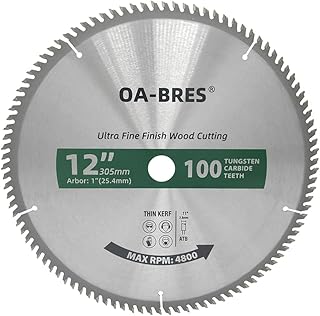
ANGELSWORD 12 Inch 100T Ultra Fine Finish (2-Pack)
Angelsword bundles two 100-tooth blades at a price point that undercuts most single-blade competitors. The carbide tips hold a clean edge through several hundred linear feet of poplar trim, and the ultra-high tooth count leaves a finish that often skips a round of sanding entirely. It is an especially smart buy for anyone who cuts a lot of casing and crown in a single project.
DEWALT DWA112100 12-Inch 100-Tooth Fine Finish
DeWalt’s factory blade for its own 12-inch sliders has earned a loyal following for good reason. The DWA112100 runs dead-flat out of the box, the ultra-sharp carbide tips produce a crisp shoulder on miters, and blade vibration is notably low. If you want a proven OEM-level upgrade without second-guessing compatibility, this is the safe bet.
WEN BL1280 12-Inch 80-Tooth Fine-Finish
Wen occupies the value end of the market, but the BL1280 punches above its price class on softwood crosscuts. The 80-tooth configuration feeds slightly faster than 100T alternatives, making it a practical all-rounder for woodworkers who alternate between finish cuts and occasional rip passes on the table saw. Edge quality on hardwood is solid, though you may notice a light scoring line on maple that demands a quick sand.
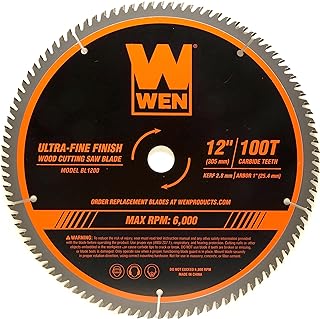
WEN BL1200 12-Inch 100-Tooth Ultra-Fine
Stepping up from the BL1280, Wen’s 100-tooth BL1200 narrows the performance gap with premium brands. The micro-grain carbide tips slice through quarter-sawn white oak with minimal burning, and the blade’s balance reduces the slight wobble that plagues cheaper 12-inch discs. For budget-conscious finish carpenters, this blade delivers near-professional results without the professional price tag.
ANGELSWORD 12-Inch 40T/60T Combo Pack
This two-blade set pairs a 40-tooth ripping blade with a 60-tooth crosscut blade, covering both primary cut types in a single purchase. While the 60-tooth blade does not quite reach the glass-smooth surface of a 100T disc, it handles framing and rougher finish work admirably — and having a dedicated rip blade on hand is a convenience many shops lack until they need one.
Frequently Asked Questions
What is the difference between an 80-tooth and a 100-tooth miter saw blade?
A 100-tooth blade generally leaves a smoother surface with less tearout on face-grain cuts, especially in hardwoods and plywood. The tradeoff is slower feed speed and slightly more heat buildup. An 80-tooth blade is a versatile middle ground that finishes well on most species while clearing chips more efficiently.
Can I use these blades on a table saw as well?
Most 12-inch blades with a 1-inch arbor will fit standard 12-inch table saws, but table saws typically run 10-inch blades for safety reasons on sliding or tilting trunnions. If your stationary cabinet saw accepts 12-inch blades, a fine-finish miter blade can double as a crosscut blade — just avoid aggressive rip cuts with a high-tooth-count disc.
How often should I replace or sharpen a fine-finish blade?
A quality carbide blade will cut cleanly through approximately 2,000 to 3,000 feet of softwood before dulling noticeably. Hardwood and engineered materials shorten that window. If you start seeing burn marks or the saw requires more force to feed stock, it is time to either send the blade out for sharpening or replace it.
Is a full-kerf blade really worth the extra motor strain?
For finish carpentry, yes. Full-kerf blades resist deflection under load, which translates to straighter miters and more consistent shoulder angles across long production runs. A well-maintained 15-amp sliding compound miter saw handles the extra resistance without issue; if your motor bogs down, sharpen or replace the blade rather than downsizing to thin-kerf.
Final Thoughts
For most finish carpenters and serious hobbyists, the DEWALT DWA112100 stands out as the most reliable single-blade choice, pairing sharp factory carbide with dead-flat tracking. Budget shoppers who need volume will find the ANGELSWORD 100T two-pack hard to beat on value. And if you want a versatile two-blade solution that covers ripping and crosscutting, the ANGELSWORD 40T/60T combo pack deserves a permanent spot in the shop.