Key takeaways
- Power Output vs. Your Actual Needs: Tally up the wattage of everything you plan to run simultaneously. A handful of USB devices needs far less than a CPAP machine plus a portable AC unit. Look at continuous wattage, not just peak—peak numbers are marketing; continuous is what keeps your gear alive at 2 a.m.
- Battery Chemistry Matters More Than Capacity Alone: LiFePO4 batteries (found in the Jackery and Anker models here) last 3,000+ charge cycles versus roughly 500 for older lithium-ion cells. If you camp frequently, paying more upfront for LiFePO4 saves real money over time.
- Gas vs. Solar vs. Hybrid: Fuel-powered inverter generators like the Oxseryn units offer unlimited runtime as long as you carry gas—ideal for extended off-grid trips. Solar power stations are silent and emissions-free but depend on sunlight. Many campers now pair a solar-capable battery station with a foldable panel for the best of both worlds.
- Weight and Portability: A 39-pound gas generator that fits under a truck seat is a different animal than a 25-pound battery station you carry from the car to the tent. Map out how far you’ll haul it and choose accordingly—don’t overbuy on capacity if portability is king.
- Noise Level and Neighbor Etiquette: Campground decibel limits are real, and nothing kills a peaceful morning faster than a loud generator. Inverter generators (both gas and battery) run significantly quieter than traditional open-frame models. Check the dBA rating and aim for anything under 55 dB at rated load if quiet camping matters to you.
What's inside
If you’ve ever arrived at a campsite only to realize your portable speaker, mini-fridge, or phone charger has nowhere to plug in, you already know the frustration. Sorting through dozens of portable generators online—each with wildly different wattage ratings, battery chemistries, and confusing accessory bundles—can feel like decoding a foreign language, especially when you just want a reliable power source for your next outdoor trip.
This guide cuts through the noise. We tested and compared six popular portable generators for camping across real-world criteria: run time, weight, outlet variety, noise levels, and charge speed. Below you’ll find our curated picks for 2026, along with a straightforward buyer’s guide so you can match a generator to your specific camping style—whether that’s car-camping with a full setup or ultralight backpacking where every ounce counts.
As an Amazon Associate we earn from qualifying purchases.


How to Choose a Portable Generator For Camping (2026)
- Power Output vs. Your Actual Needs: Tally up the wattage of everything you plan to run simultaneously. A handful of USB devices needs far less than a CPAP machine plus a portable AC unit. Look at continuous wattage, not just peak—peak numbers are marketing; continuous is what keeps your gear alive at 2 a.m.
- Battery Chemistry Matters More Than Capacity Alone: LiFePO4 batteries (found in the Jackery and Anker models here) last 3,000+ charge cycles versus roughly 500 for older lithium-ion cells. If you camp frequently, paying more upfront for LiFePO4 saves real money over time.
- Gas vs. Solar vs. Hybrid: Fuel-powered inverter generators like the Oxseryn units offer unlimited runtime as long as you carry gas—ideal for extended off-grid trips. Solar power stations are silent and emissions-free but depend on sunlight. Many campers now pair a solar-capable battery station with a foldable panel for the best of both worlds.
- Weight and Portability: A 39-pound gas generator that fits under a truck seat is a different animal than a 25-pound battery station you carry from the car to the tent. Map out how far you’ll haul it and choose accordingly—don’t overbuy on capacity if portability is king.
- Noise Level and Neighbor Etiquette: Campground decibel limits are real, and nothing kills a peaceful morning faster than a loud generator. Inverter generators (both gas and battery) run significantly quieter than traditional open-frame models. Check the dBA rating and aim for anything under 55 dB at rated load if quiet camping matters to you.
The Best Portable Generator For Camping (2026) Reviewed
Jackery Explorer 1000 v2
The Explorer 1000 v2 strikes the best balance between capacity and everyday usability for most campers. Its 1,070Wh LiFePO4 battery handles everything from mini-fridges to power tools, and the one-hour fast charge to 80% means you’re not waiting around all day before heading out. For families or anyone running multiple devices at a campsite, this is the benchmark to beat.
Anker SOLIX C1000
Anker’s C1000 matches the Jackery’s capacity class but edges ahead with a full charge in just 58 minutes and a higher 1,800W continuous output. If you regularly run power-hungry appliances—hair dryers, electric griddles, small microwaves—the extra wattage headroom is genuinely useful. It’s the strongest pure-solar-to-battery option in this roundup.
Oxseryn 4400-Watt Inverter Generator
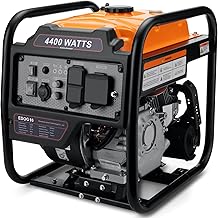
When you need serious, no-compromise power, the Oxseryn 4400 delivers. Its open-frame design isn’t the most compact, but the ECO mode keeps fuel consumption reasonable and noise in check. This is the pick for RV campers who want to run air conditioning or families powering a full outdoor kitchen setup without worrying about battery depletion.
Oxseryn 2800-Watt Portable Inverter Generator
At just 39 pounds with a 1.1-gallon tank, the Oxseryn 2800 is the gas-powered generator that actually earns the word “portable.” It’s EPA compliant, sips fuel, and the built-in fuel shut-off prevents stale-gas headaches during storage. For campers who want gas reliability without hauling a heavy unit to the site, this is the sweet spot.
Jackery Explorer 300
The Explorer 300 is the grab-and-go option for minimalists. Its 292Wh LiFePO4 battery won’t run a mini-fridge all night, but it’s perfect for keeping phones, laptops, cameras, and small lights charged over a weekend. Lightweight, affordable, and backed by Jackery’s reliability, it’s an excellent entry point for solo campers or couples on shorter trips.
Frequently Asked Questions
Can I take a portable generator on an airplane?
Most portable power stations under 100Wh are TSA-approved in carry-on luggage. The Jackery 300 and similar compact units may qualify, but anything larger—like the Explorer 1000 v2 or Anker C1000—exceeds airline limits and must travel by ground. Always check your specific airline’s lithium battery policy before heading to the airport.
How long will a portable power station run a mini-fridge while camping?
A typical 12V camping mini-fridge draws 40–60 watts. On a 1,000Wh power station like the Jackery 1000 v2, you can expect roughly 14–20 hours of runtime—enough for overnight cooling and then some. Running other devices simultaneously will shorten that window, so plan your loads accordingly.
Are gas inverter generators allowed at campgrounds?
Most campgrounds permit inverter generators, but many enforce decibel limits (typically 55–65 dB) and restrict operating hours—usually from early morning to evening. Always check the specific campground’s rules before arriving. The Oxseryn models here both meet EPA standards, but individual parks may have additional requirements.
Do I need a solar panel if I buy a battery power station?
Absolutely not. You can charge any of these power stations from a standard wall outlet at home before your trip. A solar panel is an add-on that extends your off-grid capability—especially valuable for multi-day trips where you won’t have access to shore power. Think of it as an investment for future flexibility, not a requirement.
Final Thoughts
For most campers in 2026, the Jackery Explorer 1000 v2 hits the ideal intersection of capacity, charging speed, and long-term battery value. If you demand maximum wattage from a solar setup, the Anker SOLIX C1000 is the one to beat. And for anyone who needs true gas-powered independence on extended trips, the Oxseryn 4400-Watt delivers the raw power no battery station can match yet. Pick the one that fits your camping reality, and enjoy the trip without the power anxiety.