Key takeaways
- Daily Output: Match production capacity to your actual daily usage. A small café might need 100–120 lbs, while a full-service restaurant or hotel can require 350–450 lbs per day. Always buy for your peak day, not your average.
- Storage Bin Size: Output means nothing if you have nowhere to hold the ice. Look for built-in storage of at least 100 lbs for moderate traffic, and 250 lbs or more for high-volume environments that need constant supply.
- Ice Cube Style: Full cubes melt slower in cocktails and soft drinks, while smaller or adjustable cubes suit different applications. Machines with adjustable ice thickness give you flexibility across beverage types.
- Build and Ventilation: Stainless steel construction resists corrosion and cleans up fast. Air-cooled models are the most common, but verify that your installation space has adequate clearance on all sides for proper airflow and efficiency.
- Certifications and Self-Cleaning: ETL or DOE listings confirm safety and energy standards. Auto self-cleaning cycles save significant maintenance time and reduce scale buildup, which extends the life of the unit.
What's inside
If you run a restaurant, bar, or busy event space, you already know the frustration: your old ice machine can’t keep up during peak hours, guests are waiting for drinks, and your staff is constantly making runs to the walk-in freezer with bagged ice. A commercial-grade ice maker solves that bottleneck by producing reliable volume on demand.
In this guide, I break down the six leading commercial ice makers worth considering in 2026 — covering capacity, build quality, ease of cleaning, and real-world value. Whether you need an under-counter unit for a home bar or a high-output workhorse for a full kitchen, these picks have you covered.
As an Amazon Associate we earn from qualifying purchases.




How to Choose a Commercial Ice Maker (2026)
- Daily Output: Match production capacity to your actual daily usage. A small café might need 100–120 lbs, while a full-service restaurant or hotel can require 350–450 lbs per day. Always buy for your peak day, not your average.
- Storage Bin Size: Output means nothing if you have nowhere to hold the ice. Look for built-in storage of at least 100 lbs for moderate traffic, and 250 lbs or more for high-volume environments that need constant supply.
- Ice Cube Style: Full cubes melt slower in cocktails and soft drinks, while smaller or adjustable cubes suit different applications. Machines with adjustable ice thickness give you flexibility across beverage types.
- Build and Ventilation: Stainless steel construction resists corrosion and cleans up fast. Air-cooled models are the most common, but verify that your installation space has adequate clearance on all sides for proper airflow and efficiency.
- Certifications and Self-Cleaning: ETL or DOE listings confirm safety and energy standards. Auto self-cleaning cycles save significant maintenance time and reduce scale buildup, which extends the life of the unit.
The Best Commercial Ice Makers (2026) Reviewed
VEVOR 360 LBS/24H Ice Maker
The VEVOR 360LBS strikes the best balance between raw output and thoughtful design. Its touchscreen controls and adjustable ice thickness make operation intuitive even during a rush, and the auto self-cleaning feature takes a real burden off your maintenance schedule. With a massive 250-lb storage bin, this unit keeps serving through the busiest shifts without blinking.
Coolake 450 LBS Ice Maker
If volume is your top priority, the Coolake 450LBS is hard to overlook. A 360-lb storage bin means you can produce ahead of time for events and not worry about shortages. The 22-inch full-cube design produces clean, slow-melting ice ideal for cocktails and upscale dining. ETL and DOE listed, it meets the standards you expect from a unit at this price point.
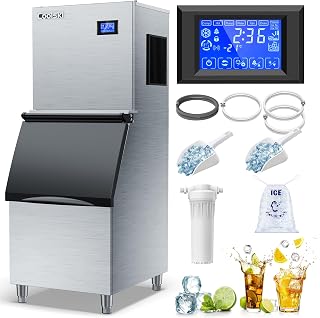
Coolski 350 LBS/Day Ice Maker
The Coolski 350LBS is built for environments that demand consistency. Its heavy-duty stainless steel body handles the wear and tear of a commercial kitchen, while the rapid ice-making cycle keeps your supply flowing. For bars and hotels that run a steady pace rather than sharp peaks, this unit delivers dependable output without the noise or maintenance headaches of lesser machines.
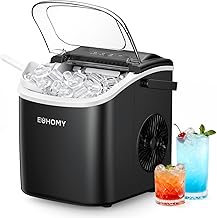
EUHOMY 100 LBS/24H Under-Counter Ice Maker
Not every setting calls for a 400-pound monster. The EUHOMY 100LBS is a freestanding, under-counter unit designed for home bars, small offices, or boutique venues. Its 33-lb storage bin is modest but sufficient for personal or low-traffic use, and the stainless steel build keeps it looking sharp. If you want commercial-level ice quality in a residential-friendly footprint, this is the pick.
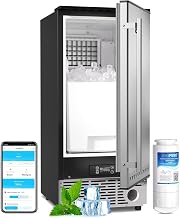
Coolake 320 LBS Under-Counter Ice Maker
The Coolake 320LBS bridges the gap between residential convenience and commercial muscle. It fits under a standard counter yet pumps out serious daily volume, with a 120-lb storage bin and a built-in water filter that reduces scale by up to 99%. For a home bar owner who entertains frequently or a small restaurant with limited floor space, it’s a genuinely practical solution.
Frequently Asked Questions
How much does a commercial ice maker produce per day?
It depends on the model. Consumer-grade units top out around 100 lbs per 24 hours, while mid-range commercial machines produce 300–350 lbs. High-capacity models like the Coolake 450LBS can generate 450 lbs daily, making them suitable for high-traffic restaurants and event venues.
Do I need a water line connection?
Yes — virtually all commercial ice makers require a dedicated water line for continuous operation. Without one, you’d need to manually fill a reservoir, which defeats the purpose of a high-output machine. Budget for a professional plumbing connection if one isn’t already in place.
How often should I clean a commercial ice maker?
Most manufacturers recommend cleaning every one to two weeks under normal use. Machines with auto self-cleaning cycles simplify this process significantly, but you should still inspect and wipe down interior surfaces regularly and flush the water line monthly.
What is the difference between air-cooled and water-cooled ice makers?
Air-cooled models use fans to dissipate heat and are easier to install because they only need a water line and electrical connection. Water-cooled units use additional water to cool the condenser, which is more efficient in hot environments but increases your water bill. For most commercial settings, air-cooled is the practical default.
Final Thoughts
For most buyers, the VEVOR 360LBS offers the strongest all-around value with its generous storage and user-friendly controls. If sheer volume is the priority, the Coolake 450LBS is the clear winner. And for under-counter installations, the Coolake 320LBS delivers impressive output in a compact form factor. Any of these three will keep the ice flowing where it matters.