Key takeaways
- Tooth Count and Finish Quality: Trim work demands blades with 80 teeth or more. Higher tooth counts produce smoother, paint-ready cuts with minimal tear-out. Blades below 80T work fine for framing lumber but will leave noticeable roughness on delicate trim profiles.
- Tooth Grind Type: ATB (Alternate Top Bevel) teeth excel at crosscutting wood fibres cleanly, making them the standard choice for trim. TCG (Triple Chip Grind) blades handle harder materials like composites and aluminium but can leave slightly rougher edges on soft trim species.
- Blade Diameter and Arbor Size: Match your saw. Most home-shop miter saws accept 10-inch blades on a 5/8-inch arbor, while larger 12-inch sliding saws need a corresponding blade and often a 1-inch arbor. Buying the wrong size wastes money and creates safety hazards.
- Carbide Tip Quality: Sharper, denser carbide tips stay clean-cutting longer. Budget blades dull faster on resinous softwoods like pine, forcing you to swap them mid-project. Look for blades advertising ultra-sharp or micro-grind carbide if longevity matters to you.
- Material Compatibility: Most trim is softwood or MDF, and any high-tooth-count blade handles it well. If your projects include plastic, composite decking, or aluminium trim, confirm the blade is rated for those materials before purchasing — standard wood blades chip or gum up on non-wood stock.
What's inside
Anyone who has installed crown moulding or baseboards knows the frustration: a miter saw blade that leaves rough, fuzzy edges on trim pieces. Those micro-tears and burn marks mean extra sanding, filler, and time wasted — or worse, visible imperfections once paint dries and light hits the joints. Picking the wrong blade turns what should be clean finish carpentry into a cleanup job.
This guide breaks down six miter saw blades suited for trim work in 2026, comparing tooth count, cut quality, material compatibility, and real-world performance. Whether you are trimming out a whole house or just replacing a single baseboard run, you will find the right blade below — without sifting through dozens of spec sheets on your own.
As an Amazon Associate we earn from qualifying purchases.



How to Choose a Miter Saw Blade For Trim (2026)
- Tooth Count and Finish Quality: Trim work demands blades with 80 teeth or more. Higher tooth counts produce smoother, paint-ready cuts with minimal tear-out. Blades below 80T work fine for framing lumber but will leave noticeable roughness on delicate trim profiles.
- Tooth Grind Type: ATB (Alternate Top Bevel) teeth excel at crosscutting wood fibres cleanly, making them the standard choice for trim. TCG (Triple Chip Grind) blades handle harder materials like composites and aluminium but can leave slightly rougher edges on soft trim species.
- Blade Diameter and Arbor Size: Match your saw. Most home-shop miter saws accept 10-inch blades on a 5/8-inch arbor, while larger 12-inch sliding saws need a corresponding blade and often a 1-inch arbor. Buying the wrong size wastes money and creates safety hazards.
- Carbide Tip Quality: Sharper, denser carbide tips stay clean-cutting longer. Budget blades dull faster on resinous softwoods like pine, forcing you to swap them mid-project. Look for blades advertising ultra-sharp or micro-grind carbide if longevity matters to you.
- Material Compatibility: Most trim is softwood or MDF, and any high-tooth-count blade handles it well. If your projects include plastic, composite decking, or aluminium trim, confirm the blade is rated for those materials before purchasing — standard wood blades chip or gum up on non-wood stock.
The Best Miter Saw Blade For Trim (2026) Reviewed
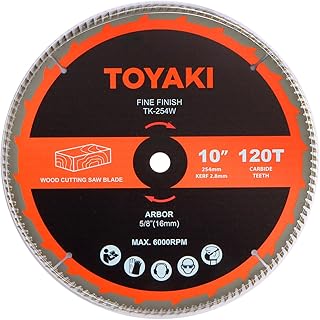
10-Inch 120-Tooth Fine-Finish Professional Woodworking Saw Blade
At 120 teeth on a 10-inch body, this blade delivers the smoothest crosscuts you can get without stepping into industrial pricing. The dense tooth spacing leaves paint-ready surfaces on pine, poplar, and MDF trim, and the 5/8-inch arbor fits most home-shop miter saws without adapters. It is a strong pick for finish carpenters who hate sanding.
WEN BL1080 10-Inch 80-Tooth Carbide-Tipped Blade
The WEN BL1080 strikes a practical balance between cut quality and cost. Its 80-carbide-tip teeth produce clean edges on baseboards and door casing, and WEN’s blade bodies tend to run true without the wobble that plagues some budget options. For weekend renovators who need reliable trim cuts without overspending, this blade earns its keep.
DEWALT 12-Inch 100-Tooth Fine Finish Blade (DWA112100)
DEWALT’s DWA112100 brings 100 ultra-sharp carbide teeth to a 12-inch platform, making it ideal for larger sliding miter saws. The blade produces noticeably cleaner miters on wider trim stock — think 5¼-inch baseboard or crown — where smaller blades sometimes struggle. DEWALT’s carbide formulation also resists dulling on resin-heavy pine, which means fewer blade changes during a full-house trimout.
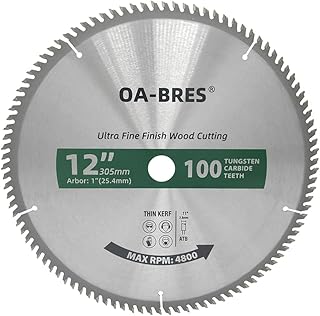
12-Inch 100-Tooth ATB TCT Ultra Fine Finish Blade
This 12-inch blade’s ATB grind is purpose-built for crosscutting wood fibres, and the triple-chip tips extend service life on harder species. It handles both miter cuts and table-saw ripping of thinner trim stock without chattering. If you run a 12-inch saw and cut a mix of hardwood and softwood trim, this blade’s versatility is hard to overlook.
10-Inch 80T TCT Miter Saw Blade for Wood, Plastic and Composite
Rounding out the list, this 80-tooth blade covers wood, plastic, and composite materials in one package — useful for installers who mix PVC trim with traditional lumber. The TCG tooth profile handles the harder composites without chipping, while still producing acceptable smoothness on standard wood trim. It is not the finest finish of the group, but the material flexibility makes it a genuinely useful all-rounder.
Frequently Asked Questions
How many teeth should a miter saw blade have for trim?
For trim and finish carpentry, aim for 80 to 120 teeth on a 10-inch blade or 100 teeth on a 12-inch blade. Higher tooth counts reduce tear-out and leave surfaces that need little to no sanding before finishing.
Can I use a framing blade for trim work?
You can, but the results will be rough. Framing blades typically have 24 to 40 teeth designed for speed, not smoothness. Trim installed with a framing blade almost always needs fill and sanding at the cut edges, which adds significant time to any finish project.
Do carbide-tipped blades make a difference?
Yes. Carbide tips hold a sharp edge far longer than standard steel, stay cleaner through resinous wood, and resist the heat buildup that causes burn marks. For trim work where cut quality matters, carbide is effectively mandatory.
What is the difference between ATB and TCG tooth grinds?
ATB teeth are bevelled on alternating sides, which slices cleanly through wood fibres during crosscuts — the primary cut in trim work. TCG teeth alternate between a flat raker and a bevelled chipper, which handles harder, more abrasive materials like composites and aluminium but can leave slightly rougher edges on softwood trim.
Final Thoughts
For most finish carpenters working in standard 10-inch saws, the DEWALT DWA112100 stands out for its blend of cut quality, durability, and brand-backed consistency. If budget is the primary concern, the WEN BL1080 delivers surprisingly polished results at a fraction of the price. For maximum smoothness on a 10-inch platform, the 120-tooth fine-finish blade leaves the least work behind on the cut line — and when trim is the goal, that is what counts most.