Key takeaways
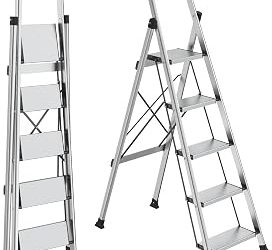
- Handrails and Grip Points: A solid handrail isn’t optional — it’s the single most important safety feature. Look for ladders with full-length or rotating handrails that you can grip while ascending, descending, and standing on the top step. Models without handrails force you to rely entirely on balance, which is a poor trade-off.
- Step Width and Texture: Narrow pedals become exhausting fast. Wide, anti-slip treads distribute weight more evenly across the foot and reduce the anxiety of slipping. Think about the size of the shoes you actually wear — if you’re in a size 11, you need a pedal that accommodates that.
- Weight Capacity: Always check the rated capacity and add a generous margin. A ladder rated for 350 pounds gives you room for your body weight plus whatever you’re holding or reaching for. Don’t settle for anything under 300 pounds if you want peace of mind.
- Setup and Folding Mechanism: If you need two hands and a YouTube tutorial to open it, you’ll stop using it altogether. The best senior-friendly ladders unfold with a single motion and lock into place with an audible click. Equally important: folding it back up should require minimal force.
- Weight and Portability: Under 15 pounds is the sweet spot. A ladder that’s too heavy discourages use and risks strain while carrying. Aluminum and thin-wall steel frames keep things manageable without sacrificing the sturdiness that lighter-duty plastic models often lack.
What's inside
Buying a step ladder when you’re over 60 isn’t the same as grabbing any old folding stool off the shelf. Joints aren’t what they used to be, balance shifts, and a wobbly platform that a younger person might shrug off can feel genuinely unsettling. The stakes are real — the CDC reports that falls among adults 65 and older send millions to emergency rooms each year, and a surprising number happen right at home during routine tasks like changing a lightbulb or reaching a pantry shelf.
This guide cuts through the noise. We evaluated step ladders and folding stools specifically for senior users, weighing handrail design, step width, weight capacity, and ease of unfolding against the everyday reality of aging hands and knees. Every pick below balances genuine stability with the kind of lightweight convenience that actually matters when your grandkids aren’t around to help.
As an Amazon Associate we earn from qualifying purchases.


How to Choose a Step Ladder For Seniors (2026)
- Handrails and Grip Points: A solid handrail isn’t optional — it’s the single most important safety feature. Look for ladders with full-length or rotating handrails that you can grip while ascending, descending, and standing on the top step. Models without handrails force you to rely entirely on balance, which is a poor trade-off.
- Step Width and Texture: Narrow pedals become exhausting fast. Wide, anti-slip treads distribute weight more evenly across the foot and reduce the anxiety of slipping. Think about the size of the shoes you actually wear — if you’re in a size 11, you need a pedal that accommodates that.
- Weight Capacity: Always check the rated capacity and add a generous margin. A ladder rated for 350 pounds gives you room for your body weight plus whatever you’re holding or reaching for. Don’t settle for anything under 300 pounds if you want peace of mind.
- Setup and Folding Mechanism: If you need two hands and a YouTube tutorial to open it, you’ll stop using it altogether. The best senior-friendly ladders unfold with a single motion and lock into place with an audible click. Equally important: folding it back up should require minimal force.
- Weight and Portability: Under 15 pounds is the sweet spot. A ladder that’s too heavy discourages use and risks strain while carrying. Aluminum and thin-wall steel frames keep things manageable without sacrificing the sturdiness that lighter-duty plastic models often lack.
The Best Step Ladder For Seniors (2026) Reviewed
HBTower Folding Step Stool with Handrail
HBTower’s core two-step model has earned its place in thousands of homes for good reason: the wide anti-slip pedal and convenient handrail create a setup that feels reassuring the moment you step on. It’s lightweight enough to carry with one hand, yet the steel frame doesn’t flex under load — a combination competitors at this price point rarely nail.
Little Giant Jumbo Step 3-Step (11903)
The standout here is the extra-wide, stair-like treads paired with a rotating handrail that adjusts to your preferred angle. The built-in tool tray is genuinely useful, not an afterthought. At 375-pound capacity and a 2.2-foot standing height, this is the premium option for anyone who wants the closest thing to climbing an actual staircase. Worth the investment if stability is non-negotiable.
HBTower 4-Step Ladder with Attachable Tool Bag
When you need more reach without upgrading to a full extension ladder, this four-step HBTower hits the sweet spot. The attachable tool bag keeps paint cans or cleaning supplies within arm’s reach so you’re not juggling items while perched. The anti-slip pedals and handrails carry over from the brand’s smaller models, scaled up proportionally.
HBTower Folding Step Stool with Tool Tray
A compact two-step variant that trades the tool bag for an integrated tray — lighter and easier to tuck beside the refrigerator. This is the pick for kitchens and pantries where space is tight and you primarily need one extra step of reliable height. Setup takes seconds, and the anti-slip surface holds up even in humid environments.
Step Stool with Handle for Adults, Heavy Duty 350 lbs
Named plainly and built plainly, this heavy-duty stool from a senior-focused brand leans hard into the “handle” concept with a tall, grippy rail designed for users who need extra confidence. The 350-pound rating is printed right on the frame — no digging through fine print. Its black finish looks sharp in a kitchen without screaming “medical equipment.”
Frequently Asked Questions
What is the safest step ladder height for seniors?
Two to three steps is the practical limit for most seniors. A two-step ladder typically puts you at around 18–24 inches of added reach, which covers light bulbs, upper cabinets, and closet shelves. Going higher increases fall risk and often demands the kind of climbing mobility that defeats the purpose of choosing a senior-friendly model.
Should seniors use ladders with handrails?
Unequivocally yes. Handrails give you a point of contact during the most vulnerable moments — transitioning from the floor to the first step, and shifting your weight at the top. A ladder without a handrail forces seniors to grip the frame itself, which is narrower, harder to hold, and positioned at an awkward angle.
How much weight can a typical step stool hold?
Most quality folding step stools for home use are rated between 300 and 375 pounds. That number includes the user plus whatever they’re carrying. Always verify the capacity with the manufacturer rather than assuming — and if you’re near the limit, step up to the next tier.
Are aluminum ladders better than steel for elderly users?
Aluminum wins on weight, which matters for portability and reducing strain during setup. Steel offers a marginally sturdier feel and often comes at a lower price. For most seniors, a well-built aluminum model strikes the best balance between ease of use and structural confidence.
Final Thoughts
For the best overall blend of safety, ease of use, and value, the HBTower Folding Step Stool with Handrail is the default recommendation — it does everything right at a price that doesn’t sting. If you want a step above in build quality and tread design, the Little Giant Jumbo Step 3-Step justifies its premium with stair-like steps and a rotating handrail that adapts to your needs. For those who primarily need a compact kitchen helper, the HBTower Folding Step Stool with Tool Tray keeps things simple and effective.