Key takeaways
- Tooth count: Higher tooth counts (80–100) deliver smoother finish cuts in hardwood and trim, while lower counts (40–60) clear material faster but leave rougher surfaces. Think about whether you need speed or polish.
- Carbide quality: Look for micro-grain or Hi-Density carbide tips. They hold an edge significantly longer than standard carbide, especially across dense species like oak, maple, and walnut.
- Arbor size: Most 12-inch miter saws use a 1-inch arbor, but always verify your saw’s spec before ordering. A mismatched arbor means a blade that simply won’t mount.
- Tooth geometry: ATB (Alternate Top Bevel) teeth handle crosscutting cleanly, while TCT (Tungsten Carbide Tipped) designs resist heat during prolonged sessions. Combo geometries split the difference.
- Blade kerf: Thin-kerf blades remove less material and put less strain on your saw’s motor. Full-kerf blades stay truer under heavy loads and resist vibration better on thick stock.
What's inside
If you’ve ever bought a 12-inch miter saw blade without knowing what you were getting into, you already understand the frustration: tear-out on hardwood, excessive heat buildup, or a blade that dulls after a single weekend of trim work. The tooth count, carbide grade, and arbor compatibility all matter more than most buyers realize, and the wrong choice costs you both money and material.
This guide walks through six of the best 12-inch miter saw blades available in 2026, comparing them on cut quality, durability, noise, and value. Whether you’re crosscutting crown molding or ripping plywood panels, the picks below cover a range of budgets and applications so you can match a blade to your actual workload.
As an Amazon Associate we earn from qualifying purchases.


How to Choose a 12-Inch Miter Saw Blade (2026)
- Tooth count: Higher tooth counts (80–100) deliver smoother finish cuts in hardwood and trim, while lower counts (40–60) clear material faster but leave rougher surfaces. Think about whether you need speed or polish.
- Carbide quality: Look for micro-grain or Hi-Density carbide tips. They hold an edge significantly longer than standard carbide, especially across dense species like oak, maple, and walnut.
- Arbor size: Most 12-inch miter saws use a 1-inch arbor, but always verify your saw’s spec before ordering. A mismatched arbor means a blade that simply won’t mount.
- Tooth geometry: ATB (Alternate Top Bevel) teeth handle crosscutting cleanly, while TCT (Tungsten Carbide Tipped) designs resist heat during prolonged sessions. Combo geometries split the difference.
- Blade kerf: Thin-kerf blades remove less material and put less strain on your saw’s motor. Full-kerf blades stay truer under heavy loads and resist vibration better on thick stock.
The Best 12-Inch Miter Saw Blades (2026) Reviewed
100-Tooth ATB TCT Ultra Fine Finish Circular Saw Blade
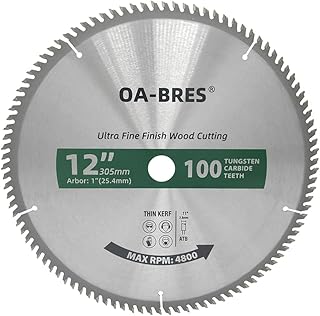
This blade packs 100 teeth with an ATB-TCT hybrid grind, producing glass-smooth crosscuts in trim and furniture-grade hardwood. The 1-inch arbor fits most standard miter saws, and the thin kerf keeps your motor running cool during extended cuts. It’s an outstanding choice for finish carpenters who demand splinter-free results on every pass.
DEWALT 12″ 100-Tooth Fine Finish (DWA112100)
DEWALT’s DWA112100 uses ultra-sharp carbide tips that slice through hardwood with noticeably less effort than many competitors in this tooth class. The blade stays quiet and flat, which matters when you’re cutting visible casing or miters that need to close perfectly. It’s a reliable workhorse for anyone who already trusts the DEWALT ecosystem.
Diablo 12″ x 80-Tooth Fine Finish (D1280X)
Diablo’s D1280X strikes a strong balance between cut smoothness and blade longevity thanks to its Hi-Density carbide formulation. At 80 teeth, it handles both crosscuts and miters with confidence while clearing chips efficiently enough to prevent burn marks on slower feed rates. It’s one of the most versatile options on this list for mixed-material shop work.
DEWALT Miter Saw Combo Pack (DWA112CMB)
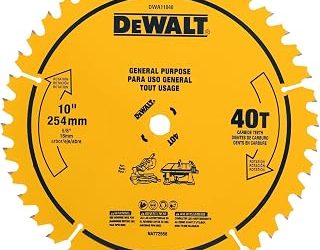
What makes the DWA112CMB stand out is practicality: you get both a 40-tooth and a 60-tooth blade in one package, letting you swap between rough crosscutting and moderate finish work without buying two separate SKUs. Both blades share the same 1-inch arbor and feature DEWALT’s sharp carbide tips. For the home workshop that tackles everything from framing lumber to cabinet panels, this combo simplifies blade management considerably.
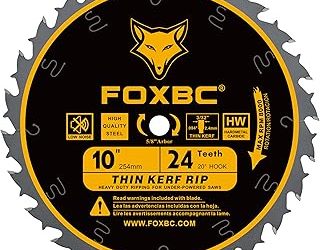
FOXBC 12-Inch 100-Tooth Ultimate Polished Finish Blade
FOXBC delivers a surprisingly refined cut for a blade at its price point, with 100 teeth engineered for an ultra-polished finish on trim, molding, and furniture joints. The 1-inch arbor ensures broad compatibility, and users consistently praise its low vibration and clean edge quality across pine, poplar, and cherry. It’s a smart pick for budget-conscious woodworkers who still refuse to compromise on finish quality.
Frequently Asked Questions
How often should I replace my miter saw blade?
There’s no fixed schedule—it depends on usage intensity and material hardness. A blade cutting soft pine daily may stay sharp for months, while one processing hardwood and composite trim will dull faster. Watch for increased burning, tear-out, or the need to apply more pressure; those are clear signals it’s time to swap.
Can I use a table saw blade on my miter saw?
If the diameter, arbor size, and RPM rating match, it will physically mount and spin. However, blades designed specifically for miter saws often have reinforced body plates that handle lateral forces better during angled cuts. Sticking with miter-rated blades is the safer, more consistent choice.
What’s the difference between 80-tooth and 100-tooth blades?
Both produce fine finish cuts, but 100-tooth blades leave a marginally smoother surface with less sanding afterward. The tradeoff is that more teeth mean more contact area, slightly more heat, and a slower feed rate. For most finish carpentry, 80 teeth is plenty; 100 teeth shines when you’re doing precision joinery or working with extremely hard species.
Do thin-kerf blades cut as well as full-kerf blades?
Thin-kerf blades cut cleanly and waste less material, which is ideal for lighter-duty miter saws with less motor power. Full-kerf blades resist deflection more effectively on thick stock and produce slightly more consistent results under heavy loads. Match the kerf to your saw’s power and the thickness of material you typically cut.
Final Thoughts
For most home woodworkers and trim installers, the Diablo D1280X offers the best blend of versatility and durability, while the DEWALT DWA112100 earns its reputation for consistently clean cuts on demanding finish work. If you’re watching your budget but don’t want to sand every joint twice, the FOXBC 100-Tooth blade punches well above its price point. Pick the tooth count and carbide grade that match your workload, and you’ll notice the difference on your very first cut.