Key takeaways
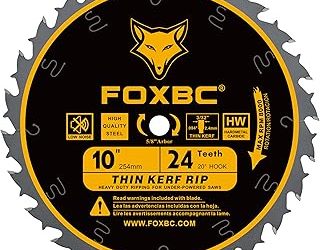
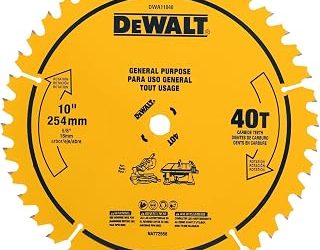
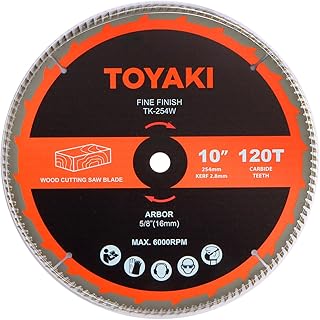
- Tooth Count and Cut Type: Fewer teeth (40T) mean faster, rougher cuts suited for ripping dimensional lumber. More teeth (60T–120T) leave a smoother surface that needs little to no sanding, making them ideal for finish carpentry and cabinetry work.
- Kerf Thickness: Thin-kerf blades remove less material per pass, which puts less strain on your motor and wastes less wood. They’re especially valuable on battery-powered miter saws where every amp-hour counts, though full-kerf blades track straighter in dense hardwoods.
- Carbide Quality and Grind: Not all carbide tips are created equal. ATB (alternate top bevel) grinds handle crosscuts and plywood well, while TCG (triple chip grind) blades excel at non-ferrous metals. Higher-grade carbide stays sharp longer, saving you money over time.
- Arbor Size: Nearly every 10-inch miter saw in North America ships with a 5/8-inch arbor. Double-check your saw’s spec sheet before ordering — a mismatch means a blade that simply won’t fit.
- Intended Material: Wood, plywood, MDF, laminate, and aluminum all demand different blade geometries. Using a wood blade on aluminum isn’t just a bad cut waiting to happen — it’s a safety hazard. Match the blade to the material every time.
What's inside
Walk into any home center and you’ll find a dozen ten-inch blades hanging on the rack, all promising “ultra-fine finish” or “professional results.” The problem? They all look nearly identical in the packaging, yet perform wildly differently on actual cuts. Pick the wrong one and you’ll spend your weekend sanding down tear-out instead of assembling furniture.
This guide cuts through the noise. We looked at blade material, tooth count, kerf width, and real-world cut quality across the six most popular 10-inch miter saw blades available in 2026. Whether you’re trimming crown molding, breaking down plywood, or crosscutting hardwood for a bookshelf, the picks below will help you match the right blade to the job.
As an Amazon Associate we earn from qualifying purchases.


How to Choose a 10-Inch Miter Saw Blade (2026)
- Tooth Count and Cut Type: Fewer teeth (40T) mean faster, rougher cuts suited for ripping dimensional lumber. More teeth (60T–120T) leave a smoother surface that needs little to no sanding, making them ideal for finish carpentry and cabinetry work.
- Kerf Thickness: Thin-kerf blades remove less material per pass, which puts less strain on your motor and wastes less wood. They’re especially valuable on battery-powered miter saws where every amp-hour counts, though full-kerf blades track straighter in dense hardwoods.
- Carbide Quality and Grind: Not all carbide tips are created equal. ATB (alternate top bevel) grinds handle crosscuts and plywood well, while TCG (triple chip grind) blades excel at non-ferrous metals. Higher-grade carbide stays sharp longer, saving you money over time.
- Arbor Size: Nearly every 10-inch miter saw in North America ships with a 5/8-inch arbor. Double-check your saw’s spec sheet before ordering — a mismatch means a blade that simply won’t fit.
- Intended Material: Wood, plywood, MDF, laminate, and aluminum all demand different blade geometries. Using a wood blade on aluminum isn’t just a bad cut waiting to happen — it’s a safety hazard. Match the blade to the material every time.
The Best 10-Inch Miter Saw Blades (2026) Reviewed
WEN BL1080 80-Tooth Carbide-Tipped
The BL1080 punches well above its price point. Eighty carbide-tipped teeth deliver a glassy-smooth surface on hardwoods and plywood alike, and the thin kerf keeps your saw running cool during long cutting sessions. It’s the blade we’d hand someone building their first set of floating shelves.
Benchmark Abrasives 100-Tooth TCT
Where most blades on this list live in wood territory, Benchmark’s TCT blade is purpose-built for aluminum and non-ferrous metals. The tungsten carbide tips hold up surprisingly well against soft metals without the chattering and vibration you’d get from a general-purpose blade. If your project list includes aluminum trim or copper flashing, this is the one to mount.
ANGELSWORD 60-Tooth Fine Finish (2-Pack)
Getting two identical 60-tooth blades in a single package is a practical win for anyone who swaps blades frequently between a table saw and a miter saw. The finish quality on crosscuts is genuinely impressive for the price, leaving surfaces that take finish stain evenly without pre-sanding. A smart bulk buy for trim work.
WORKPRO 80-Tooth Ultra Fine Finish
WORKPRO’s thin-kerf design paired with 80 ATB teeth makes this a standout for cabinetry and trim installs. The reduced blade kerf means your miter saw doesn’t bog down on dense hardwoods, and the resulting cut edges on plywood and laminate are clean enough for visible joints. One blade per pack, but it earns its spot.
KENDO 2-Pack 40T/60T Set
This duo covers the two most common cutting tasks in a home workshop. The 40-tooth blade rips through 2x4s with authority, while the 60-tooth blade handles plywood and MDF without leaving fuzzy edges. Buying them together means you’re always ready to switch tasks without a mid-project hardware store run.
Frequently Asked Questions
How often should I replace my miter saw blade?
It depends entirely on usage and material. A blade used daily on hardwood will dull noticeably within a few weeks, while weekend hobbyists working mostly in softwood and plywood might get a year or more. Signs it’s time: burning smells, rougher cuts, and needing to push harder through the same material.
Can I use a 10-inch miter saw blade on my table saw?
Yes — as long as the arbor size matches and the blade’s maximum RPM rating meets or exceeds your saw’s speed. Most 10-inch blades are designed for both platforms, which is why many woodworkers buy multiples of the same blade.
What’s the difference between thin kerf and full kerf?
Thin-kerf blades are typically around 1/16 inch thick, while full-kerf blades sit at 1/8 inch. Thin kerf wastes less wood and requires less power, making it better for underpowered saws and sheet goods. Full kerf is stiffer and less prone to deflection, which matters when ripping thick, dense stock.
Do I need different blades for plywood and solid wood?
Not necessarily, but an ATB blade with 60 or more teeth will handle both admirably. If you’re doing a lot of finish plywood work — think cabinet boxes or veneer panels — a dedicated higher-tooth-count blade will leave cleaner edges with less chipping on the face veneer.
Final Thoughts
For most home workshop needs, the WEN BL1080 strikes the best balance of cut quality, durability, and price. If your projects regularly involve metal alongside wood, the Benchmark Abrasives TCT is an essential specialty blade. And for pure value, the KENDO 2-Pack gives you a rip and crosscut blade in one purchase — hard to beat when you’re outfitting a shop on a budget.