Key takeaways
- CFM at 90 PSI: The Tornador needs roughly 4 to 6 CFM at 90 PSI to run continuously without losing pressure. Anything below that range means constant cycling and uneven spray patterns.
- Tank Size: A larger tank (20+ gallons) buffers the demand so your motor isn’t turning on every thirty seconds. Smaller pancake-style tanks work for quick jobs but struggle on full interior details.
- Noise Level: Home garages sit close to living spaces, so models under 75 dBA make a real difference in whether your neighbors — or family — tolerate your Saturday routine.
- Portability and Footprint: Vertical upright compressors save floor space; wheeled units let you roll the rig to the driveway. Weigh the trade-off between tank volume and the space you actually have available.
- Maintenance Requirements: Oil-free pumps eliminate a chore and reduce long-term cost. If you do go with an oiled model, check how easy the drain valve and filter access are before committing.
What's inside
If you own a Tornador cleaning gun, you already know the satisfying difference it makes on upholstery, door panels, and dashboard crevices. What many first-time buyers discover the hard way, though, is that the Tornador is only as good as the air supply feeding it. Hook one up to an undersized compressor and you get sputtering airflow, a gun that stalls mid-spray, and a half-finished car interior staring back at you.
This guide breaks down the six compressors and companion tools that actually hold up to Tornador demand. Every pick below was evaluated against a few non-negotiables — steady CFM output, realistic recovery time, noise you can live with in a home garage, and build quality that survives weekend after weekend of use. Consider this your shortcut to the right setup without the trial-and-error phase.
As an Amazon Associate we earn from qualifying purchases.



How to Choose an Air Compressor For Tornador (2026)
- CFM at 90 PSI: The Tornador needs roughly 4 to 6 CFM at 90 PSI to run continuously without losing pressure. Anything below that range means constant cycling and uneven spray patterns.
- Tank Size: A larger tank (20+ gallons) buffers the demand so your motor isn’t turning on every thirty seconds. Smaller pancake-style tanks work for quick jobs but struggle on full interior details.
- Noise Level: Home garages sit close to living spaces, so models under 75 dBA make a real difference in whether your neighbors — or family — tolerate your Saturday routine.
- Portability and Footprint: Vertical upright compressors save floor space; wheeled units let you roll the rig to the driveway. Weigh the trade-off between tank volume and the space you actually have available.
- Maintenance Requirements: Oil-free pumps eliminate a chore and reduce long-term cost. If you do go with an oiled model, check how easy the drain valve and filter access are before committing.
The Best Air Compressor For Tornador (2026)s Reviewed
Klutch 29-Gallon, 2.5 HP
This is the workhorse most Tornador users end up gravitating toward once they outgrow smaller units. The 5.1 CFM at 90 PSI comfortably powers a Tornador through a full interior detail without hunting for recovery time, and the vertical oil-free design keeps the footprint reasonable for a garage corner. The large wheels and maintenance-friendly drain valve show thoughtful engineering rather than box-checking.
DEWALT 6-Gallon Pancake (DWFP55126)
DEWALT’s pancake is a proven jobsite staple that translates surprisingly well to light Tornador work. At 2.6 SCFM it falls short of sustained Tornador use on its own, but its fast recovery and rock-solid 165 PSI max rating make it viable for quick touch-ups or pairing in a two-compressor setup. Its real strength is simplicity — plug it in, attach your hose, and go.
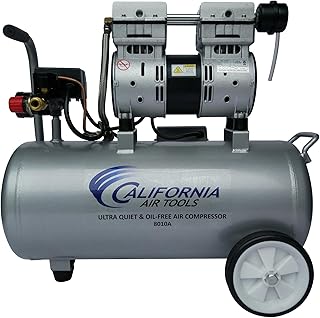
California Air Tools 8010A
The 8010A earns its reputation on noise alone. At 60 dBA you can run this unit in a shared garage or apartment complex without triggering complaints, which matters more than most spec sheets acknowledge. The trade-off is a modest 1.0 HP motor and 8-gallon tank, so reserve this for lighter Tornador sessions or spot cleaning rather than marathon full-car details.
Tornado Car Cleaning Gun
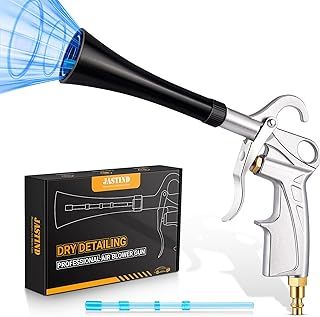
Pairing a quality compressor with a purpose-built Tornador-style gun matters more than people realize. This brass quick-plug unit handles 60 to 150 PSI, ships with an extra blasting tube, and its metal body won’t crack after a season of use. If your current cleaning gun is the bottleneck in your workflow, upgrading here delivers immediate results.
Car Detailing Air Gun Kit with 5 Hoses
This all-in-one detailing kit bundles a high-pressure air gun with five hoses of varying lengths, which eliminates the fumble of adapters and mismatched fittings. For Tornador users who also blow out vents, seams, and tight trim gaps, having dedicated hose lengths on hand turns a two-tool job into a seamless single session.
Frequently Asked Questions
What CFM does a Tornador actually need?
Most Tornador models perform best between 4 and 6 CFM at 90 PSI. Below 4 CFM the gun sputters and you lose the characteristic vortex pattern that makes it effective. Check your specific Tornador manual for the exact number, and aim 20% higher than the minimum to account for hose length and fitting losses.
Can I use a pancake compressor with a Tornador?
You can, but with caveats. A 6-gallon pancake tank empties quickly under Tornador demand, so you will experience pauses while the motor catches up. It works for quick interior sprays and touch-ups, but a larger tank delivers a noticeably more consistent experience during a full detail.
How loud is too loud for a home garage setup?
Anything above 80 dBA becomes uncomfortable without hearing protection over a full session. Models in the 65 to 75 dBA range strike the best balance for home garages, letting you work for an hour or more without fatigue or neighbor friction. The California Air Tools 8010A sits at the quiet end of that spectrum at 60 dBA.
Is an oil-free compressor reliable for Tornador use?
Oil-free pumps have improved significantly over the past few years and handle Tornador duty without issue for most home users. They require less maintenance, tolerate colder startup temperatures, and won’t leak oil on your garage floor. For professional daily use, oiled pumps still edge ahead in longevity, but for weekend warriors they are the practical choice.
Final Thoughts
For most home garage Tornador users, the Klutch 29-Gallon offers the best balance of sustained airflow, tank capacity, and livability. The California Air Tools 8010A earns a strong recommendation if noise is your primary concern, and pairing any compressor above with the Tornado Car Cleaning Gun kit ensures the gun itself isn’t the weak link in your setup.