Key takeaways
- CFM at 90 PSI matters more than peak pressure: Impact wrenches typically need 4–6 CFM at 90 PSI to run without stalling. A high max PSI means nothing if the pump can’t deliver continuous volume when the trigger is pulled.
- Tank size sets your work rhythm: A 6-gallon pancake handles most automotive and framing tasks between cycles, but heavier users running impact tools back-to-back will appreciate an 8-gallon tank’s longer sustained output before the motor kicks in.
- Noise level determines where you can work: If your shop shares a wall with living space, anything above 70 dBA gets old fast. Oil-free models in the 56–60 dBA range make indoor and evening work genuinely feasible.
- Oil-free versus oiled pumps trade longevity for convenience: Oil-free designs eliminate maintenance and won’t leak on a truck bed, but oiled compressors generally run cooler and last longer under heavy daily use.
- Portability has a real cost: Lighter units with smaller tanks are easier to carry but refill more often. Heavier models with wheels save your back on longer jobsites but take up more truck space.
What's inside
Choosing an air compressor for impact wrenches and nailers is a headache most homeowners don’t expect. You buy what looks like a solid unit, drag it to the garage, hook up your impact tool, and the compressor either can’t keep up, screams through the walls, or runs out of breath halfway through a lug nut. The real problem isn’t a lack of options — it’s that CFM ratings, tank pressure, and noise levels all interact in ways that spec sheets don’t make obvious.
This guide cuts through the noise. We compared six popular compressors across the metrics that actually matter when you’re driving lag bolts, tightening wheel nuts, or firing a framing nailer — sustained airflow, recovery speed, portability, and how loudly they announce themselves to the entire neighborhood.
As an Amazon Associate we earn from qualifying purchases.



How to Choose an Air Compressor For Impact Tools (2026)
- CFM at 90 PSI matters more than peak pressure: Impact wrenches typically need 4–6 CFM at 90 PSI to run without stalling. A high max PSI means nothing if the pump can’t deliver continuous volume when the trigger is pulled.
- Tank size sets your work rhythm: A 6-gallon pancake handles most automotive and framing tasks between cycles, but heavier users running impact tools back-to-back will appreciate an 8-gallon tank’s longer sustained output before the motor kicks in.
- Noise level determines where you can work: If your shop shares a wall with living space, anything above 70 dBA gets old fast. Oil-free models in the 56–60 dBA range make indoor and evening work genuinely feasible.
- Oil-free versus oiled pumps trade longevity for convenience: Oil-free designs eliminate maintenance and won’t leak on a truck bed, but oiled compressors generally run cooler and last longer under heavy daily use.
- Portability has a real cost: Lighter units with smaller tanks are easier to carry but refill more often. Heavier models with wheels save your back on longer jobsites but take up more truck space.
The Best Air Compressor For Impact Tools (2026) Reviewed
Metabo HPT EC914S 6-Gallon Pancake
At 200 PSI and a genuine 4 CFM flow rate, this is one of the few pancake compressors that can actually keep a framing nailer or mid-range impact wrench fed without constant cycling. It runs multiple pneumatic tools simultaneously — something competitors at this price point struggle with — and the quick-connect coupler swaps between tools in seconds. For anyone who regularly bounces between a nailer and an impact driver on a jobsite, this unit earns its spot.
DEWALT DWFP55126 6-Gallon Pancake
DEWALT’s flagship pancake doesn’t chase flashy numbers. Instead it delivers a reliable 2.6 SCFM at 90 PSI with an oil-free pump that genuinely stays maintenance-free for years. It’s a dependable choice for lighter impact tool work — think brad nailers, pin nailers, and small bolt-driving tasks — though it will cycle more frequently under sustained heavy load. The build quality and parts availability through DEWALT’s network give it an edge for long-term ownership.
California Air Tools CAT-1P1060S
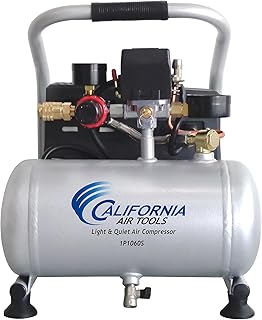
At just 56 dBA, this compressor is quieter than most dishwashers. The tradeoff is a 1-gallon tank and modest .6 HP motor, which means it’s best paired with lightweight brad nailers and small impact tools rather than heavy-duty wrenches. Where it shines is finish carpentry inside a finished home — you can run it during a nap without waking anyone up. It won’t replace a pancake compressor for garage work, but as a specialized indoor tool, it’s unmatched.
DEWALT DWFP55130 Quiet Trim
DEWALT built this 200-PSI unit specifically for trim carpenters who need higher pressure without the noise penalty. It runs noticeably quieter than the DWFP55126 while maintaining enough volume for finish nailers and light-impact tasks. The compact profile fits easily in a cabinet or closet between jobs. For home projects where you need more muscle than the California Air Tools 1-gallon but can’t tolerate a full-size pancake screaming through the house, this hits the sweet spot.
California Air Tools 8010A 8-Gallon
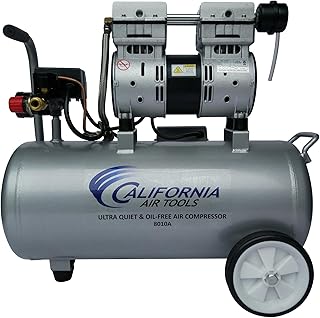
The 8010A is the compressor you buy when you want a single unit that covers everything from impact wrench duty to finish nailers without compromise. Its aluminum tank keeps the weight manageable, the wheels handle garage floors smoothly, and at 60 dBA it’s still far quieter than traditional shop compressors. The 1.0 HP motor delivers consistent airflow that doesn’t drop off during longer fastening sequences — a real advantage when you’re working through a pile of lug nuts or running long bead after long bead.
Frequently Asked Questions
Can a pancake compressor run an impact wrench?
Yes, but with caveats. Most pancake compressors deliver enough CFM for intermittent impact wrench use — loosening a few bolts, tightening fasteners during assembly. For continuous automotive work like removing all four wheels or sustained torque applications, a unit with at least 4 CFM at 90 PSI (like the Metabo HPT EC914S) will keep up far better than smaller models.
What CFM do I need for a 1/2-inch impact wrench?
A typical 1/2-inch pneumatic impact wrench requires roughly 4–6 CFM at 90 PSI. Check your tool’s spec sheet for the exact number, then add 20% margin. An undersized compressor will force the tool to pause and wait for pressure recovery, which gets frustrating fast and can actually reduce bolt-stripping performance.
Is a larger tank always better?
Not always. A larger tank reduces cycling frequency and gives steadier pressure, which is great for sustained impact work. But it also adds weight and bulk. If you’re only driving occasional nails or tightening a few fasteners, a 6-gallon pancake keeps things portable without sacrificing practical performance.
Do oil-free compressors last as long as oiled ones?
Modern oil-free pumps have closed the gap considerably. For homeowner and moderate jobsite use, an oil-free compressor will typically last many years without issue. Oiled pumps still have an edge under heavy daily commercial use because they run cooler and experience less internal wear, but for most buyers reading this guide, oil-free is the practical and maintenance-free choice.
Final Thoughts
For most homeowners who need a compressor that handles impact tools without frustration, the Metabo HPT EC914S offers the best balance of airflow, pressure, and price. If quiet indoor work is a priority, the California Air Tools 8010A delivers serious capacity at a noise level you can live with. And for trim work inside finished spaces, the DEWALT DWFP55130 threads the needle between capability and discretion. All three represent genuine value rather than just the loudest marketing.