Key takeaways
- Room size and blade span: For dining rooms under 144 square feet, a 30–42 inch fan circulates air without overwhelming the space; larger rooms over 200 square feet benefit from 48–52 inch models. Mismatch the two and you get either stagnant corners or an uncomfortably breezy meal.
- Motor type and noise: DC motors run quieter and use less electricity than traditional AC motors, which matters when your fan hangs directly above the conversation zone. Look for fans rated under 35 decibels if noise is a dealbreaker.
- Lighting quality and dimming: A dining fan pulls double duty as your primary overhead fixture, so color temperature range (ideally 3000K–6500K) and true dimmability aren’t luxuries. Flicker-free LEDs with a memory function save you from re-adjusting every time you switch the fan on.
- Mounting style and ceiling height: Low-profile or flush-mount designs work best with standard 8-foot ceilings, while retractable-blade and fandelier styles need at least 9 feet to look proportional and spin safely. Measure from ceiling to tabletop height before ordering.
- Control and smart features: Remote controls are now baseline; app connectivity, voice assistant compatibility, reversible airflow for seasonal use, and programmable timers add convenience that pays off daily rather than sitting unused in a drawer.
What's inside
Finding a ceiling fan that actually looks good above your dining table—without drowning out dinner conversation or clashing with your décor—is one of those deceptively tricky home upgrades. Buyers get burned by fans that wobble, buzz, or produce barely a whisper of airflow, and the gap between a $30 builder-grade fixture and a genuinely thoughtful fan with light is enormous.
This guide breaks down six ceiling fans built specifically for dining and living spaces, comparing noise levels, lighting quality, motor type, and real-world installation ease so you can pick the right fit without second-guessing your choice.
As an Amazon Associate we earn from qualifying purchases.


How to Choose a Dining Room Ceiling Fan With Light
- Room size and blade span: For dining rooms under 144 square feet, a 30–42 inch fan circulates air without overwhelming the space; larger rooms over 200 square feet benefit from 48–52 inch models. Mismatch the two and you get either stagnant corners or an uncomfortably breezy meal.
- Motor type and noise: DC motors run quieter and use less electricity than traditional AC motors, which matters when your fan hangs directly above the conversation zone. Look for fans rated under 35 decibels if noise is a dealbreaker.
- Lighting quality and dimming: A dining fan pulls double duty as your primary overhead fixture, so color temperature range (ideally 3000K–6500K) and true dimmability aren’t luxuries. Flicker-free LEDs with a memory function save you from re-adjusting every time you switch the fan on.
- Mounting style and ceiling height: Low-profile or flush-mount designs work best with standard 8-foot ceilings, while retractable-blade and fandelier styles need at least 9 feet to look proportional and spin safely. Measure from ceiling to tabletop height before ordering.
- Control and smart features: Remote controls are now baseline; app connectivity, voice assistant compatibility, reversible airflow for seasonal use, and programmable timers add convenience that pays off daily rather than sitting unused in a drawer.
The Best Dining Room Ceiling Fans With Light (2026) Reviewed
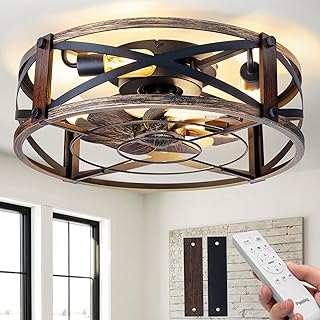
Passky 20″ Caged Fandelier
This compact caged fan punches well above its weight for small dining nooks and galley kitchens. The reversible DC motor is genuinely quiet—quieter than most fans at this price—and the farmhouse cage aesthetic hides the blades entirely, giving you a fixture that reads as a pendant light rather than a fan. Six speeds and a 1/2/4-hour timer round out a surprisingly polished package.
48″ Crystal Chandelier Fan
For anyone who wants a statement piece without commissioning a custom light fixture, this rose gold crystal fandelier delivers real visual drama. The dimmable LED array produces warm, flattering light for evening meals, and the 48-inch span moves enough air to serve a proper dining room. Assembly takes patience—those crystal strands are fiddly—but the end result looks far more expensive than it is.
52″ Farmhouse Flush Mount Fan
The workhorse pick. Five reversible blades in a vintage low-profile housing give this fan the widest ceiling compatibility in the group, and the three-light cluster provides ample illumination without hunting for separate fixtures. Six speeds cover everything from a gentle drift to serious summer cooling, and the flush mount keeps headroom clear in rooms with standard ceilings.
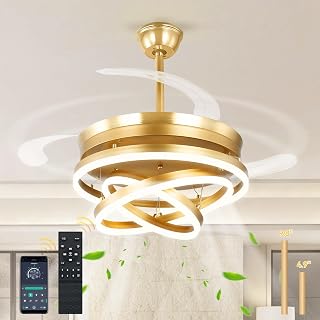
30″ Retractable Ceiling Fan
When the blades retract, this unit reads as a sleek brushed nickel flush-mount light—ideal for dining rooms where the fan should disappear when you want a cleaner look. The 3000K–6500K dimmable LED handles everything from candlelit ambiance to bright task lighting, and at 30 inches it suits apartments and breakfast nooks where every inch of ceiling real estate counts.
addlon 24″ Fandelier
The addlon stands out for thoughtful extras that competitors skip: app control with a memory function, wider-than-average airflow distribution, and a DC motor tuned for near-silent operation. At 24 inches it fills the gap between a full ceiling fan and a purely decorative fixture, making it a smart choice for smaller formal dining rooms where you want air movement without visual bulk.
Frequently Asked Questions
What size ceiling fan do I need for a dining room?
Rooms up to 144 square feet work best with fans between 30 and 36 inches, while rooms from 144 to 224 square feet call for 42 to 52 inch models. The key rule is that at least 30 inches should separate the blade tips from any wall, and the fan should hang at least 7 feet above the floor for safety and airflow efficiency.
Can a ceiling fan provide enough light for dining?
Yes, provided you choose a model with dimmable LEDs rated at least 1500 lumens for an average-sized dining room. Fans with multiple light sources—clusters of three or more LED panels—distribute light more evenly and let you dial brightness down for intimate dinners or up for homework at the table.
Are DC motor fans worth the extra cost over AC motors?
For a dining room, consistently. DC motors consume roughly 60 percent less energy, run significantly quieter, and typically offer more speed settings with smoother transitions. Since a dining fan is often on while people are eating and talking, that noise reduction alone justifies the premium.
How hard is it to install a ceiling fan with lights?
Most models in this roundup mount to a standard ceiling electrical box, and if your box is already rated for a fan (marked “fan-rated” or rated for 50 pounds or more), installation is a straightforward swap. The crystal and retractable-blade designs take longer due to delicate components, but none require specialty tools. If you’re uncomfortable working overhead with wiring, budget $100–$175 for a professional install.
Final Thoughts
For most dining rooms the addlon 24″ Fandelier hits the best balance of quiet operation, smart controls, and versatile lighting. If you need a larger fan for an open dining area, the 52″ Farmhouse Flush Mount is the reliable, no-nonsense choice. And for anyone prioritizing aesthetics above all else, the 48″ Crystal Chandelier Fan turns a functional fixture into the room’s centerpiece. Measure twice, check your ceiling height, and pick the one that matches how you actually use the space.