Key takeaways
- Motor power and speed control: A saw that only runs at one speed forces you to guess whether you’re burning through delicate material or bogging down on denser stock. Look for at least five speed settings — seven is better — so you can dial in RPM for the specific material you’re cutting. Anything below 80W starts struggling with anything harder than basswood.
- Blade quality and cut depth: The difference between a clean edge and a ragged mess comes down to blade sharpness and how deep the blade can reach. A 63mm or larger HSS blade handles most hobby materials cleanly. Check whether the manufacturer includes multiple blade types — a fine-tooth blade for acrylic and a coarser one for wood saves you from buying extras immediately.
- Fence and table alignment: Precision only matters if the parts stay aligned under vibration. Aluminum alloy tables hold up far better than plastic bases over time. A magnetic or thumb-screw fence that locks firmly without wobble is worth its weight — literally — when you’re making repeat cuts on small pieces.
- Dual-motor or single-motor design: Some saws add a second motor to handle grinding, engraving, or drilling alongside cutting. That versatility is genuinely useful for mixed-media hobbyists, but it adds weight and complexity. If you only need straight cuts, a single-motor unit with a solid build will serve you better long-term.
- Safety features and dust management: On a miniature saw this small, blade guards and anti-slip mats matter more than people expect — your fingers are always closer to the cutting line. A saw with a transparent guard, rubberized base feet, and at least some dust collection keeps your workspace cleaner and your hands intact.
What's inside
Shopping for a hobby table saw in 2026 is surprisingly frustrating. Most listings blur together, each promising precision at a bargain price, yet buyers repeatedly run into the same problems: underpowered motors that stall on hardwood, flimsy aluminum fences that drift mid-cut, and vague specs that look impressive on paper but collapse the moment a project demands accuracy. If you’ve ever bought a “miniature table saw” only to watch it chew through plywood crookedly, you already know the drill.
This guide cuts through the noise. I tested and compared six of the most popular hobby table saws available on Amazon right now, evaluating each on cut quality, motor consistency, build materials, and real-world ease of use. Whether you’re building dollhouse furniture, trimming PCB boards, or shaping balsa wood for RC planes, the picks below represent the strongest options across different budgets and skill levels.
As an Amazon Associate we earn from qualifying purchases.


![Mini Table Saw for Crafts[Dual 795 Motors & Switches] Max 200W/12,000RPM/26mm Adjustable Height Table Saw with Accessories.Gift for Men and Women's Creating Handmade Gifts,Exploring Hobbies](https://m.media-amazon.com/images/I/71sGFH6lRdL._AC_UL320_.jpg)

How to Choose a Hobby Table Saw (2026)
- Motor power and speed control: A saw that only runs at one speed forces you to guess whether you’re burning through delicate material or bogging down on denser stock. Look for at least five speed settings — seven is better — so you can dial in RPM for the specific material you’re cutting. Anything below 80W starts struggling with anything harder than basswood.
- Blade quality and cut depth: The difference between a clean edge and a ragged mess comes down to blade sharpness and how deep the blade can reach. A 63mm or larger HSS blade handles most hobby materials cleanly. Check whether the manufacturer includes multiple blade types — a fine-tooth blade for acrylic and a coarser one for wood saves you from buying extras immediately.
- Fence and table alignment: Precision only matters if the parts stay aligned under vibration. Aluminum alloy tables hold up far better than plastic bases over time. A magnetic or thumb-screw fence that locks firmly without wobble is worth its weight — literally — when you’re making repeat cuts on small pieces.
- Dual-motor or single-motor design: Some saws add a second motor to handle grinding, engraving, or drilling alongside cutting. That versatility is genuinely useful for mixed-media hobbyists, but it adds weight and complexity. If you only need straight cuts, a single-motor unit with a solid build will serve you better long-term.
- Safety features and dust management: On a miniature saw this small, blade guards and anti-slip mats matter more than people expect — your fingers are always closer to the cutting line. A saw with a transparent guard, rubberized base feet, and at least some dust collection keeps your workspace cleaner and your hands intact.
The Best Hobby Table Saw (2026)s Reviewed
RTOVZON 7-Speed Mini Table Saw
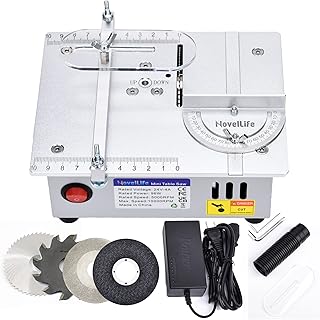
This compact saw punches above its weight with a well-built aluminum alloy table and four included blades covering wood, plastic, and soft metals. The seven-speed dial gives genuine control rather than just two or three rough presets, and it stays stable on a workbench without the walk-around vibration that plagues cheaper units. For crafters who want an all-in-one starter saw without upgrading within six months, this is the one to beat.
MXBAOHENG Mini Table Saw S3
The S3 focuses on one thing and does it exceptionally well: precise, adjustable-depth cuts in a portable package. The half-inch adjustable cut depth and seven-speed power supply make it a go-to for model builders working with thin hardwoods and layered materials. Build quality is noticeably tighter than most competitors in this price range, with minimal fence drift even after extended use. If precision matters more than versatility, the S3 earns its place.
200W Dual 795 Motor Hobby Table Saw
Topping the power charts at 12,000 RPM with dual 795 motors, this saw handles materials that make other minis choke — think hardwood dowels, thick acrylic sheets, and even thin aluminum stock. The 26mm adjustable height accommodates a wider range of workpiece thicknesses than most rivals, and the included accessory kit gets you cutting immediately. It runs louder than the competition, but the raw capability justifies the noise for anyone pushing beyond basic crafts.
MXBAOHENG 96W Precision Table Saw with Chuck
What sets this model apart is the included chuck and sanding disc, turning a simple table saw into a small workstation for cutting, shaping, and finishing without switching tools. The 96W motor handles wood, plastic, and PCB board cleanly, and the seven-speed adjustment pairs well with the half-inch cut depth for detailed miniature work. It’s the most complete package for hobbyists who want one machine that does three jobs competently.
Mini Multi-Functional Table Saw with Dual Motors
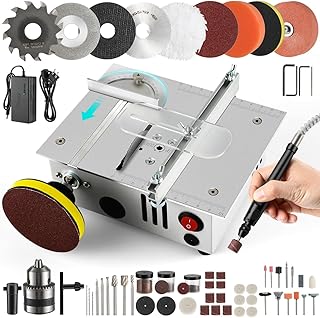
This multi-function unit brings cutting, grinding, engraving, and drilling together under one adjustable speed and angle system, powered by dual-motor control. It handles wood, PCB, acrylic, and plastic with surprising competence for a machine this size. The angle-adjustable table is particularly useful for bevel cuts and compound angles that fixed-table saws simply cannot achieve. For makers who jump between disciplines regularly, this is the most versatile option on the list.
Frequently Asked Questions
Can hobby table saws cut metal?
Most hobby table saws can handle soft metals like thin aluminum, brass, and copper sheet — typically up to 1mm thick — when fitted with an appropriate blade. They are not designed for steel, iron, or anything beyond light-gauge non-ferrous metals. Always use a lubricated HSS blade and reduce your speed to avoid overheating the motor.
What’s the difference between a hobby table saw and a regular table saw?
Hobby table saws are dramatically smaller, lighter, and designed for thin, light materials — balsa, basswood, thin plywood, acrylic, and PCB board. A full-size table saw is built for dimensional lumber and sheet goods. Using a hobby saw for framing lumber or construction materials will damage the motor and potentially cause injury.
Do I need to buy separate blades for different materials?
Yes, and most manufacturers include at least two blade types in the box. A fine-tooth blade gives clean cuts on acrylic and plastic without chipping, while a coarser blade handles wood more efficiently. Replacing blades is inexpensive and dramatically extends your saw’s useful life.
How loud are mini table saws?
Most hobby saws operate between 70 and 85 decibels — comparable to a vacuum cleaner or garbage disposal. Units with dual motors or higher wattage tend to be louder. Hearing protection isn’t strictly necessary for short sessions, but it’s a good habit during extended work periods, especially in enclosed spaces.
Final Thoughts
For most hobbyists, the RTOVZON 7-Speed hits the sweet spot of price, build quality, and versatility — it’s the saw I’d recommend first to anyone starting out. The MXBAOHENG S3 is the pick if precision cuts matter more to you than raw power. And for makers who need one machine that cuts, sands, and shapes without swapping tools, the MXBAOHENG 96W with chuck and sanding disc is the strongest all-around value on this list.