Key takeaways
- CFM at 90 PSI: This is the number that actually matters for sustained tool use. Anything below 3.5 CFM at 90 PSI will struggle with framing nailers or impact wrenches. Look for 4.0+ CFM if you plan on running pneumatic tools regularly rather than just inflating tires.
- Noise Level: A unit running at 85 dB or above will demand hearing protection and annoy the neighbors. Oil-free compressors under 80 dB exist in this category and are worth the small premium for garage or shared-space use.
- Oil-Free vs. Oil-Lubricated: Oil-free pumps are lower-maintenance and more portable since they don’t need to sit level. Oil-lubricated units run cooler and last longer under heavy duty cycles, but they’re heavier and require regular oil changes.
- Tank Orientation and Portability: Vertical tanks save floor space in tight garages; horizontal tanks offer a lower center of gravity and often sturdier wheel setups. Check the weight-to-wheel ratio—a 10 gallon compressor over 70 pounds without a handle is no fun to drag around.
- Duty Cycle and Motor Rating: A 100% duty cycle means the motor can run continuously without overheating, which matters if you’re spraying an entire piece of furniture. Peak HP numbers are marketing fluff—sustained (running) horsepower tells the real story.
What's inside
Shopping for a 10 gallon air compressor in 2026 means sorting through a wall of near-identical specs, misleading peak horsepower numbers, and models that range from whisper-quiet shop companions to ear-splitting budget options. Whether you need one for tire inflation, brad nailing, or weekend spray-painting projects, picking the wrong unit means wasted money and a tool that quits halfway through the job.
This guide cuts through the noise. We evaluated the leading 10 gallon compressors on airflow delivery, noise output, motor quality, and real-world durability so you can grab the right one without second-guessing yourself.
As an Amazon Associate we earn from qualifying purchases.



How to Choose a 10 Gallon Air Compressor (2026)
- CFM at 90 PSI: This is the number that actually matters for sustained tool use. Anything below 3.5 CFM at 90 PSI will struggle with framing nailers or impact wrenches. Look for 4.0+ CFM if you plan on running pneumatic tools regularly rather than just inflating tires.
- Noise Level: A unit running at 85 dB or above will demand hearing protection and annoy the neighbors. Oil-free compressors under 80 dB exist in this category and are worth the small premium for garage or shared-space use.
- Oil-Free vs. Oil-Lubricated: Oil-free pumps are lower-maintenance and more portable since they don’t need to sit level. Oil-lubricated units run cooler and last longer under heavy duty cycles, but they’re heavier and require regular oil changes.
- Tank Orientation and Portability: Vertical tanks save floor space in tight garages; horizontal tanks offer a lower center of gravity and often sturdier wheel setups. Check the weight-to-wheel ratio—a 10 gallon compressor over 70 pounds without a handle is no fun to drag around.
- Duty Cycle and Motor Rating: A 100% duty cycle means the motor can run continuously without overheating, which matters if you’re spraying an entire piece of furniture. Peak HP numbers are marketing fluff—sustained (running) horsepower tells the real story.
The Best 10 Gallon Air Compressor (2026)s Reviewed
VEVOR 10 Gallon Oil-Free Air Compressor
The VEVOR hits a sweet spot most competitors miss: 5.3 CFM at 90 PSI paired with a genuinely quiet 78 dB output. Its 2 HP motor handles spray painting, tire inflation, and light automotive work without breaking a sweat, and the steel tank construction feels built to last years rather than months. If you need serious airflow without turning your garage into a construction site, this is the one to beat.
Craftsman CMXECXA0331042 10 Gallon
Craftsman’s 10 gallon offering delivers a solid 4.0 CFM at 90 PSI with a peak 1.8 HP motor and a max 150 PSI that gives you extra reserve pressure for demanding tools. The oil-free pump and onboard wheel kit make it genuinely portable, and the 120V plug-and-play setup means no special wiring. It’s a dependable all-rounder backed by a brand name that still carries weight in home workshops.
Albott 10 Gallon Vertical Air Compressor
The Albott’s vertical design is a space-saver, and its copper-wound motor is a detail you rarely see at this price point—it runs cooler and more efficiently than aluminum-wound alternatives. At 1.8 HP with 115 PSI max output, it handles tire inflation, nail guns, and light-duty inflation tasks comfortably. It’s not the strongest performer for sustained painting, but for intermittent household use, it punches above its weight.
Stark USA 3.5HP 10 Gallon Horizontal Compressor
Where the Stark USA stands out is raw output: 8.37 CFM from a 3.5 HP motor is exceptional for a 10 gallon unit and puts it in serious compressor territory. The horizontal tank keeps the center of gravity low and the ultra-quiet operation is a genuine selling point for shared garages or late-night projects. This is the pick if you need maximum airflow without jumping to a 20+ gallon tank.
ETENWOLF VORTEX S6 Portable Tire Inflator
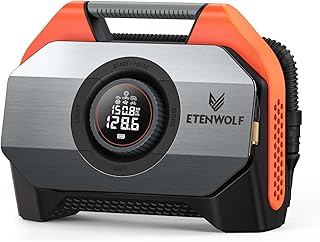
The ETENWOLF isn’t a traditional tank compressor, but it deserves a mention for buyers whose main need is tire inflation and light pneumatic work. Its 19,200 mAh battery delivers cordless freedom with a 100% duty cycle and dual-cylinder design that inflates car tires in minutes. The LED backlight and vivid orange housing make it a practical road-trip and emergency tool, even if it won’t replace a full shop compressor.
Frequently Asked Questions
Is a 10 gallon air compressor enough for home use?
For most household tasks—tire inflation, brad and finish nailing, airbrushing, and light spray painting—a 10 gallon tank provides enough air volume to work comfortably. It becomes limiting only when you need to run high-consumption tools like dual-action sanders or impact wrenches for extended periods.
How long does a 10 gallon compressor take to fill?
Most 10 gallon units fill from empty to full pressure in 2 to 4 minutes, depending on motor horsepower and CFM rating. Once topped off, the tank provides enough reserve for several minutes of continuous tool use before the motor kicks back on.
Can I run a paint sprayer with a 10 gallon compressor?
You can run HVLP (high volume, low pressure) sprayers with a 10 gallon compressor if it delivers at least 4.0 CFM at the sprayer’s required PSI. For continuous spray painting of large surfaces, a larger tank reduces motor cycling and gives a smoother finish, but small-to-medium projects are well within reach.
Do I need hearing protection with a 10 gallon compressor?
Units above 80 dB benefit from hearing protection during extended use, and anything above 85 dB absolutely requires it. Quieter models in the 70–80 dB range are tolerable for short bursts but still worth protecting against if you’re working in an enclosed space for an hour or more.
Final Thoughts
For most home garage setups, the VEVOR 10 Gallon offers the best balance of airflow, quiet operation, and build quality. The Craftsman CMXECXA0331042 is the safe, reliable choice if brand backing and portability matter most, while the Stark USA stands alone if you need maximum CFM from a compact 10 gallon footprint. Pick based on your primary task, and you won’t regret the decision.