Key takeaways
- No-See-Ums vs. Standard Mesh: Standard mosquito mesh (around 186 holes per square inch) blocks mosquitoes and gnats well enough for most people. If you camp near standing water or coastal marshes, upgrade to no-see-um-grade fabric (300+ holes per square inch) — the weight penalty is minimal but the difference in protection is night and day.
- Coverage Angle: Full 360-degree enclosure wraps completely around your hammock and seals underneath, which matters most when you’re sleeping on your side. Partial or open-bottom nets are lighter but leave your lower half exposed if the wind shifts.
- Zipper Placement and Dual-Sided Access: A net that only unzips from one side gets annoying fast. Dual-sided diagonal zippers let you roll in and out without wrestling the whole thing off the ridgeline — a detail that separates convenient nets from frustrating ones.
- Integrated vs. Separate Design: Some hammocks ship with the bug net sewn directly into the body, which eliminates the fiddle of threading a net over a ridgeline but locks you into one configuration. Separate nets give you flexibility to use the hammock without bug protection on clear, cool nights.
- Weight and Packability: Backpackers should target nets under 12 ounces total. Car campers have more room to prioritize durability and full coverage. Look at the packed size alongside the weight — a net that stuffs into its own pocket and compresses to the size of a fist will actually get used every trip.
What's inside
You’ve picked out the hammock, packed the straps, and maybe even invested in a quality tarp — but the moment you settle in at dusk, the mosquitoes find you anyway. A surprising number of campers discover this the hard way: without a dedicated bug net, even the best hammock setup turns into an open invitation for every biting insect within a quarter mile.
This guide breaks down the hammock bug nets actually worth buying in 2026. We looked at coverage design, fabric density, zipper quality, weight-to-protection ratio, and real-world ease of setup. Whether you’re a weekend car camper or a through-hiker counting every ounce, there’s a net here that fits both your hammock and your pack.
As an Amazon Associate we earn from qualifying purchases.


How to Choose a Hammock Bug Net (2026)
- No-See-Ums vs. Standard Mesh: Standard mosquito mesh (around 186 holes per square inch) blocks mosquitoes and gnats well enough for most people. If you camp near standing water or coastal marshes, upgrade to no-see-um-grade fabric (300+ holes per square inch) — the weight penalty is minimal but the difference in protection is night and day.
- Coverage Angle: Full 360-degree enclosure wraps completely around your hammock and seals underneath, which matters most when you’re sleeping on your side. Partial or open-bottom nets are lighter but leave your lower half exposed if the wind shifts.
- Zipper Placement and Dual-Sided Access: A net that only unzips from one side gets annoying fast. Dual-sided diagonal zippers let you roll in and out without wrestling the whole thing off the ridgeline — a detail that separates convenient nets from frustrating ones.
- Integrated vs. Separate Design: Some hammocks ship with the bug net sewn directly into the body, which eliminates the fiddle of threading a net over a ridgeline but locks you into one configuration. Separate nets give you flexibility to use the hammock without bug protection on clear, cool nights.
- Weight and Packability: Backpackers should target nets under 12 ounces total. Car campers have more room to prioritize durability and full coverage. Look at the packed size alongside the weight — a net that stuffs into its own pocket and compresses to the size of a fist will actually get used every trip.
The Best Hammock Bug Nets (2026) Reviewed
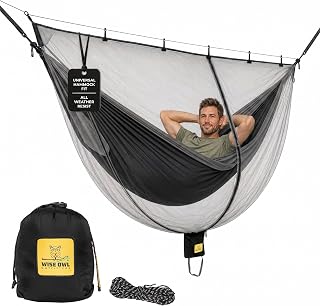
Wise Owl Outfitters Hammock Bug Net
Wise Owl’s standalone bug net has earned a reputation for straightforward reliability. The mesh is fine enough to stop no-see-ums, the ridgeline integration is clean, and it sets up in under three minutes even on the first try. If you already own a gathered-end hammock and just want dependable bug protection without overthinking it, this is the pick.
Hammock Bug Mosquito Net XL 11×4.6FT
This net earns its “XL” badge with generous 11-foot length and 4.6-foot diameter — it swallows wide double hammocks without leaving gaps at the ends. The dual-sided diagonal zipper is smooth and doesn’t snag on the polyester fabric, which is a bigger deal than it sounds at 5 a.m. when you’re half-asleep and reaching for the exit. Best option if you use a wide or double hammock and want full enclosure without custom sizing.
Onewind 11ft Ultralight Camping Hammock with Mosquito Net
Onewind pairs a 40D hexagon ripstop nylon hammock body with an integrated no-see-ums bug net and built-in ridgeline, all at a weight that won’t punish your pack. The 64-inch single-wide panel is comfortable for solo sleepers who want a streamlined all-in-one system. It’s the strongest choice for hikers who’d rather carry one item that does two jobs well.
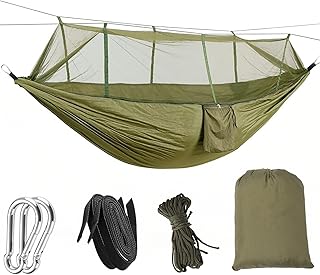
Camping Hammock with Mosquito Net and Rain Fly
Functioning as a full hammock tent with both bug net and rain fly included, this setup covers the two biggest outdoor comfort threats in a single package. The trade-off is bulk — it’s heavier and takes up more pack space than a minimalist net — but for car camping and festival weekends, the all-in-one convenience is hard to argue with.
Camping Hammock with Mosquito Net, 500 lbs Portable
With a 500-pound weight rating and included tree straps, this hammock-with-net combo targets larger campers and double-occupancy setups without compromise. The dual/single switchable design adds versatility, and the black-and-grey colorway resists showing trail grime. It’s the go-to when durability and weight capacity matter more than shaving ounces.
Frequently Asked Questions
Can I attach an aftermarket bug net to any hammock?
Most standalone bug nets work with gathered-end hammocks using a ridgeline clip system, but compatibility depends on your hammock’s length and suspension style. Measure your hammock from end loop to end loop and compare it to the net’s rated coverage length before purchasing — anything more than a foot shorter than the net will leave the ends bunched and gap-prone.
Do bug nets work against ticks?
Mesh netting physically blocks ticks that are crawling upward toward exposed skin, but it’s not a foolproof tick defense since ticks can also enter through the bottom if your net isn’t sealed underneath. Pair your net with a permethrin treatment on your clothing and a thorough tick check before bed for reliable protection.
How do I keep the net from sagging onto my face while sleeping?
A taut ridgeline above your hammock is the key — clip or tie the bug net’s suspension to that ridgeline so the mesh hangs above you in an arch rather than draping onto your skin. Most of the nets reviewed here include ridgeline attachment points specifically for this purpose.
Are integrated nets better than separate ones?
Integrated nets save weight and setup time, but you can’t remove them when conditions don’t warrant the extra layer. Separate nets give you a modular approach — use the hammock alone on bug-free winter nights, add the net in summer — which most experienced campers eventually prefer for versatility.
Final Thoughts
For sheer all-around value, the Wise Owl Outfitters net remains the easiest recommendation — it works well, sets up fast, and doesn’t demand a learning curve. Hikers watching their pack weight should look hard at the Onewind integrated system for its two-in-one efficiency, and anyone using a wider hammock or camping with a partner will appreciate the generous sizing of the XL mosquito net. Any of these three will keep the bugs out and the evenings enjoyable.