Key takeaways
- Tooth count: Fewer teeth (32–40) move material fast for ripping or framing; more teeth (60–80) deliver glass-smooth surfaces on crosscuts and sheet goods. Match the count to your most frequent cut type.
- Tooth grind: ATB (alternate top bevel) handles general woodworking well, while ATB+R or TCG grinds handle plywood and laminate with less chipping. Check the manufacturer’s grind label before buying.
- Carbide quality: Premium micro-grain carbide stays sharp through hundreds of linear feet of hardwood, whereas budget tips dull quickly and require frequent sharpening. Look for blades advertising hardened or precision-ground tips.
- Kerf width: Full-kerf blades (1/8″) are stiffer and resist deflection, making them ideal for table saws with ample motor power. Thin-kerf options reduce waste and strain on smaller motors but can wander on thick stock.
- Vibration and noise control: Laser-cut expansion slots, tensioning rings, and anti-vibration designs reduce blade wobble and sound level, producing cleaner cuts and a more comfortable shop experience.
What's inside
Shopping for a replacement 10-inch table saw blade sounds simple until you’re staring at dozens of nearly identical listings, each promising cleaner cuts, longer life, or quieter operation. The reality is that blade selection directly shapes the quality of every joint, shelf, and tabletop you build—and a mismatched tooth count or poor carbide quality can ruin expensive hardwood in a single pass.
This guide cuts through the noise. We evaluated the most popular 10-inch table saw blades available in 2026, focusing on cut quality, durability, value, and how well each blade matches real-world home woodworking tasks—from rough framing lumber to finish-grade plywood.
As an Amazon Associate we earn from qualifying purchases.



How to Choose a 10 In Table Saw Blade (2026)
- Tooth count: Fewer teeth (32–40) move material fast for ripping or framing; more teeth (60–80) deliver glass-smooth surfaces on crosscuts and sheet goods. Match the count to your most frequent cut type.
- Tooth grind: ATB (alternate top bevel) handles general woodworking well, while ATB+R or TCG grinds handle plywood and laminate with less chipping. Check the manufacturer’s grind label before buying.
- Carbide quality: Premium micro-grain carbide stays sharp through hundreds of linear feet of hardwood, whereas budget tips dull quickly and require frequent sharpening. Look for blades advertising hardened or precision-ground tips.
- Kerf width: Full-kerf blades (1/8″) are stiffer and resist deflection, making them ideal for table saws with ample motor power. Thin-kerf options reduce waste and strain on smaller motors but can wander on thick stock.
- Vibration and noise control: Laser-cut expansion slots, tensioning rings, and anti-vibration designs reduce blade wobble and sound level, producing cleaner cuts and a more comfortable shop experience.
The Best 10 In Table Saw Blade (2026)s Reviewed
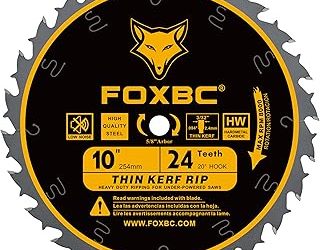
FOXBC 10-Inch 80-Tooth Ultra Finish
This blade punches well above its price point, leaving an ultra-fine surface that often needs zero sanding afterward. The 80-tooth ATB grind and laser-cut slots keep vibration low, making it a standout choice for cabinetmakers and hobbyists who prioritize finish quality on hardwood and plywood.
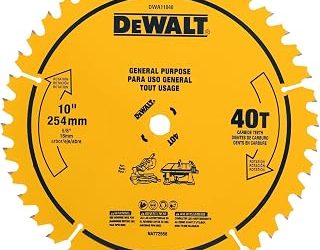
DEWALT DWA11040 10-Inch 40-Tooth
DEWALT’s 40-tooth blade is a workhorse for ripping and general crosscutting, and its ultra-sharp carbide tips stay effective long after cheaper alternatives dull. It’s the blade most home shop owners reach for when they need one reliable all-rounder that handles dimensional lumber and sheet goods without complaint.
WEN BL1080 10-Inch 80-Tooth Ultra-Fine Finish
WEN delivers impressive finish quality at a price that undercuts most competitors by a significant margin. The 80 carbide-tipped teeth produce burn-free crosscuts on hardwoods, and the blade’s balanced design minimizes chatter on both table saws and sliding miter saws.
WEN BL1060 10-Inch 60-Tooth Fine Finish
Sitting between rough-cutting and ultra-fine blades, the BL1060 strikes a practical middle ground—smooth enough for visible joinery yet durable enough for repeated production runs. If you frequently switch between ripping and crosscutting without swapping blades, this 60-tooth option gives you a strong compromise.
10 Inch 3-Pack (32T + 60T + 80T)
This triple-blade set covers the full spectrum: a 32-tooth workhorse for fast ripping, a 60-tooth general-purpose blade, and an 80-tooth finish blade for delicate cuts. For woodworkers setting up a shop from scratch, buying all three at once saves money and ensures the right blade is always on hand.
Frequently Asked Questions
Can I use these blades on a miter saw as well as a table saw?
Yes—every blade listed here uses a standard 5/8-inch arbor and is rated for both table saws and miter saws. Always confirm your saw’s arbor size and maximum RPM rating before mounting any blade.
How often should I replace my table saw blade?
A quality carbide blade typically stays sharp through 200 to 400 hours of cutting softwood, less for hardwoods and abrasive materials like MDF. Dull blades burn wood, require more feed force, and produce rough surfaces—replace or resharpen as soon as you notice either symptom.
What tooth count is best for a beginner?
A 40-tooth blade like the DEWALT DWA11040 gives beginners the widest usable range, handling both ripping and crosscutting acceptably. As your projects grow more specific, adding a 60- or 80-tooth blade expands your capabilities without replacing your everyday cutter.
Does blade thickness really make a difference?
Full-kerf blades resist deflection better, producing straighter cuts on thick stock. Thin-kerf blades waste less material and demand less motor power, which benefits smaller contractor saws. Choose based on your saw’s horsepower and the precision your projects require.
Final Thoughts
For most home woodworkers, the DEWALT DWA11040 40-Tooth handles daily tasks reliably, while the FOXBC 80-Tooth earns its spot whenever finish quality matters. Budget-conscious buyers who want multiple blade options should seriously consider the 3-Pack, which covers ripping, general cutting, and ultra-fine work at a fraction of buying each blade individually. Any of these choices will noticeably upgrade your cuts compared to the stock blade that shipped with your saw.