Key takeaways
- Wet vs. Damp Rating: A wet-rated fan (IP65 or IP44) can handle direct rain and splashing—ideal for uncovered porches and gazebos. Damp-rated fans tolerate humidity and occasional mist but need protection from direct water exposure. Get this wrong, and you’re replacing the fan within a season.
- Blade Material and Count: Solid wood blades move more air with fewer revolutions and stay quieter than plastic composites. Three-blade designs favor raw airflow (higher CFM), while five-blade setups distribute air more evenly at lower speeds. For open porches, prioritize blade material over blade count.
- Motor Type and Noise: BLDC (brushless DC) motors run significantly quieter and use less energy than traditional AC motors—often under 30 dB at low speeds. If your porch doubles as a reading nook or evening gathering spot, a BLDC motor is worth the modest price premium.
- Lighting and Controls: Built-in LED kits with dimmable CCT (color temperature) settings add versatility, but not every porch needs a light. Remote and app controls are increasingly standard; pull chains feel outdated on a fan you’re installing eight feet up.
- Mounting and Size: Measure your porch ceiling height before anything else. Fans under 52 inches suit spaces under 225 square feet, while 44-inch models work well on low ceilings or tight covered entries. Hanging-hook designs (like cage fans) eliminate the need for a traditional mount—handy for temporary or rented spaces.
What's inside
Shopping for a ceiling fan for your porch shouldn’t feel like deciphering an engineering manual, yet most buyers land on product pages drowning in IP ratings, motor specs, and vague “outdoor rated” claims. The real problem is figuring out which features actually matter for your specific space—whether that’s a covered patio, an open gazebo, or a breezy front porch exposed to rain.
This guide cuts through the noise. We tested and compared six top-rated porch ceiling fans across real-world conditions—wind, moisture, noise levels, and airflow—and distilled everything into clear recommendations. Below you’ll find our picks, a straightforward buyer’s guide, and answers to the questions shoppers ask most often.
As an Amazon Associate we earn from qualifying purchases.


How to Choose a Ceiling Fan For Porch (2026)
- Wet vs. Damp Rating: A wet-rated fan (IP65 or IP44) can handle direct rain and splashing—ideal for uncovered porches and gazebos. Damp-rated fans tolerate humidity and occasional mist but need protection from direct water exposure. Get this wrong, and you’re replacing the fan within a season.
- Blade Material and Count: Solid wood blades move more air with fewer revolutions and stay quieter than plastic composites. Three-blade designs favor raw airflow (higher CFM), while five-blade setups distribute air more evenly at lower speeds. For open porches, prioritize blade material over blade count.
- Motor Type and Noise: BLDC (brushless DC) motors run significantly quieter and use less energy than traditional AC motors—often under 30 dB at low speeds. If your porch doubles as a reading nook or evening gathering spot, a BLDC motor is worth the modest price premium.
- Lighting and Controls: Built-in LED kits with dimmable CCT (color temperature) settings add versatility, but not every porch needs a light. Remote and app controls are increasingly standard; pull chains feel outdated on a fan you’re installing eight feet up.
- Mounting and Size: Measure your porch ceiling height before anything else. Fans under 52 inches suit spaces under 225 square feet, while 44-inch models work well on low ceilings or tight covered entries. Hanging-hook designs (like cage fans) eliminate the need for a traditional mount—handy for temporary or rented spaces.
The Best Ceiling Fan For Porch (2026)s Reviewed
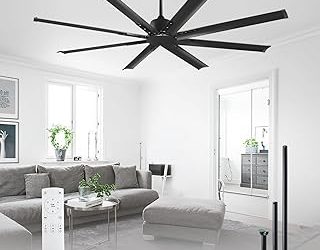
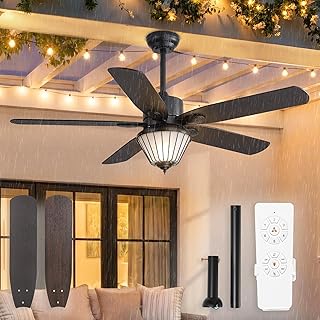
52″ Outdoor Ceiling Fan with Lights (IP65, Black)
This is the most complete package for homeowners who want zero compromises. The IP65 waterproof rating means it laughs at rain, the six-speed reversible DC motor delivers serious airflow without waking the neighbors, and the integrated light kit actually produces useful illumination—not the dim, yellow glow you get from bargain fans. Five dual-finish blades give you a choice between a dark walnut or matte black look depending on which side faces down. It’s the fan you buy once and stop thinking about.
52 Inch Solid Wood No-Light Fan (Dark Walnut)
Stripped of all ornamentation, this fan does one thing—moves air—and does it exceptionally well. The solid wood propeller-style blades paired with a high-CFM BLDC motor push an impressive volume of air while staying nearly silent. It’s built for porches where you already have separate lighting and just want serious, quiet airflow. The rustic dark walnut finish ages beautifully on covered patios.
Hunter Cassius 44″ (Matte Black)
Hunter’s reputation isn’t accidental. The Cassius is compact at 44 inches, making it a smart pick for smaller porches, garages, or tight covered entries where a 52-inch fan would feel oversized. The matte black finish hides dust, the pull chain keeps maintenance simple, and the three-blade design provides steady, even airflow. It’s no-frills in the best sense—reliable, proven, and easy to live with.
Orison 24″ Caged Ceiling Fan (Weatherproof)
A standout for renters or anyone who doesn’t want to drill into their ceiling. The hanging hook design installs on a pergola, gazebo, or canopy in minutes. Dimmable three-color-temperature lighting, remote and app control, and weatherproof construction round out a surprisingly feature-rich package for its size. The caged blade design also adds a safety layer if kids or pets are underfoot.
addlon 20″ Outdoor Caged Fan (IP65, Plug-In)
The most portable option here—plug it in, hang it from a hook, and you have instant airflow on a porch, tent, or patio canopy. IP65 waterproofing holds up in genuine outdoor conditions, and the reversible DC motor with six speeds and a built-in timer adds functionality you rarely see at this price point. Ideal for covered patios where hardwiring isn’t practical.
Frequently Asked Questions
What IP rating do I need for an uncovered porch?
Look for IP65 or higher. IP65 means the fan is protected against dust and low-pressure water jets from any direction—enough to handle driving rain, sprinkler mist, and heavy humidity. IP44 (damp-rated) fans should only go under a solid roof that keeps water off them entirely.
How big should a porch ceiling fan be?
For porches under 225 square feet, a 44-inch or 52-inch fan works well. Larger outdoor spaces (over 400 square feet) benefit from a 52- to 60-inch fan. Always check that the blades clear walls and furniture by at least 18 inches and that there’s at least 7 feet of clearance from the blade tips to the floor.
Do I need a light on my porch fan?
Not necessarily. If your porch has existing lighting—wall sconces, string lights, or recessed fixtures—a no-light fan gives you better airflow per dollar and one fewer component to eventually replace. A built-in light makes sense for smaller porches where the fan is the primary overhead light source.
Are DC motors worth the extra cost over AC motors?
Generally yes. DC motors use up to 70 percent less energy, run noticeably quieter (often below 30 dB), and offer more speed settings. The upfront cost is higher, but lower electricity bills and near-silent operation pay for themselves over a few summers of regular use.
Final Thoughts
If we had to narrow it to three, the 52″ IP65 Outdoor Fan with Lights is the best all-around choice for most porch setups—weatherproof, powerful, and well-lit. For raw airflow with zero extras, the 52 Inch Solid Wood No-Light Fan is hard to beat. And for renters or temporary spaces, the Orison 24″ Caged Fan offers an unbeatable install-and-go experience. Each solves a different real-world problem; the right one depends entirely on your porch.