Key takeaways
- Material Grade: Insist on 316 stainless steel. Lower grades like 304 look similar in photos but lack the corrosion resistance needed for saltwater or even hard-freshwater use. Marine-grade 316 costs a bit more upfront and pays for itself by the third season.
- Weight Capacity: Look for a rating of at least 400 pounds. Many of the best-selling models now handle 600–900 pounds, which matters when two adults climb in quick succession or a larger rider uses the ladder solo.
- Step Width and Tread: Wide, flat steps with textured or rubberized grip surfaces make a dramatic difference in comfort and safety. Narrow round tubing is harder on bare feet and much slipperier when wet.
- Folding and Telescoping Mechanism: A good ladder should collapse flush against the transom or platform without rattling. Test whether the locking pins engage positively — models that rely on friction alone tend to loosen over time.
- Handrail Design: Integrated handrails that extend above the top step give you something solid to grip during the critical first pull-up. Welded rail joints are stronger than bolted ones, which can work loose in rough water.
What's inside
If you’ve ever tried hoisting yourself out of the water onto a pontoon platform after a long swim, you know exactly how much a bad ladder can ruin an otherwise perfect day on the lake. Flimsy steps flex under weight, thin tubing burns your palms, and telescoping mechanisms that jam mid-extension are more common than most manufacturers would like to admit. For families with kids, older riders, or anyone who simply wants safe, dependable reboarding, choosing the right pontoon ladder is not a decision to make on a whim.
This guide breaks down the five strongest pontoon ladders you can buy right now, evaluating each on build material, weight capacity, step width, ease of folding, and real-world durability. We focused on models that use 316-grade stainless steel (the marine standard), since anything less will pit and corrode within a couple of seasons. Whether your pontoon has a rear entry setup or you need a versatile dock-to-swim platform ladder, the picks below cover the most common setups boat owners actually deal with.
As an Amazon Associate we earn from qualifying purchases.




How to Choose a Pontoon Ladder (2026)
- Material Grade: Insist on 316 stainless steel. Lower grades like 304 look similar in photos but lack the corrosion resistance needed for saltwater or even hard-freshwater use. Marine-grade 316 costs a bit more upfront and pays for itself by the third season.
- Weight Capacity: Look for a rating of at least 400 pounds. Many of the best-selling models now handle 600–900 pounds, which matters when two adults climb in quick succession or a larger rider uses the ladder solo.
- Step Width and Tread: Wide, flat steps with textured or rubberized grip surfaces make a dramatic difference in comfort and safety. Narrow round tubing is harder on bare feet and much slipperier when wet.
- Folding and Telescoping Mechanism: A good ladder should collapse flush against the transom or platform without rattling. Test whether the locking pins engage positively — models that rely on friction alone tend to loosen over time.
- Handrail Design: Integrated handrails that extend above the top step give you something solid to grip during the critical first pull-up. Welded rail joints are stronger than bolted ones, which can work loose in rough water.
The Best Pontoon Ladder (2026)s Reviewed
Heavy-Duty 4-Step Stainless Steel Ladder with Handrails
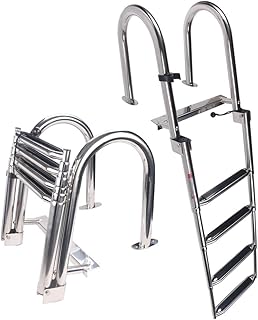
This ladder checks nearly every box for serious pontoon owners. The extra-wide steps feel secure underfoot, the handrails sit at a natural gripping height, and the 600-pound capacity gives you comfortable margin for larger riders. The telescoping action is smooth, and the 316 stainless construction shows no signs of surface wear even after extended freshwater use. It is our top overall recommendation for most pontoon setups.
Heavy Duty 316 SS 4-Step Folding Inboard Ladder
All-welded reinforcement sets this model apart from competitors that rely on hardware connections at stress points. The wide steps and strong handrails make it a confidence-inspiring choice for families with children, and the rear-entry inboard design fits the majority of modern pontoon transoms without modification. Build quality is genuinely impressive for the price bracket.
Stainless Steel In-Board 4-Step Welded Reinforce Folding Ladder
A no-frills workhorse that punches above its weight. The reinforced folding mechanism locks firmly in both the deployed and stowed positions, and the welded construction eliminates the bolt-loosening headaches that plague cheaper options. If you want something straightforward that simply works season after season, this model delivers without any unnecessary extras driving up the cost.
Telescopic 4-Step Pontoon Ladder (900 lbs Capacity)
The standout here is the 900-pound weight rating — the highest in this roundup. The telescoping design extends and retracts smoothly, making it a solid pick for boats with limited platform space. The marine-grade stainless steel holds up well, though the steps are slightly narrower than our top picks. Best suited for owners who prioritize raw capacity over step comfort.
Telescoping Folding Pontoon Swim Boarding Ladder
Originally designed with outboard configurations in mind, this ladder adapts surprisingly well to pontoon and yacht platforms. The folding mechanism is compact and travel-friendly, and the stainless steel construction resists salt spray effectively. It is a versatile option for boat owners who swap between different vessel types throughout the season.
Frequently Asked Questions
What type of stainless steel is best for a pontoon ladder?
316 stainless steel is the gold standard for marine ladders. It contains molybdenum, which dramatically improves resistance to chloride corrosion compared to 304 stainless. If you boat in brackish or saltwater, 316 is essentially non-negotiable.
Can I install a rear-entry pontoon ladder myself?
Most rear-entry models bolt directly onto the existing platform or transom using standard marine hardware. If you are comfortable with a drill, socket wrench, and basic waterproof sealant, a DIY installation typically takes under an hour. Just confirm bolt-hole spacing matches your platform before ordering.
How much weight capacity do I actually need?
Plan for at least double the weight of your heaviest expected rider. A 400-pound rating works for most adults, but if you regularly entertain guests or have larger family members, stepping up to a 600- or 900-pound-rated ladder removes any worry about stressing the frame.
Do telescoping ladders last as long as fixed-step models?
Quality telescoping ladders with positive-locking pins are nearly as durable as fixed designs. The key is choosing a model with stainless steel locking mechanisms rather than plastic or aluminum detents, which wear out faster. Rinse the telescoping sections with fresh water after each use to prevent mineral buildup in the channels.
Final Thoughts
For most pontoon owners, the Heavy-Duty 4-Step Stainless Steel Ladder with Handrails offers the best blend of safety, comfort, and long-term durability. The Heavy Duty 316 SS Folding Inboard Ladder is an excellent runner-up with superior weld quality, and the Telescopic 4-Step with its 900-pound capacity is worth serious consideration if weight rating is your top priority. Whatever you choose, sticking with 316 stainless steel and wide, textured steps will keep you climbing safely for years.