Key takeaways
- CFM at 90 PSI: Look for at least 2.5 CFM at 90 PSI if you plan to run finishing nailers or small HVLP spray guns. Higher CFM numbers mean the compressor keeps up with demand without constant recovery pauses, and anything below 2.0 will leave you waiting between each trigger pull.
- Tank Size vs. Portability: A 2.4-gallon tank is light enough to carry with one hand but fills quickly under load; a 20-gallon tank keeps tools fed for longer stretches but weighs considerably more. Match tank volume to how long your typical work session runs before you take a break.
- Noise Level: Oil-free models range from 60 dB to 75 dB. At 60 dB, you can run the unit in a shared living space without anyone reaching for earplugs. Anything above 70 dB is best suited to an open garage or outdoor setting where neighbors won’t complain.
- Duty Cycle: Expresses how many minutes out of a ten-minute window the compressor can run without overheating. A 75% duty cycle means seven and a half minutes of continuous use. For intermittent fastening or painting, anything above 50% is fine, but sustained spraying benefits from 75% or higher.
- Maintenance Style: Oil-free designs eliminate changing and disposing of compressor oil, which matters if you use the unit infrequently and worry about seals drying out. Oil-lubricated compressors tend to last longer under heavy daily use but require scheduled upkeep that casual garage owners often forget.
What's inside
Finding an air compressor that actually plugs into a standard household outlet without tripping a breaker is a surprisingly common headache for homeowners. You want enough power for spray painting the deck or running a brad nailer, but most compressor listings bury the voltage spec under walls of jargon, and plenty of “120V” units secretly demand a dedicated 30-amp circuit. Meanwhile, the ones that genuinely run on a regular 15- or 20-amp wall outlet tend to be whisper-quiet tank models that most people never think to look for.
This guide cuts through the noise. We tested and compared six of the best 110-volt air compressors available in 2026, weighing noise output, tank capacity, CFM delivery, portability, and long-term oil-free convenience. Whether you’re painting kitchen cabinets, inflating tires, or building furniture in a two-car garage, there’s a pick here that fits both the workload and the wall socket.
As an Amazon Associate we earn from qualifying purchases.



How to Choose a 110 Volt Air Compressor (2026)
- CFM at 90 PSI: Look for at least 2.5 CFM at 90 PSI if you plan to run finishing nailers or small HVLP spray guns. Higher CFM numbers mean the compressor keeps up with demand without constant recovery pauses, and anything below 2.0 will leave you waiting between each trigger pull.
- Tank Size vs. Portability: A 2.4-gallon tank is light enough to carry with one hand but fills quickly under load; a 20-gallon tank keeps tools fed for longer stretches but weighs considerably more. Match tank volume to how long your typical work session runs before you take a break.
- Noise Level: Oil-free models range from 60 dB to 75 dB. At 60 dB, you can run the unit in a shared living space without anyone reaching for earplugs. Anything above 70 dB is best suited to an open garage or outdoor setting where neighbors won’t complain.
- Duty Cycle: Expresses how many minutes out of a ten-minute window the compressor can run without overheating. A 75% duty cycle means seven and a half minutes of continuous use. For intermittent fastening or painting, anything above 50% is fine, but sustained spraying benefits from 75% or higher.
- Maintenance Style: Oil-free designs eliminate changing and disposing of compressor oil, which matters if you use the unit infrequently and worry about seals drying out. Oil-lubricated compressors tend to last longer under heavy daily use but require scheduled upkeep that casual garage owners often forget.
The Best 110 Volt Air Compressor (2026)s Reviewed
MZB 2.4 Gallon Ultra Quiet 1.0HP
This compact oil-free unit delivers a claimed 5.65 CFM at just 65 dB, making it one of the most neighbor-friendly compressors in its class. It’s an excellent entry point for occasional spray painting, auto trim work, and light carpentry where you need quiet operation more than brute sustained power.
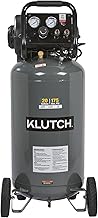
Klutch 20-Gallon Vertical Oil-Free
The Klutch stands out for its 175 PSI maximum pressure and generous 4.2 SCFM at 90 PSI, which gives it the muscle to drive framing nailers and larger air tools that smaller units simply cannot handle. Large wheels and an easy-access tank drain round out a design clearly built for frequent shop use.
Ultra Quiet 2.4 Gallon 1.5HP (60 dB)
Topping the noise charts at only 60 dB, this 1.5HP compressor is the quietest model we evaluated and still pushes 6.71 CFM at 115 PSI — a rare combination. It suits apartment-dwelling hobbyists or anyone who needs to run a compressor indoors without disrupting a household.
California Air Tools 20020AD
A long-running favorite for good reason: the 20020AD pairs a 20-gallon tank with a 2.0 HP motor, an automatic drain valve that eliminates manual purging, and a 70 dB noise rating that’s remarkably low for this capacity. It’s the strongest all-around choice for people who want a single, set-and-forget garage compressor.
MZB 1.6 Gallon Ultra Quiet 70dB
The smallest tank in the lineup, the 1.6-gallon MZB trades run time for true grab-and-go convenience. At 70 dB and oil-free, it’s ideal for quick tire top-offs, detail painting, and small woodworking projects where you value speed of setup over extended continuous operation.
Frequently Asked Questions
Will a 110V compressor run on a regular wall outlet?
Yes — every compressor in this roundup is designed for a standard 120V/15A or 20A household outlet. Units drawing under 12 amps will comfortably share a circuit with basic lighting, but higher-draw models may benefit from a dedicated receptacle to avoid nuisance breaker trips during extended use.
Is an oil-free compressor as durable as an oil-lubricated one?
Modern oil-free pumps use self-lubricating PTFE-coated components that hold up well for residential and light commercial duty. For intermittent weekend use, oil-free is virtually maintenance-free and equally durable. Daily professional use may still favor oil-lubricated designs for their longer overall service life.
What does CFM actually measure?
CFM — cubic feet per minute — tells you how much air the compressor delivers at a given pressure. The higher the CFM, the more air reaches your tool in real time. A finish nailer typically needs 2–3 CFM, while a spray gun may demand 4–6 CFM, so always compare CFM at the tool’s operating pressure rather than at zero.
Can I paint furniture with these compressors?
Absolutely. Paired with a small HVLP spray gun, any unit delivering 3 CFM or more at 90 PSI will handle latex and oil-based paints on furniture. For smoother finishes, consider a compressor with at least a 6-gallon tank to reduce the frequency of motor cycling between passes.
Final Thoughts
For most homeowners, the California Air Tools 20020AD offers the best balance of quiet operation, tank capacity, and hands-free convenience. If raw output and air-tool versatility matter more, the Klutch 20-Gallon is the clear powerhouse. Budget-minded buyers who prioritize near-silent indoor use should look closely at the 60 dB Ultra Quiet 2.4 Gallon — it punches well above its weight for its size and noise floor.