Key takeaways
- CFM at 90 PSI: A HVLP spray gun typically needs 8–15 CFM at the gun inlet. Look for a compressor that delivers at least 5 CFM at 90 PSI sustained—higher is better if you plan full resprays rather than spot touch-ups.
- Tank Capacity: Larger tanks (15+ gallons) store more compressed air, giving you steadier pressure and fewer motor cycles during long spray sessions. For a single car, 13–29 gallons is the practical sweet spot.
- Noise Level: Garage walls amplify sound fast. Anything under 70 dB makes a real difference during extended painting, especially in residential neighborhoods where a loud compressor can sour the relationship with your neighbors quickly.
- Oil-Free vs. Oil-Lubricated: Oil-free units are lower-maintenance and avoid the risk of oil vapor contaminating your paint finish—something that matters more in an open garage environment than most people realize.
- Portability and Footprint: Think about where the compressor lives between projects. Vertical tanks save floor space, large wheels make repositioning easy, and lighter units suit garages where you need to shuffle things around constantly.
What's inside
Buying an air compressor for at-home car painting is one of those projects where the wrong choice wastes your money and your entire weekend. Most people underestimate how much sustained airflow a spray gun actually demands, then discover halfway through a door panel that their compact unit can’t keep up—leaving uneven coats and a half-finished job to deal with.
This guide cuts through the noise. I’ve narrowed the field to six compressors worth considering in 2026 and reviewed the top five for practical home-use car painting, focusing on airflow, noise, tank capacity, and whether they genuinely hold up when you’re spraying for more than a few minutes straight.
As an Amazon Associate we earn from qualifying purchases.



How to Choose an Air Compressor For Painting Cars At Home (2026)
- CFM at 90 PSI: A HVLP spray gun typically needs 8–15 CFM at the gun inlet. Look for a compressor that delivers at least 5 CFM at 90 PSI sustained—higher is better if you plan full resprays rather than spot touch-ups.
- Tank Capacity: Larger tanks (15+ gallons) store more compressed air, giving you steadier pressure and fewer motor cycles during long spray sessions. For a single car, 13–29 gallons is the practical sweet spot.
- Noise Level: Garage walls amplify sound fast. Anything under 70 dB makes a real difference during extended painting, especially in residential neighborhoods where a loud compressor can sour the relationship with your neighbors quickly.
- Oil-Free vs. Oil-Lubricated: Oil-free units are lower-maintenance and avoid the risk of oil vapor contaminating your paint finish—something that matters more in an open garage environment than most people realize.
- Portability and Footprint: Think about where the compressor lives between projects. Vertical tanks save floor space, large wheels make repositioning easy, and lighter units suit garages where you need to shuffle things around constantly.
The Best Air Compressor For Painting Cars At Home (2026) Reviewed
Klutch 29-Gallon
This is the workhorse of the group. With 5.1 CFM at 90 PSI and a 175 PSI max, it handles sustained HVLP spraying without breaking a sweat—exactly what you want when you’re moving panel to panel and can’t afford pressure drops. The vertical oil-free design keeps the footprint manageable, and the quick recovery time means less waiting between bursts. For anyone serious about full-car repaints at home, this is the compressor that actually matches the job.
VEVOR 13-Gallon
A solid middle-ground option that punches above its price point. At 4.6 SCFM and 125 PSI max with a noise level around 66 dB, it’s surprisingly pleasant to work with for extended periods. The thickened steel tank and wheeled base feel durable, and the quiet operation means you can spray on a Saturday morning without drawing complaints. Best suited for touch-ups, two-stage jobs, or anyone who doesn’t need marathon spray sessions every weekend.
California Air Tools CAT-4610AC
The twin aluminum tank design is genuinely smart—lightweight and corrosion-resistant, which matters when humidity fluctuates in a non-climate-controlled garage. At 4.6 CFM, it keeps pace on smaller panels, and the “ultra quiet” branding is no exaggeration compared to most competitors. It won’t win any awards for speed on a full respray, but for targeted bodywork and spot painting, the portability and near-whisper operation make it easy to recommend.
15-Gallon Vertical Tank (66 dB, 2HP)
This one hits a useful balance between capacity and price. The twin-cylinder design pushes 4.5 CFM at 90 PSI with a 125 PSI ceiling, which handles standard HVLP guns reasonably well. At 66 dB it stays unobtrusive, and the vertical tank keeps it out of your way on the garage floor. It’s not glamorous, but it does the job without drama—and sometimes that’s exactly what you need.
MZB 2.4-Gallon
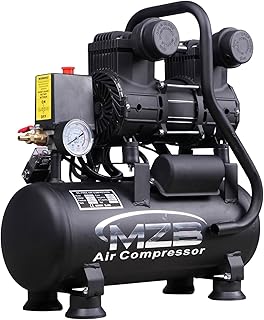
Don’t let the small tank fool you entirely—the 5.65 CFM output is surprisingly strong for a unit this compact, and at 70 dB it’s quieter than many full-size models. This is strictly a spot-repair and detail-painting companion, not a full-car sprayer, but for fender touch-ups, bumper repaints, and small bodywork projects it punches well above its weight. The dual steel tanks and oil-free design keep maintenance essentially zero.
Frequently Asked Questions
Can I paint a whole car with a small compressor?
You can attempt spot repairs and small panels, but a full-car respray demands sustained CFM that small-gallon units simply can’t provide without constant recovery pauses. Those pauses create pressure inconsistencies that show up as orange peel or uneven texture in your finish. For complete repaints, aim for at least 13 gallons and 4+ CFM at 90 PSI minimum.
How many CFM does a spray gun need for car painting?
Most HVLP automotive spray guns require 8–15 CFM at the inlet, though some gravity-fed models work with as little as 4–6 CFM if you spray in shorter passes. Always check your specific gun’s specs, and remember that CFM ratings on compressors are often measured at lower pressures than you’ll actually use—so give yourself a comfortable margin.
Do I need an oil-free compressor for painting cars?
Oil-free is strongly preferred for automotive painting. Oil-lubricated compressors can pass tiny oil vapor through the air line, which contaminates your paint and causes adhesion problems or fisheyes in the finish. Even with filtration, the risk isn’t worth it when oil-free models now deliver comparable performance for home use.
Is a 66 dB compressor quiet enough for a residential garage?
At 66 dB, you’re roughly at the volume of a normal conversation—which is genuinely manageable in an attached garage without driving your household crazy. Anything over 75 dB starts to feel intrusive during a multi-hour paint session, so prioritizing units in the 60–68 dB range makes a noticeable quality-of-life difference you’ll appreciate immediately.
Final Thoughts
For dedicated at-home car painting where you want zero compromise, the Klutch 29-Gallon is the clear standout—it has the airflow, tank size, and recovery speed to handle full resprays without the frustrating pauses that ruin a finish. If you’re working on smaller projects and want a quieter, more affordable setup, the VEVOR 13-Gallon and California Air Tools CAT-4610AC both deliver reliable results without the noise or footprint of a full-size unit.