Key takeaways
- Tooth Count: Fewer teeth (24–40) rip-cut faster and clear sawdust efficiently. More teeth (60–80) produce smoother finish cuts but generate more heat and slow your feed rate. A two-blade approach — a low-count ripper and a high-count finisher — is the sweet spot for most home shops.
- Kerf Width: Full-kerf blades (around 1/8 inch) are stiffer and resist deflection, which matters when you’re cutting thick stock on a contractor saw. Thin-kerf blades waste less material and strain smaller motors less, but they can wander in dense hardwoods if your fence isn’t dialed in.
- Carbide Quality and Tip Geometry: Look for micro-grain carbide tips that stay sharp through hundreds of cuts. Grind angle affects whether the blade trades cleanly or chips out on end grain. Budget blades often use softer carbide that dulls after a single project season.
- Arbor Size and Compatibility: Most 10-inch table saws in North America use a 5/8-inch arbor. Always verify before buying — especially with imported blades that may ship with European-standard bore sizes. A mismatch means a wasted purchase and a return trip.
- Anti-Kickback Design: Blades with rakers or anti-kickback shoulder geometry reduce the chance of workpiece binding and flying back at you. If you’re doing a lot of rip cuts in construction lumber, this is a genuine safety feature, not just a selling point.
What's inside
Few things ruin a woodworking afternoon faster than a dull, cheap blade tearing through plywood or leaving burn marks on hardwood. Whether you’re cross-cutting oak for a farmhouse table or ripping plywood for built-in shelving, a 10-inch table saw blade is one of those purchases where the wrong choice costs you real time and material. The challenge is that the market is flooded with options that all claim to deliver “ultra-fine finishes” and “professional results” — but the tooth count, kerf, and arbor specs tell a very different story once the blade is spinning at 5,000 RPM.
This guide cuts through the noise. We evaluated six popular 10-inch table saw blades across tear-out resistance, finish quality on both softwood and hardwood, durability of carbide tips, and pure value for money. Below you’ll find our curated picks along with a practical buyer’s guide so you can match the right blade to your actual projects, not just the marketing copy on the box.
As an Amazon Associate we earn from qualifying purchases.


How to Choose a 10 Inch Table Saw Blade (2026)
- Tooth Count: Fewer teeth (24–40) rip-cut faster and clear sawdust efficiently. More teeth (60–80) produce smoother finish cuts but generate more heat and slow your feed rate. A two-blade approach — a low-count ripper and a high-count finisher — is the sweet spot for most home shops.
- Kerf Width: Full-kerf blades (around 1/8 inch) are stiffer and resist deflection, which matters when you’re cutting thick stock on a contractor saw. Thin-kerf blades waste less material and strain smaller motors less, but they can wander in dense hardwoods if your fence isn’t dialed in.
- Carbide Quality and Tip Geometry: Look for micro-grain carbide tips that stay sharp through hundreds of cuts. Grind angle affects whether the blade trades cleanly or chips out on end grain. Budget blades often use softer carbide that dulls after a single project season.
- Arbor Size and Compatibility: Most 10-inch table saws in North America use a 5/8-inch arbor. Always verify before buying — especially with imported blades that may ship with European-standard bore sizes. A mismatch means a wasted purchase and a return trip.
- Anti-Kickback Design: Blades with rakers or anti-kickback shoulder geometry reduce the chance of workpiece binding and flying back at you. If you’re doing a lot of rip cuts in construction lumber, this is a genuine safety feature, not just a selling point.
The Best 10 Inch Table Saw Blades (2026) Reviewed
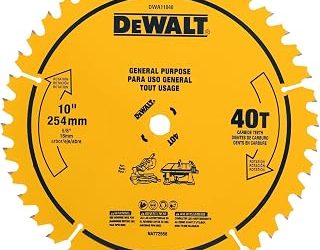
DEWALT DWA11040 10-Inch 40-Tooth
DEWALT’s 40-tooth blade hits the cross-cut-and-rip sweet spot for general workshop duty. The Ultra Sharp carbide tips hold their edge well through softwood and plywood, and the thin kerf keeps your saw’s motor from bogging down. It’s not a finish-wood hero, but for a workhorse blade you won’t baby, it punches well above its price.
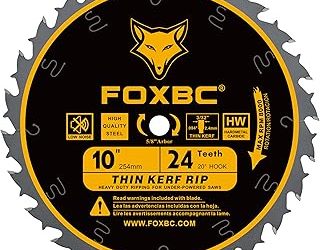
FOXBC 10-Inch 80-Tooth Ultra Finish
The FOXBC 80-tooth is a value play that genuinely surprises. On maple and birch cross-cuts it leaves a surface that barely needs sanding, and the 5/8-inch arbor drops right onto standard table saws. It runs slightly noisier than premium competitors, but the cut quality-to-dollar ratio is hard to argue with for shop furniture and cabinet parts.
WEN BL1080 10-Inch 80-Tooth Ultra-Fine Finish
WEN’s top-tier 80-tooth blade is built for miter saw and table saw finish work where appearance matters. The carbide-tipped teeth produce consistently clean edges on hardwoods without the burn marks that plague cheaper high-count blades. If your projects lean toward furniture and trim, this is the blade that earns a permanent spot in your rotation.
WEN BL1060 10-Inch 60-Tooth Fine Finish
Sitting between the workhorse 40-tooth and the precision 80-tooth, the BL1060 handles cross-cuts and moderate rip cuts with equal competence. It’s the blade you mount when you know your project will involve both operations and you don’t want to swap mid-job. The finish quality is noticeably better than a 40-tooth but doesn’t slow you down the way an 80 does on longer cuts.
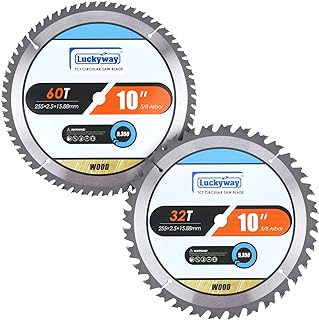
Luckyway 10-Inch 60 & 32-Tooth Two-Pack
This two-blade combo covers both ripping (32-tooth) and finishing (60-tooth) for a price that makes it a smart entry point for new woodworkers. Neither blade matches the top-tier individual performers in carbide longevity, but the concept is sound and the 60-tooth finisher holds its own against pricier single-blade options. A practical starter kit if you’re outfitting a first shop.
Frequently Asked Questions
What tooth count is best for a general-purpose 10-inch table saw blade?
A 40-tooth blade handles the widest range of tasks — ripping plywood, cross-cutting dimensional lumber, and making rough furniture cuts. If you need cleaner edges on hardwood, stepping up to a 60-tooth gives a visible improvement without the patience tax of an 80-tooth blade.
How often should I replace or sharpen my table saw blade?
With quality carbide, expect 200 to 400 cuts before noticeable dulling in hardwood, longer in softwood and plywood. Signs it’s time: burn marks, increased effort to push stock through, and visible tear-out on both edges of a cut. Professional sharpening extends blade life significantly, but at some point replacement is more economical.
Can I use miter saw blades on my table saw?
Technically yes if the arbor size and bore diameter match, and many manufacturers design blades for both tools. However, miter saw blades are sometimes optimized for shorter cross-cuts and may not handle the sustained heat of ripping long boards on a table saw. Check the manufacturer’s intended use ratings before mixing applications.
Do thin-kerf blades really save that much material?
A thin-kerf blade removes roughly 1/32 inch less kerf per pass compared to a full-kerf blade. Over a sheet of plywood with multiple rip cuts, that difference adds up to measurably more usable material. On thick hardwood, the savings per cut are modest, but the reduced motor load on smaller saws is the real practical benefit.
Final Thoughts
For most home woodworkers, the DEWALT DWA11040 handles everyday tasks with dependable results, while the WEN BL1080 steps up when finish quality is the priority. If budget is the driving factor, the Luckyway two-pack gives you a ripping and finishing blade for the price others charge for one. Match the blade to what you actually build most often, and your work — and your sawdust pile — will thank you.