Key takeaways
- Tooth count: Fewer teeth (32–40T) clear material fast for ripping and rough framing. More teeth (60–80T) give smoother surfaces for finish work, cabinetry, and crosscuts. Many shops keep at least two blades on hand.
- Kerf width: Full-kerf blades (about 1/8 inch) resist deflection and stay straighter under load, while thin-kerf blades waste less wood and demand less motor power. Choose based on whether your saw has the horsepower and whether stock cost matters to you.
- Carbide quality: Larger, more durable carbide tips hold an edge longer and can be sharpened multiple times. Look for industrial-grade or micro-grain carbide if you cut dense hardwoods regularly.
- Arbor compatibility: Nearly every 10-inch table saw in North America uses a 5/8-inch arbor, but double-check your manual before ordering — a wrong arbor hole means an unusable blade.
- Intended cut type: A single general-purpose blade can handle a lot, but dedicated ripping or finishing blades consistently outperform all-rounders when the job demands a clean edge or fast throughput.
What's inside
Finding the right 10-inch blade for a table saw sounds simple until you realize how many options crowd the market — and how drastically the wrong pick can wreck a cut. A blade with too few teeth leaves tear-out on crosscuts, while one with too many can burn through hardwoods during a rip. Between tooth count, arbor size, kerf width, and carbide quality, most buyers either overspend on specs they don’t need or grab the cheapest option and regret it on the first project.
This guide breaks down six of the most popular 10-inch table saw blades you can buy right now, compares their strengths honestly, and helps you match the right blade to the work you actually do — whether that’s framing lumber, finishing cabinet panels, or tackling a mix of both. After the roundup, you’ll find a quick buying guide and answers to the questions most woodworkers ask before pulling the trigger.
As an Amazon Associate we earn from qualifying purchases.


How to Choose a 10 Inch Blade For Table Saw (2026)
- Tooth count: Fewer teeth (32–40T) clear material fast for ripping and rough framing. More teeth (60–80T) give smoother surfaces for finish work, cabinetry, and crosscuts. Many shops keep at least two blades on hand.
- Kerf width: Full-kerf blades (about 1/8 inch) resist deflection and stay straighter under load, while thin-kerf blades waste less wood and demand less motor power. Choose based on whether your saw has the horsepower and whether stock cost matters to you.
- Carbide quality: Larger, more durable carbide tips hold an edge longer and can be sharpened multiple times. Look for industrial-grade or micro-grain carbide if you cut dense hardwoods regularly.
- Arbor compatibility: Nearly every 10-inch table saw in North America uses a 5/8-inch arbor, but double-check your manual before ordering — a wrong arbor hole means an unusable blade.
- Intended cut type: A single general-purpose blade can handle a lot, but dedicated ripping or finishing blades consistently outperform all-rounders when the job demands a clean edge or fast throughput.
The Best 10 Inch Blade For Table Saw (2026)s Reviewed
DEWALT DWA11040 40-Tooth Fine Finish
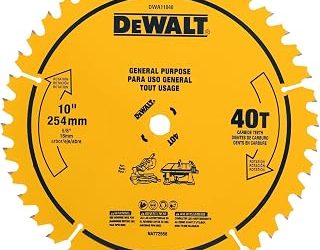
DEWALT’s 40-tooth blade hits the sweet spot between speed and cut quality, making it a reliable daily driver for woodworkers who don’t want to swap blades between rip cuts and crosscuts. The Ultra Sharp carbide tips stay keen well past their price point, and the fine-finish grind leaves a surface that needs minimal sanding — a genuine time saver on furniture projects.
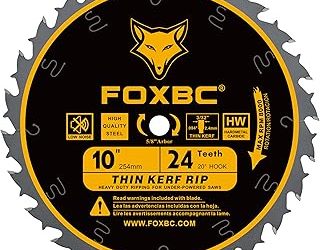
FOXBC 80-Tooth Ultra Finish
For the price, FOXBC’s 80-tooth blade delivers a level of finish that rivals blades costing twice as much. It excels on plywood, melamine, and hardwood crosscuts where chip-out would otherwise mean extra cleanup. If your work leans toward cabinetry or built-ins and you want a premium cut without the premium bill, this blade punches above its weight.
WEN BL1080 80-Tooth Ultra-Fine Finish
WEN’s 80-tooth professional blade is built for miter and table saw users who prioritize glass-smooth surfaces on every cut. The carbide tips are adequately durable for softwoods and most hardwoods, though very abrasive engineered materials may dull them faster than higher-end alternatives. Still, at its price, replacing the blade periodically is far cheaper than sanding out rough cuts.
WEN BL1060 60-Tooth Fine Finish
The 60-tooth WEN splits the difference between aggressive cutting and a clean finish, making it a smart choice for woodworkers who want one blade that handles both rip and crosscut tasks without dramatic performance gaps. It produces noticeably smoother faces than a 40-tooth blade while still clearing stock reasonably quickly — ideal for weekend builders who value efficiency and decent surface quality alike.
10-Inch 3-Pack (32T, 60T, 80T)
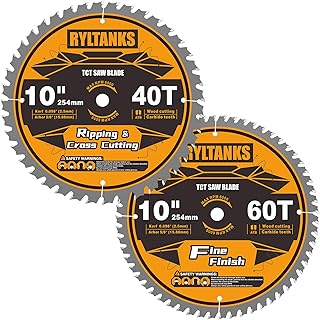
This multi-pack covers the full spectrum from rough framing to ultra-fine finishing, giving new shop owners three purpose-built blades at a fraction of the cost of buying them separately. The 32-tooth blade chews through dimensional lumber without bogging down the motor, the 60-tooth handles general furniture work, and the 80-tooth delivers show-ready finishes. It’s arguably the smartest starter investment on this list.
Frequently Asked Questions
What tooth count is best for a general-purpose table saw blade?
A 40-tooth blade works well for most general-purpose cutting — fast enough for ripping, clean enough for casual crosscuts. If you frequently need finished surfaces on plywood or hardwood, stepping up to a 60-tooth blade gives you noticeably better results with only a modest drop in speed.
Can I use a miter saw blade on a table saw?
Yes, provided the arbor size and diameter match — and most 10-inch blades use the same 5/8-inch arbor standard across both saw types. The real difference lies in the blade’s grind angle and tooth geometry, so choose a blade rated for the type of cut you’ll be making most often, regardless of which saw it’s mounted on.
How often should I replace or sharpen my table saw blade?
A quality carbide blade lasts anywhere from 100 to 300 hours of cutting depending on material hardness and maintenance habits. You’ll know it’s time when you notice increased burning, rougher surfaces, or the blade requiring more feed pressure than it used to. Cleaning pitch buildup regularly with a blade cleaner extends usable life significantly.
Is a thin-kerf or full-kerf blade better for home use?
Thin-kerf blades are gentler on smaller motors and waste less material, making them a strong fit for most home shop saws that top out at 15 amps. Full-kerf blades resist vibration better and stay truer during heavy cuts, but they demand more power and generate more sawdust — a trade-off that mostly matters in professional or industrial settings.
Final Thoughts
For most home woodworkers, the DEWALT DWA11040 offers the best blend of versatility and cut quality at a fair price. If smooth finishes on plywood and hardwood are your priority, the FOXBC 80-tooth delivers exceptional value. And for anyone setting up a new shop on a budget, the 10-inch 3-Pack covers every common cutting scenario without forcing you to choose just one specialty. Match the blade to your dominant task, keep it clean, and the difference in your work will be immediate.