Key takeaways
- Full six-sided enclosure: A proper encasement wraps the top, bottom, and all four sides of your box spring. Anything less leaves an entry point for pests. Look for the word “six-sided” in the product name — it’s a genuine differentiator.
- Zipper lock quality: This is where budget models fail first. A fused or micro-zipper track with a locking clamp keeps bugs sealed inside and dust out. Test this before you strip the packaging.
- Material thickness and weave: Thicker polyester or terry-top fabrics resist punctures better than thin, papery covers. A minimum of 100 GSM (grams per square meter) gives you a meaningful barrier without trapping excessive heat.
- Waterproof vs. water-resistant: Truly waterproof encasements use a membrane laminate that blocks liquid entirely. “Water-resistant” merely slows absorption. For allergy or spill protection, go waterproof — no half-measures.
- Fit and depth tolerance: Most queen box springs are 9 inches deep, but older or pillow-top units can run deeper. Choose an encasement rated at least 10–12 inches, or you’ll fight the zipper every time you make the bed.
What's inside
Buying a box spring encasement sounds simple until you start reading product descriptions and realize every option claims to be “100% waterproof,” “bed bug proof,” and “hypoallergenic” — with no consensus on what actually matters. The stakes are real, though: a poorly sealed or thin encasement defeats the entire purpose, and you end up replacing it after one missed seam or leaking zipper.
This guide breaks down what genuinely separates a reliable box spring encasement from a gimmicky one. I’ve evaluated construction quality, zipper integrity, fabric breathability, and real-world durability across six popular options so you can pick the right encasement and move on with your life.
As an Amazon Associate we earn from qualifying purchases.




How to Choose a Bed Bug Box Spring Encasement (2026)
- Full six-sided enclosure: A proper encasement wraps the top, bottom, and all four sides of your box spring. Anything less leaves an entry point for pests. Look for the word “six-sided” in the product name — it’s a genuine differentiator.
- Zipper lock quality: This is where budget models fail first. A fused or micro-zipper track with a locking clamp keeps bugs sealed inside and dust out. Test this before you strip the packaging.
- Material thickness and weave: Thicker polyester or terry-top fabrics resist punctures better than thin, papery covers. A minimum of 100 GSM (grams per square meter) gives you a meaningful barrier without trapping excessive heat.
- Waterproof vs. water-resistant: Truly waterproof encasements use a membrane laminate that blocks liquid entirely. “Water-resistant” merely slows absorption. For allergy or spill protection, go waterproof — no half-measures.
- Fit and depth tolerance: Most queen box springs are 9 inches deep, but older or pillow-top units can run deeper. Choose an encasement rated at least 10–12 inches, or you’ll fight the zipper every time you make the bed.
The Best Bed Bug Box Spring Encasements (2026) Reviewed
Hospitology Products Sleep Defense System
Hospitology’s encasement consistently earns trust from pest-control professionals, and it’s easy to see why. The micro-zipper track is genuinely difficult to see once sealed, the fabric has enough heft to feel substantial without crinkling loudly, and the six-sided construction fits snugly on a standard queen box spring without bunching at corners.
SureGuard Queen Box Spring Encasement
SureGuard nails the balance between protection and comfort. The cotton-terry top layer feels pleasant to the touch while the underlying waterproof membrane handles spills without compromise. What stands out most is the reinforced double-stitching along all seams — a small detail that makes a big difference in long-term bed-bug containment.
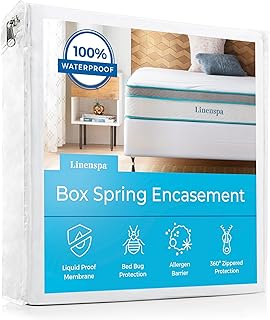
Linenspa Zippered Waterproof Encasement
Linenspa’s offering works best for shoppers who want solid basics at a lower price point. The 360-degree zippered closure covers the box spring completely, and the waterproof barrier holds up after multiple washes. It’s thinner than some premium options, so it won’t resist punctures quite as well, but for routine allergen and moisture protection it delivers reliably.
Guardmax Premium Box Spring Cover
Guardmax brings an absorbent terry-cloth exterior that genuinely soaks up accidental spills before they reach the box spring surface — a step beyond simple waterproof membranes. The six-side fit accommodates slightly thicker-than-average box springs, and the zippered closure includes a Velcro flap that adds a layer of redundancy against insect escape.
Utopia Bedding Bed Bug Mattress & Box Spring Cover
Utopia Bedding’s encasement earns its spot for sheer value. At a lower price than most competitors, it still provides a full six-sided zippered enclosure rated up to 12 inches deep, making it one of the most forgiving fits on the market. The dust-mite-proof fabric holds up well through washing, and the double-interlocking zipper adds a second line of defense that budget shoppers rarely get.
Frequently Asked Questions
How long does a box spring encasement last?
Most quality encasements last five to ten years with normal use and periodic washing. Signs you need a replacement include visible thinning, yellowing of the waterproof membrane, or a zipper that no longer locks flush.
Can I use a mattress encasement on a box spring?
You can technically zip one over a box spring, but mattress encasements are cut deeper and shaped differently. A dedicated box spring encasement like the ones reviewed here will fit more precisely and seal more securely.
Do bed bug encasements need to be washed?
Yes, but gently. Machine-wash on a cold cycle with mild detergent and avoid bleach or fabric softeners, which degrade waterproof membranes. Tumble-dry on low or air-dry to preserve zipper components.
Will an encasement make my bed feel different?
Barely noticeable. The encasement sits beneath your mattress, so you’re unlikely to feel it once everything is made up. Thicker terry-topped models may add a slight cushion, which most people actually prefer.
Final Thoughts
If I had to narrow the field to a short list, the Hospitology Products Sleep Defense System earns the top spot for its professional-grade zipper lock and durable fabric. The SureGuard Queen Encasement is the best all-around performer for households dealing with both spills and pest concerns, and the Utopia Bedding Encasement is the smart budget pick that doesn’t cut corners where it counts. Any of the three will keep your box spring sealed and your sleep uninterrupted.