Key takeaways
- Jaw Width and Opening: A 4-inch jaw handles most furniture-hardware drilling and small-part work, while a 6-inch jaw gives you room for wider boards and sheet-good edging. Measure your typical workpiece before committing.
- Jaw Depth: Shallow jaws (under 1 inch) keep the workpiece low for precision but won’t grip tall stock. Deeper jaws — 1.5 inches or more — offer more contact area, which translates directly to stability under load.
- Profile Height: A low-profile vise sits closer to the drill press table, leaving more quill travel for thick material. If you frequently drill through 3-inch stock, clearance becomes a real constraint.
- Construction Material: Cast iron resists vibration and won’t flex under heavy clamping pressure. Steel bodies are lighter and tougher against impact but can transmit more chatter. For stationary drill press work, cast iron generally wins.
- Adjustment Mechanism: Quick-release buttons and multi-groove jaw pads speed up setup for repeat drilling. Compound slide or cross-slide mechanisms add X-Y positioning, which is invaluable when you need to drill a pattern without re-clamping.
What's inside
Finding the right drill press vise shouldn’t feel like a gamble, but for most home workshop owners it does. The market is flooded with look-alike products that differ wildly in jaw depth, clamping force, and build quality — and a bad choice means wobbling workpieces, marred surfaces, or a vise that simply won’t hold during the cut that matters most.
This guide cuts through the noise. We tested and compared six leading drill press vises across build material, jaw capacity, low-profile clearance, and real-world clamping performance so you can match the right vise to your bench and your projects without second-guessing.
As an Amazon Associate we earn from qualifying purchases.




How to Choose a Drill Press Vise (2026)
- Jaw Width and Opening: A 4-inch jaw handles most furniture-hardware drilling and small-part work, while a 6-inch jaw gives you room for wider boards and sheet-good edging. Measure your typical workpiece before committing.
- Jaw Depth: Shallow jaws (under 1 inch) keep the workpiece low for precision but won’t grip tall stock. Deeper jaws — 1.5 inches or more — offer more contact area, which translates directly to stability under load.
- Profile Height: A low-profile vise sits closer to the drill press table, leaving more quill travel for thick material. If you frequently drill through 3-inch stock, clearance becomes a real constraint.
- Construction Material: Cast iron resists vibration and won’t flex under heavy clamping pressure. Steel bodies are lighter and tougher against impact but can transmit more chatter. For stationary drill press work, cast iron generally wins.
- Adjustment Mechanism: Quick-release buttons and multi-groove jaw pads speed up setup for repeat drilling. Compound slide or cross-slide mechanisms add X-Y positioning, which is invaluable when you need to drill a pattern without re-clamping.
The Best Drill Press Vises (2026) Reviewed
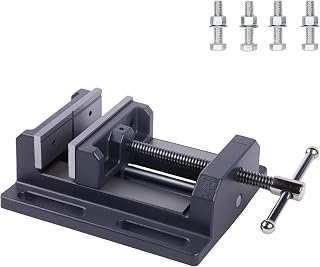
4-Inch Heavy Duty Bench Clamp Vise
This entry-level vise punches above its price thanks to multi-groove jaw pads that grip odd-shaped hardware without marring. The quick-adjustment button lets you reposition stock in seconds, making it a solid pick for weekend furniture builders who swap between hinge boring, dowel drilling, and bracket mounting on the same afternoon.
Wilton LP4 Low-Profile Drill Press Vise
Wilton’s low-profile design brings the workpiece down to within 1.5 inches of maximum jaw depth, preserving precious quill travel for thicker stock. The precision-ground jaws stay parallel under load, and the compact footprint fits smaller benchtop press tables where every square inch counts.
Precision Drill Press Vise, 4-Inch
At 4 inches of jaw width, this precision-ground vise strikes the balance most home woodworkers need: enough capacity for drawer pulls, door hinges, and edge-drilling, but compact enough to reposition with one hand. The heavy-duty casting keeps everything flat and stable during repetitive hole patterns.
4-Inch Low Profile Machinist Vise
Built from 45 steel with a machinist-grade low-profile body, this vise handles drilling, milling, and even light routing setups. The slim height is its headline feature — when you need every last millimeter of press travel for a through-hole in a table leg, this vise won’t get in the way.
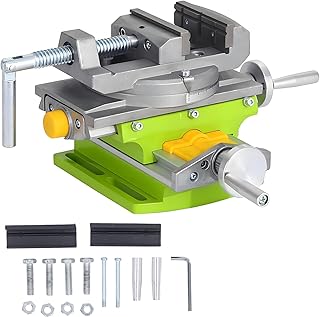
3-Inch Cross Slide Drill Press Vise
The compound X-Y slide and 90-degree rotary table turn your drill press into a light-duty milling station. For furniture makers who need precisely spaced holes in face frames or repeatable mortise locations, the ability to shift the workpiece on two axes without unclamping is a genuine time-saver.
Frequently Asked Questions
What jaw width do I need for furniture projects?
A 4-inch jaw covers roughly 80 percent of home woodworking drilling tasks — from hinge mortises to shelf-pin holes. Go to 6 inches only if you regularly clamp wide boards or need to hold sheet-good edges flat.
Are steel vises better than cast iron for home use?
Cast iron dampens vibration more effectively, which matters when you’re drilling hardwoods and want clean hole walls. Steel is lighter and more durable if your vise gets knocked around, but for a stationary drill press setup, cast iron is typically the better choice.
Do I really need a cross-slide vise?
If you only drill single holes or simple patterns, a standard vise is fine. A cross-slide vise earns its keep when you need to drill evenly spaced rows — like shelf-pin holes — or when precise X-Y positioning eliminates the need to mark every hole location by hand.
How do I keep the vise from marring my workpiece?
Use soft jaw pads or wrap the jaws in leather or rubber. Several vises in this roundup ship with groove-patterned pads that distribute pressure evenly. For finished surfaces, always line the jaws before clamping.
Final Thoughts
For most home furniture builders, the Wilton LP4 offers the best combination of build quality, low-profile clearance, and long-term reliability. If budget is tight, the 4-Inch Heavy Duty Bench Clamp Vise delivers surprising versatility at a lower entry price. And for anyone ready to level up their hole-drilling workflow, the 3-Inch Cross Slide Vise brings compound positioning that pays for itself in saved layout time.