Key takeaways
- Run the ice maker for 24 hours before your first big gathering so the bin fills completely.
- Replace the inline water filter every six months to keep ice tasting clean and prevent mineral buildup in the line.
- Leave at least two inches of clearance behind and above the unit to keep the compressor from overheating.
- If you are renting or unsure about plumbing connections, consider a countertop ice maker paired with a standard refrigerator—it is the most flexible setup to take with you when you move.
What's inside
There is a particular satisfaction that comes from grabbing a cold glass of water straight from your fridge, no tray to fill, no counter space lost to a separate machine. An ice-making refrigerator solves one of those small daily friction points that, once removed, you genuinely miss when it is gone. But shopping for one in 2026 means navigating a wide range of options—from compact apartment units to full-size French door models—each making different trade-offs on capacity, ice style, energy use, and price.
This guide walks you through exactly what matters when choosing a refrigerator with a built-in ice maker. We will cover how to match a model to your space, which ice-making systems actually hold up over time, and how to avoid the features that look impressive in a showroom but never get used at home. By the end, you will have a clear framework for picking the right unit with confidence.
As an Amazon Associate we earn from qualifying purchases.


Measure First, Browse Second
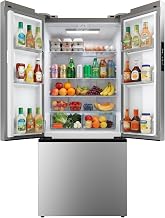
Before you fall in love with a specific model, get three numbers: the width, depth, and height of the space where the refrigerator will sit. Counter-depth units like the KoolMore 4-Door French Door or the Samsung 26 cu. ft. 3-Door model align roughly with standard cabinetry, creating a built-in look without custom paneling. If you are furnishing an apartment or a secondary kitchen, something smaller like the Upstreman 7.1 Cu.Ft. Bottom Freezer is dramatically easier to place—just confirm the door swing clears your nearest wall or island. A common mistake is measuring the old refrigerator instead of the actual opening. Measure the opening, then subtract two inches on each side for airflow.
Understand Ice Maker Types
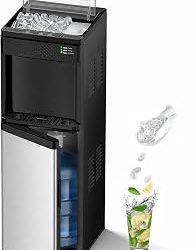
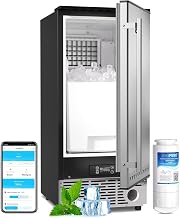
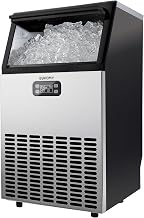
Not every “ice maker” produces the same thing. Most built-in units generate crescent or half-cube ice—the workhorse shape you see in restaurant sodas. The Samsung RF27CG5400SRAA goes further by offering four ice types, including larger cubes for cocktails and a nugget option. French door models from Antarctic Star and KoolMore typically use single-evaporator systems that produce standard cubes from a slim interior bin. If your household burns through ice at a high rate—for instance, you host frequently or run a home bar—you may benefit from pairing a standard fridge with a dedicated freestanding ice maker like the Commercial 100 Lb/24H unit, which runs independently and won’t slow down your refrigerator’s cooling cycle.
Capacity and Layout Trade-Offs
Total cubic footage tells only part of the story. What matters is how that space is divided. Bottom-freezer designs like the Upstreman BM71 and the 16 Cu. Ft. French Door model keep fresh items at eye level, which research consistently links to less food waste. Counter-depth French door units from KoolMore and Antarctic Star split the refrigerator into two wide shelves—ideal for sheet pans and large platters—but the freezer drawer below can feel less organized than a traditional swing-door freezer. For families of four or more, aim for at least 18 cubic feet of total capacity. For one or two people, 7 to 12 cubic feet is usually more than sufficient and will cost noticeably less to run.
Energy Efficiency and Long-Term Cost
An ice maker is one of the most power-hungry components in any refrigerator because it must maintain sub-freezing temperatures in a small compartment that opens and closes constantly. Look for models with inverter compressors—the Antarctic Star 17.5 Cu.Ft. and the Samsung RF27CG5400SRAA both use this technology, which adjusts cooling output to demand rather than running at full blast in cycles. The payoff is lower electricity bills and quieter operation. Freestanding commercial-style ice makers draw significant wattage on their own, so if you run one alongside a full-size fridge, budget for the added consumption. The U.S. Department of Energy’s Energy Star ratings remain the quickest way to compare annual operating costs side by side.
Ice Storage, Delivery, and Reliability
A built-in ice maker’s bin usually holds between 3 and 6 pounds of ice. That is enough for daily use but can run dry during a party. Freestanding units like the Commercial 100 Lb/24H machine store up to 20 pounds and replenish far faster, making them a practical supplement for entertaining households. Reliability is worth scrutinizing too. Ice maker failures—typically clogged water lines or worn harvest mechanisms—are among the top refrigerator repair calls. Units with dual water inlet options add a layer of redundancy, and models with straightforward, accessible components are easier and cheaper to service down the road. If the model you are considering has a sealed, non-serviceable ice system, factor that into your decision.
Tips
- Run the ice maker for 24 hours before your first big gathering so the bin fills completely.
- Replace the inline water filter every six months to keep ice tasting clean and prevent mineral buildup in the line.
- Leave at least two inches of clearance behind and above the unit to keep the compressor from overheating.
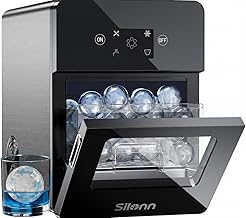
- If you are renting or unsure about plumbing connections, consider a countertop ice maker paired with a standard refrigerator—it is the most flexible setup to take with you when you move.
Frequently Asked Questions
Does a built-in ice maker use a lot of extra electricity?
It adds roughly 100 to 200 kilowatt-hours per year compared to a refrigerator without one, depending on usage and ambient temperature. Models with inverter compressors keep that increase toward the lower end of the range.
Can I install a counter-depth refrigerator myself?
Most counter-depth units arrive without handles attached, and the installation itself is straightforward—slide it in, level the feet, connect the water line if applicable. However, if your kitchen has tight tolerances or you need a new water supply valve installed, a professional visit is worth the small fee.
How long does a refrigerator ice maker typically last?
With regular maintenance, the ice maker assembly generally lasts as long as the refrigerator itself—roughly 10 to 15 years. The most common point of failure is the water inlet valve, which is an inexpensive part to replace.
Is a freestanding ice maker better than a built-in one?
It depends on your volume needs. Freestanding units produce and store far more ice, but they occupy extra floor or counter space and require their own power supply. For most households, a built-in ice maker handles daily demand comfortably, and a portable unit fills the gap for larger events.
Conclusion
The best refrigerator with an ice maker is the one that fits your space, matches your household’s ice consumption, and does not force you to pay for features you will never use. Start with measurements, prioritize inverter compressor technology for efficiency, and decide honestly how much ice you actually need on a daily basis. With those three pieces sorted, the right choice becomes obvious—and you will enjoy cold drinks on demand for years to come.