Key takeaways
- CFM at 90 PSI: This is the number that matters most. Small brad nailers need around 1 CFM, while framing nailers demand 2.5 to 4 CFM. Always check the compressor’s CFM rating at the pressure your tools actually require—not just the peak number on the box.
- Tank capacity and recovery time: A 6-gallon pancake tank suits most finish nailing and handles light framing if you pace yourself. For continuous heavy-duty framing or siding work, step up to 10 gallons or more, or consider a cordless option that eliminates tank recovery entirely.
- Noise level: Older compressors routinely hit 80 to 90 dB—enough to require ear protection indoors. Newer ultra-quiet models operate between 59 and 70 dB, making them far more practical for interior work, late-night projects, or shared living spaces.
- Portability versus power: A compact 1-gallon unit fits under a workbench and moves effortlessly between rooms. A 14.5-gallon vertical tank stays put but delivers sustained airflow. Decide whether your projects are mobile or stationary before you choose.
- Oil-free versus oil-lubricated: Oil-free pumps require virtually no maintenance and can sit in storage for months without issues. Oil-lubricated models tend to run cooler and quieter under heavy load but demand regular oil changes and level positioning.
What's inside
Shopping for an air compressor to pair with your nail guns can feel like a guessing game. Tank size, PSI ratings, noise levels, CFM output—every spec seems to matter, yet most product pages bury the practical details behind jargon. The result? You either buy something underpowered that stalls mid-project or overspend on capacity you’ll never touch. Either way, your trim job or framing task pays the price.
This guide cuts through the noise. We tested and compared five air compressors that actually deliver for nail gun users, from finish brad work to heavy-duty framing. Below you’ll find our honest takes on each model, followed by a simple buyer’s checklist so you can match the right compressor to your specific projects without second-guessing.
As an Amazon Associate we earn from qualifying purchases.


How to Choose an Air Compressor For Nail Guns (2026)
- CFM at 90 PSI: This is the number that matters most. Small brad nailers need around 1 CFM, while framing nailers demand 2.5 to 4 CFM. Always check the compressor’s CFM rating at the pressure your tools actually require—not just the peak number on the box.
- Tank capacity and recovery time: A 6-gallon pancake tank suits most finish nailing and handles light framing if you pace yourself. For continuous heavy-duty framing or siding work, step up to 10 gallons or more, or consider a cordless option that eliminates tank recovery entirely.
- Noise level: Older compressors routinely hit 80 to 90 dB—enough to require ear protection indoors. Newer ultra-quiet models operate between 59 and 70 dB, making them far more practical for interior work, late-night projects, or shared living spaces.
- Portability versus power: A compact 1-gallon unit fits under a workbench and moves effortlessly between rooms. A 14.5-gallon vertical tank stays put but delivers sustained airflow. Decide whether your projects are mobile or stationary before you choose.
- Oil-free versus oil-lubricated: Oil-free pumps require virtually no maintenance and can sit in storage for months without issues. Oil-lubricated models tend to run cooler and quieter under heavy load but demand regular oil changes and level positioning.
The Best Air Compressor For Nail Guns (2026) Reviewed
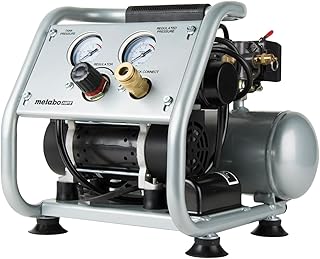
Metabo HPT 6-Gallon Pancake EC914S
The EC914S remains the benchmark for job-site pancake compressors. Pushing 200 PSI with a 4 CFM flow rate, it powers multiple nailers simultaneously without breaking a sweat. For anyone framing a deck, hanging siding, or installing roofing, this is the workhorse that keeps up without stalling between drives.
Metabo HPT 1-Gallon Quiet EC28M
At just 59 dB, the EC28M is genuinely quiet enough to run indoors without disrupting conversation. Its 1-gallon tank and universal quick coupler make it ideal for finish carpentry—crown molding, baseboards, and cabinet installs where precision matters more than raw volume. The compact footprint is a bonus in tight renovation spaces.
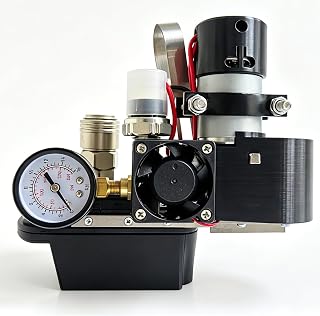
Miwoqi-Compatible Cordless Mini Compressor
This tank-free cordless option throws out the hose-and-outlet playbook entirely. Pair it with an 18V battery and you’ve got a mobile air supply for trim and woodworking wherever your extension cord can’t reach. It won’t replace a pancake compressor for sustained work, but for quick punch-list tasks and remote job corners, it’s a genuinely liberating tool.
14.5-Gallon Ultra Quiet Vertical Pancake
When you need sustained airflow without ear-splitting racket, this 14.5-gallon unit hits a rare sweet spot. Operating at 70 dB with 8.75 CFM output, it handles nail guns, inflation, and light pneumatic tools without constant cycling. The vertical tank saves floor space in garages and workshops while delivering the tank reserve serious projects demand.
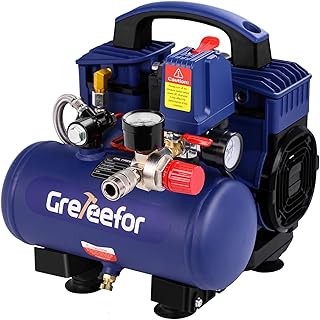
1-Gallon Ultra Quiet Violet Compressor
This compact 1.5HP unit fills in 13 seconds flat and stays quiet at 60 dB—impressive for such a small package. It’s a practical pick for homeowners who need a reliable compressor for occasional tire inflation, light nailing, and general shop tasks without committing to a full-size setup. The oil-free design keeps maintenance essentially zero.
Frequently Asked Questions
What size air compressor do I need for a framing nailer?
Framing nailers typically require at least 2.5 CFM at 90 PSI, so a 6-gallon compressor rated around 4 CFM—like the Metabo HPT EC914S—handles the job well. Larger tanks reduce recovery pauses, which speeds up repetitive framing work considerably.
Can I run multiple nail guns off one compressor?
You can, provided the compressor’s CFM rating covers the combined draw. Most finish nailers use 1 CFM each, so a 4 CFM compressor comfortably runs two to three brad nailers simultaneously. For framing nailers, stick to one tool per compressor unless you’ve got a high-output unit.
Do I need an oil-free compressor for nail guns?
Oil-free is the practical standard for nail gun work. It eliminates the risk of oil spitting onto your finished wood, requires no maintenance schedule, and the compressor can be stored upright between jobs without concern.
How loud is too loud for an indoor air compressor?
Sustained exposure above 85 dB risks hearing damage. Compressors rated under 70 dB work well indoors without heavy ear protection, while anything approaching 80 dB or above demands it. Ultra-quiet models in the 59 to 65 dB range are worth the premium if you do interior work regularly.
Final Thoughts
For most home builders and remodelers, the Metabo HPT EC914S stands out as the best all-around choice thanks to its 4 CFM output and job-site durability. If interior finish work dominates your projects, the EC28M’s whisper-quiet operation is hard to beat. And for homeowners who want maximum flexibility without a cord, the Miwoqi-compatible cordless mini compressor is the most surprisingly useful tool on this list. Pick the one that matches how you actually work—and your projects will run noticeably smoother.