Key takeaways
- Tooth count: Blades with 80 to 100 teeth generally leave smoother crosscuts in plywood, hardwood, and trim, while 40- to 60-tooth designs cut faster and handle general-purpose work more comfortably.
- Blade purpose: A fine-finish blade is ideal for visible furniture parts, but a combination blade is more useful if you regularly switch between rough sizing and clean crosscutting.
- Arbor fit: Confirm that the blade’s arbor matches your miter saw. Many 12-inch models use a 1-inch arbor, but checking the saw manual prevents an inconvenient return.
- Kerf and power: Thin-kerf blades can reduce waste and feel easier on lower-powered saws. Standard-kerf blades may be more rigid and better suited to demanding hardwood cuts.
- Carbide and construction: Durable carbide teeth, a flat plate, and vibration-control features help a blade stay accurate, quieter, and useful over repeated projects.
What's inside
Choosing a 12-inch miter saw blade is less straightforward than it looks. Tooth count, carbide quality, kerf width, arbor size, and the type of wood you cut all affect whether your saw produces clean furniture-grade joints or leaves splintered edges that need extra sanding. A blade that works beautifully on trim may be frustratingly slow on dimensional lumber.
This guide focuses on practical home use: cabinet parts, shelving, picture frames, molding, and general furniture projects. We look at finish quality, versatility, cutting feel, and value so you can match a blade to your saw and your usual workload without buying more specialized equipment than you need.
As an Amazon Associate we earn from qualifying purchases.


How to Choose a/an 12 Miter Saw Blades (2026)
- Tooth count: Blades with 80 to 100 teeth generally leave smoother crosscuts in plywood, hardwood, and trim, while 40- to 60-tooth designs cut faster and handle general-purpose work more comfortably.
- Blade purpose: A fine-finish blade is ideal for visible furniture parts, but a combination blade is more useful if you regularly switch between rough sizing and clean crosscutting.
- Arbor fit: Confirm that the blade’s arbor matches your miter saw. Many 12-inch models use a 1-inch arbor, but checking the saw manual prevents an inconvenient return.
- Kerf and power: Thin-kerf blades can reduce waste and feel easier on lower-powered saws. Standard-kerf blades may be more rigid and better suited to demanding hardwood cuts.
- Carbide and construction: Durable carbide teeth, a flat plate, and vibration-control features help a blade stay accurate, quieter, and useful over repeated projects.
The Best 12 Miter Saw Blades (2026)s Reviewed
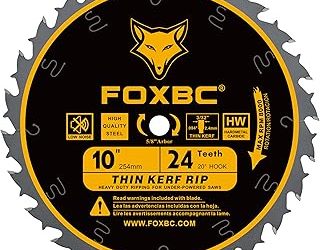
FOXBC 12-Inch 100-Tooth Blade
The FOXBC 100-tooth blade is aimed squarely at clean, polished-looking cuts in trim, plywood, and furniture components. Its high tooth count favors reduced breakout and a neat edge, making it a sensible choice when the cut will be visible and you would rather spend less time sanding.
DEWALT DWA112100 Fine-Finish Blade
DEWALT’s DWA112100 is a strong pick for detailed woodworking where consistent results matter more than maximum cutting speed. The ultra-sharp carbide teeth are designed for fine crosscuts, and it is particularly well suited to molding, hardwood boards, and assembly parts that need to meet cleanly.
WEN BL1280 80-Tooth Blade
The WEN BL1280 offers a useful middle ground between a very fine 100-tooth blade and a faster general-purpose model. Its 80-tooth layout should suit home workshops handling plywood, softwood, and occasional hardwood, especially when a smooth finish is important but productivity still matters.
DEWALT DWA112CMB Combo Pack
This DEWALT two-blade set is one of the most practical options for a mixed-use workshop. The 40-tooth blade is better for quicker everyday cuts, while the 60-tooth blade provides a cleaner finish for visible edges, so you can choose based on the job instead of forcing one blade to do everything.
ANGELSWORD 40T/60T Two-Pack
ANGELSWORD’s 40T and 60T combination pack offers similar flexibility at a value-oriented price point. It makes sense for homeowners who cut both rough stock and finished boards, with the lower-tooth blade handling faster work and the 60-tooth option helping reduce splintering on furniture parts.
Frequently Asked Questions
Is a 100-tooth blade always better for furniture?
Not always. A 100-tooth blade can produce an exceptionally clean edge, but it usually cuts more slowly and may generate more heat. For most furniture work, an 80- or 60-tooth blade can provide an excellent finish while removing material more efficiently.
Can these blades cut hardwood?
Yes, provided the blade is correctly matched to the saw and material. Use a steady feed rate, support the work securely, and avoid forcing the blade. Dense hardwood benefits from sharp carbide teeth and occasional cleaning to prevent resin or dust buildup.
What blade should I use for trim and molding?
A fine-finish blade with 80 to 100 teeth is usually the best choice for trim because it minimizes visible tear-out. Make sure the stock is firmly supported and use the appropriate cutting direction for the molding profile.
How often should a miter saw blade be replaced?
Replace or sharpen a blade when cuts become noticeably rough, the saw requires unusual pressure, or burning and wandering appear despite proper setup. Life depends on the materials, nails or embedded debris, frequency of use, and how carefully the blade is stored.
Final Thoughts
For the cleanest furniture cuts, the FOXBC 100-tooth and DEWALT DWA112100 are compelling fine-finish choices. If you want one purchase to cover both quick construction cuts and cleaner joinery, the DEWALT DWA112CMB combo pack offers the most practical versatility for a home workshop.