Key takeaways
- Mounted kit or cordless unit: Choose a hard-mounted system if you run airbag suspension, air horns, or need air available at the flip of a switch. Choose a cordless inflator if your main jobs are tires, bikes, and inflatables, and you’d rather skip drilling and wiring entirely.
- Duty cycle over peak PSI: A 150 PSI rating means little if the motor overheats after five minutes. Look for stated duty cycle percentages, dual-cylinder designs, or 100% continuous ratings if you plan to fill four large tires back to back.
- Tank capacity: A 2 to 2.5 gallon reservoir stores pressure so the pump isn’t cycling constantly. It’s essential for air horns and genuinely useful for suspension, but it also means finding real mounting space under the bed or frame.
- Controls and readouts: Wireless app or remote control lets you adjust ride height from outside the cab, which matters when you’re loading heavy furniture alone. Digital gauges with auto-shutoff prevent the overinflation that eats tire life.
- Power source honesty: Battery inflators are rated in mAh, and bigger packs mean more tires per charge. A dual-power model that also accepts 12V keeps you moving when the pack is flat, which is worth the small bulk penalty.
What's inside
Hauling a sofa across town, towing a trailer full of flat-pack boxes, or leveling an RV for the weekend all put the same demand on a vehicle: air, on demand, without a trip to the gas station. Most people discover this the hard way, kneeling on cold asphalt with a cigarette-lighter inflator that stalls out after one tire. Onboard air changes that equation. It lives in your truck or SUV permanently, feeds airbag suspension when the bed is loaded, tops off tires before a delivery run, and doubles as a way to inflate guest air mattresses and pool floats when the season turns.
The catch is that “onboard air compressor” covers two very different products. Some are hard-mounted suspension kits with wiring harnesses, gauges, and tanks. Others are cordless inflators you toss in a door pocket. This guide separates the two, explains which one actually solves your problem, and reviews the standout options for 2026 based on duty cycle, real fill speed, and how much installation work you’re signing up for.
As an Amazon Associate we earn from qualifying purchases.



How to Choose a/an Onboard Air Compressor (2026)
- Mounted kit or cordless unit: Choose a hard-mounted system if you run airbag suspension, air horns, or need air available at the flip of a switch. Choose a cordless inflator if your main jobs are tires, bikes, and inflatables, and you’d rather skip drilling and wiring entirely.
- Duty cycle over peak PSI: A 150 PSI rating means little if the motor overheats after five minutes. Look for stated duty cycle percentages, dual-cylinder designs, or 100% continuous ratings if you plan to fill four large tires back to back.
- Tank capacity: A 2 to 2.5 gallon reservoir stores pressure so the pump isn’t cycling constantly. It’s essential for air horns and genuinely useful for suspension, but it also means finding real mounting space under the bed or frame.
- Controls and readouts: Wireless app or remote control lets you adjust ride height from outside the cab, which matters when you’re loading heavy furniture alone. Digital gauges with auto-shutoff prevent the overinflation that eats tire life.
- Power source honesty: Battery inflators are rated in mAh, and bigger packs mean more tires per charge. A dual-power model that also accepts 12V keeps you moving when the pack is flat, which is worth the small bulk penalty.
The Best Onboard Air Compressor (2026)s Reviewed
RETRUE Onboard Air Compressor System for Truck Airbag Suspension
This is the straightforward choice for anyone already running air bags on an F-150, Silverado, Sierra, or Ram and tired of manual fills. The universal kit includes the harness, switch, and fittings needed to inflate bags from the driver’s seat, which makes a real difference when your load changes between an empty bed and a full one.
Medium Duty Onboard Air System with 2.5 Gallon Tank
The 150 PSI compressor paired with a 9.5 liter reservoir gives you stored air rather than on-demand pumping, so tire fills are quicker and train horns actually sound like train horns. Budget an afternoon for mounting and plan your tank location before you buy, because the tank is the bulkiest part of any onboard setup.
maXpeedingrods 120 PSI On Board Air Compressor System
The wireless app and remote control are the headline here, and they’re more than a gimmick when you’re adjusting a trailer or van’s ride height while standing at the hitch. At 120 PSI it’s tuned for suspension work rather than high-pressure tank filling, which is the right priority for most pickup and trailer owners.
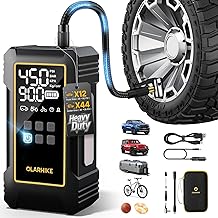
OlarHike 12000mAh Heavy Duty Tire Inflator
A genuinely fast cordless unit that handles truck, Jeep, SUV, and RV tires without the fade you get from cheaper inflators. Dual 12V and battery power is the feature to appreciate most, since it means a dead pack never leaves you stranded.
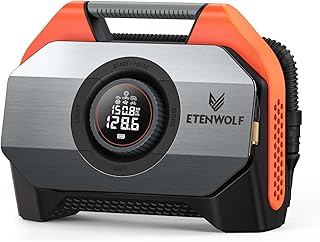
ETENWOLF VORTEX S6 Tire Inflator
The dual-cylinder pump and 100% duty cycle rating let this one run continuously, and the 19200mAh battery gets through a full set of heavy-duty tires with margin left over. The LED backlight and bright orange housing are small touches that pay off on a dark roadside.
Frequently Asked Questions
Do I need a tank, or is a tankless compressor enough?
Tankless is fine for airbag suspension alone. Add a tank if you want air horns, faster tire fills, or the ability to run air tools briefly.
Can an onboard system inflate air mattresses and pool toys?
Yes, with the right nozzle adapter, though high-pressure compressors move less volume than a dedicated low-pressure blower. A cordless inflator with an included inflatables adapter is the easier route.
How hard is installation on a mounted kit?
Expect two to four hours with basic tools for a straightforward suspension kit. Wiring through the firewall and finding secure tank mounting points are the parts that consume the most time.
What PSI should I actually run?
Follow the door jamb placard for tires and the airbag manufacturer’s spec for suspension, typically 5 to 100 PSI depending on load. Higher isn’t better.
Final Thoughts
For truck owners running air suspension, the RETRUE kit covers the essentials at a sensible price, while the maXpeedingrods system earns its premium through app and remote control that make load adjustments genuinely easy. If you want capability without touching your wiring, the ETENWOLF VORTEX S6 is the more versatile cordless pick thanks to its continuous duty cycle and large battery.