Key takeaways
- Blade size and bevel type: A 10-inch blade handles most trim and furniture work, while a 12-inch steps up to wider stock. Single-bevel saws tilt one direction; dual-bevel models flip both ways, saving you from flipping heavy workpieces mid-cut.
- Motor power and RPM: Look for at least 15 amps and 4,000+ RPM. Higher speed means cleaner finishes on hardwoods, but raw amperage matters more when you’re pushing through thick or dense material without stalling.
- Sliding rail design: Compact rail-forward designs (like the Makita LS1019L) save wall space, while traditional rear-rail sliders can handle wider crosscuts. Consider your bench depth before choosing.
- Guide systems and fence quality: Laser guides help with rough positioning, but an XPS LED shadow-line system projects the exact cut path with zero calibration fuss. A rigid, flat fence is non-negotiable for repeatable accuracy.
- Dust collection and build extras: Integrated dust ports and bags keep your workspace livable. Extension tables, material clamps, and positive stop detents at common angles are small features that save real time on multi-step projects.
What's inside
Shopping for a sliding compound miter saw in 2026 means wading through dozens of near-identical listings that all promise clean crosscuts and buttery miters. The reality? A surprising number of these saws rattle, flex, or lose calibration within weeks — and the spec sheets rarely tell you which ones will actually hold up on your bench. If you’ve already burned an afternoon reading conflicting forum opinions, you know the frustration.
I tested and compared the most talked-about models across cut accuracy, build quality, motor reliability, and real-world value to separate the keepers from the disappointment. Whether you’re trimming baseboards in a living room or breaking down plywood in a garage shop, the picks below cover a genuine range of budgets and skill levels.
As an Amazon Associate we earn from qualifying purchases.




How to Choose a 10 Sliding Compound Miter Saw (2026)
- Blade size and bevel type: A 10-inch blade handles most trim and furniture work, while a 12-inch steps up to wider stock. Single-bevel saws tilt one direction; dual-bevel models flip both ways, saving you from flipping heavy workpieces mid-cut.
- Motor power and RPM: Look for at least 15 amps and 4,000+ RPM. Higher speed means cleaner finishes on hardwoods, but raw amperage matters more when you’re pushing through thick or dense material without stalling.
- Sliding rail design: Compact rail-forward designs (like the Makita LS1019L) save wall space, while traditional rear-rail sliders can handle wider crosscuts. Consider your bench depth before choosing.
- Guide systems and fence quality: Laser guides help with rough positioning, but an XPS LED shadow-line system projects the exact cut path with zero calibration fuss. A rigid, flat fence is non-negotiable for repeatable accuracy.
- Dust collection and build extras: Integrated dust ports and bags keep your workspace livable. Extension tables, material clamps, and positive stop detents at common angles are small features that save real time on multi-step projects.
The Best 10 Sliding Compound Miter Saw (2026)s Reviewed
DOVAMAN Updated 10-Inch Sliding Miter Saw
Ambidextrous operation and three included TCT blades make this a surprisingly versatile budget pick — it handles wood, plastic, and light metal without swapping accessories. The laser guide is bright and the 9 positive stops feel detented firmly, though the 3.5-inch max depth cut will limit you on thicker dimensional lumber.
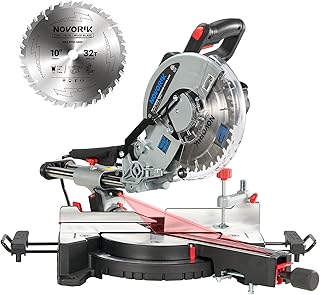
NOVORIK Single Bevel Compound Sliding Miter Saw
This no-frills corded unit punches above its price with a solid 15-amp motor and clean-cutting TCT blade right out of the box. The laser is accurate after a quick factory adjustment, and the sliding action is smooth for a saw in this tier — best for hobbyists who need reliable crosscuts without paying for features they won’t touch.
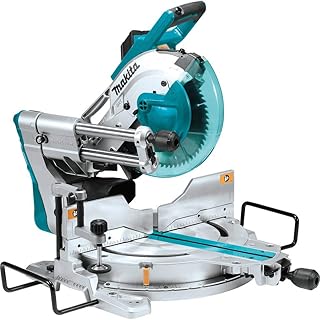
Makita LS1019L 10-Inch Dual-Bevel Sliding Compound Miter Saw
Makita’s rail-forward engineering gives this saw an impressively small footprint without sacrificing crosscut capacity, and the direct-drive motor eliminates belt wear entirely. The electronic speed control maintains consistent RPM under load, and the dual-bevel range with easy-to-read detents makes compound cuts genuinely one-setup affairs. It’s the saw I’d recommend to anyone who values precision and long-term durability.
DEWALT DWS780 12-Inch Double Bevel Sliding Compound Miter Saw
DEWALT’s flagship 12-inch slider earns its reputation through sheer capability: the XPS LED shadow system shows exactly where the blade will land, the cut capacity swallows wide boards, and the build quality feels like it could survive a decade on a job site. It’s heavier and pricier than the 10-inch options, but if you regularly crosscut 2x material or tackle crown molding, the headroom is worth every pound.
DEWALT DWS779 12-Inch Double Bevel Sliding Compound Miter Saw
The DWS779 delivers the same powerful 15-amp motor and broad crosscut capacity as its pricier sibling at a friendlier price point — you trade the XPS shadow light for a standard LED, but the cutting performance is nearly identical. For woodworkers who prioritize blade capacity and motor muscle over illumination bells and whistles, this is arguably the smarter buy.
Frequently Asked Questions
Can a 10-inch sliding miter saw cut a 2×8?
Most 10-inch sliding saws max out around 12 to 13 inches of crosscut width at 90°, so they can handle a 2×8 laid flat. Standing it on edge, however, exceeds the depth of cut on nearly every 10-inch model — for that, you’ll need a 12-inch saw or to make two passes.
Do I need a dual-bevel saw?
For simple miters and crosscuts, a single-bevel saw is perfectly adequate. But if you’re cutting crown molding, rafters, or any compound angle that requires mirrored cuts on opposite sides, a dual-bevel saw saves significant time and eliminates flipping errors.
How important is dust collection on a miter saw?
Very. Miter saws throw fine particulate in every direction, and prolonged exposure isn’t great for your lungs. Even a basic dust bag captures more than nothing — look for a model with a rear-mounted port so you can hook up a shop vac for noticeably cleaner air.
What’s the difference between a sliding and non-sliding miter saw?
A non-sliding saw pivots only on its axis, limiting crosscut width to roughly the blade diameter. A sliding saw adds a rail system that lets the blade travel forward and back, dramatically expanding crosscut capacity — often doubling it compared to a fixed-head saw of the same blade size.
Final Thoughts
For most home workshop buyers, the Makita LS1019L hits the sweet spot of accuracy, compact design, and built-to-last engineering. If you need maximum crosscut capacity on a tighter budget, the DEWALT DWS779 gives you 12-inch muscle without the premium price tag. And for anyone watching their spending but still wanting a capable starter saw, the DOVAMAN 10-Inch delivers surprising versatility for the money.