Key takeaways
- Type: Decide between passive silica gel desiccants (no power needed, ideal for small locked enclosures) and active electric units (better for larger spaces or areas with persistent high humidity). Each has a distinct use case, and mixing them is often the best strategy.
- Coverage Area: Match the unit’s rated capacity to the cubic footage of your space. A canister rated for 60 cubic feet won’t make a dent inside a walk-in closet, and an oversized electric unit in a small gun safe wastes energy and space.
- Safety Certification: Look for UL-listed electric models and non-toxic desiccant materials. Any unit placed inside a sealed metal enclosure near ammunition or chemicals needs to meet baseline safety standards — don’t cut corners here.
- Reusability: Rechargeable silica gel canisters and renewable desiccant packs save significant money over disposable moisture absorbers. If you live in a humid climate, factor ongoing replacement costs into your decision.
- Maintenance Burden: Consider how often you will need to recharge or replace the dehumidifier. Cordless units that plug in to regenerate are convenient for people who want a set-it-and-forget-it solution, while electric units with fans require occasional filter checks.
What's inside
Anyone who has opened a gun safe, tool cabinet, or storage closet only to find a musty film of moisture on metal surfaces knows the quiet damage humidity can do. Rust forms silently, finishes degrade, and expensive equipment loses value long before you notice the problem. Choosing the right dehumidifier for a compact, enclosed space is different from picking one for a whole room — the stakes are higher, the space is tighter, and safety from fire or chemical off-gassing matters just as much as moisture control.
This guide walks through the most reliable safe dehumidifier options available in 2026, from chemical silica gel canisters to compact electric units. Each product here was evaluated for effectiveness, safety, ease of use, and long-term value so you can protect your gear without second-guessing your pick.
As an Amazon Associate we earn from qualifying purchases.


How to Choose a Safe Dehumidifier (2026)
- Type: Decide between passive silica gel desiccants (no power needed, ideal for small locked enclosures) and active electric units (better for larger spaces or areas with persistent high humidity). Each has a distinct use case, and mixing them is often the best strategy.
- Coverage Area: Match the unit’s rated capacity to the cubic footage of your space. A canister rated for 60 cubic feet won’t make a dent inside a walk-in closet, and an oversized electric unit in a small gun safe wastes energy and space.
- Safety Certification: Look for UL-listed electric models and non-toxic desiccant materials. Any unit placed inside a sealed metal enclosure near ammunition or chemicals needs to meet baseline safety standards — don’t cut corners here.
- Reusability: Rechargeable silica gel canisters and renewable desiccant packs save significant money over disposable moisture absorbers. If you live in a humid climate, factor ongoing replacement costs into your decision.
- Maintenance Burden: Consider how often you will need to recharge or replace the dehumidifier. Cordless units that plug in to regenerate are convenient for people who want a set-it-and-forget-it solution, while electric units with fans require occasional filter checks.
The Best Safe Dehumidifier (2026)s Reviewed
XL Gun Safe Dehumidifier 450g Silica Gel Canister
This large-capacity desiccant canister handles up to 60 cubic feet and features color-changing indicator beads that make it obvious when regeneration is due. It is a no-fuss, no-electricity solution for gun safes and tool chests where space is tight and reliability matters most. The 450g load gives it staying power between recharges that smaller canisters simply cannot match.
Eva-Dry Wireless Mini Dehumidifier E-333
A longtime staple in the small-space dehumidifier category, the Eva-Dry E-333 is completely cordless during operation and recharges by plugging into a standard outlet. It works well in compact safes and small closets, and the absence of moving parts means there is nothing to rattle, overheat, or fail. For sub-50-cubic-foot spaces, it remains a dependable pick.
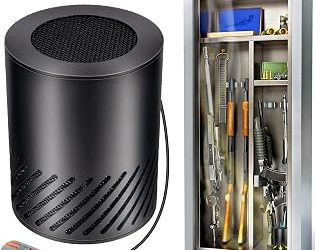
Gun Safe Dehumidifier Electric 360° Heating Unit
This plug-in electric dehumidifier uses a built-in fan to circulate warm air in a full 360-degree pattern, actively pushing moisture out of enclosed spaces rather than passively absorbing it. It is the strongest choice for larger safes or environments where humidity consistently exceeds 60 percent. The compact form factor keeps it from consuming valuable shelf space.
Eva-Dry E-500 Renewable Silica Gel Dehumidifier 2-Pack
Sold as a two-pack with each unit covering 500 cubic feet, the E-500 offers impressive capacity for the price. The renewable silica beads last up to ten years before needing replacement, and the plug-in regeneration cycle is simple. This two-pack configuration makes it practical to protect multiple safes or a combination of a safe and a closet with one purchase.
TOAAOT 200g Silica Gel Canister 3-Pack
Budget-friendly without being disposable, this three-pack of 200g canisters distributes moisture absorption across smaller compartments like gun cases, tackle boxes, or tool drawers. Each canister includes color-indicating beads and recharges in a standard oven. For buyers who need protection in several small enclosures rather than one large space, the per-unit value is hard to beat.
Frequently Asked Questions
Do I need an electric dehumidifier inside my gun safe?
Not necessarily. For most standard gun safes under 50 cubic feet, a quality silica gel canister provides adequate moisture control without any power source. Electric units become worthwhile for large walk-in safes or in climates where humidity regularly climbs above 70 percent.
Are silica gel dehumidifiers safe around ammunition?
Yes. Non-indicating and food-grade silica gel is non-toxic and chemically inert, making it safe for enclosed spaces containing ammunition, tools, or sensitive equipment. Always verify that the specific product uses non-toxic silica rather than calcium chloride, which can leak corrosive brine.
How often should I recharge a reusable desiccant canister?
Most reusable silica gel canisters need recharging every two to four weeks, depending on ambient humidity and the sealed volume of your space. Color-changing indicator beads take the guesswork out by shifting from blue or orange to a clearly different shade when saturation is reached.
Can I use more than one dehumidifier in the same safe?
Absolutely. Combining a passive silica gel canister with an active electric unit is a common strategy in high-humidity regions. The desiccant handles localized moisture while the electric unit works on overall air circulation, giving you layered protection.
Final Thoughts
For most gun safe owners, the XL 450g Silica Gel Canister hits the sweet spot of capacity, simplicity, and zero fire risk. If you need active moisture removal in a larger enclosure, the 360° Heating Electric Dehumidifier delivers the performance that passive units cannot. And for anyone protecting multiple small spaces on a budget, the Eva-Dry E-500 two-pack offers the best long-term value on the market right now.