Key takeaways
- Pressure vs. Surface Damage: Decks, especially softwood like cedar and pine, are more forgiving than concrete but far less forgiving than brick. A unit in the 2,100–2,500 PSI range handles most deck cleaning without risk of splintering or gouging, while anything above 4,000 PSI should only be used on heavily weathered hardwood or with significant standoff distance.
- Nozzle Versatility: A wide spray pattern (40° white or 25° green nozzle) is the default for deck boards. Models that ship with multiple quick-connect nozzles let you dial down for delicate railings and crank up for stubborn stains — this flexibility matters more than headline PSI numbers.
- Hose and Cord Length: A 25-foot hose gives you reasonable reach, but if your deck wraps around the house or sits far from an outlet, look for units offering 30+ feet. Every extra foot of hose means less time dragging the machine back and forth across wet boards.
- Portability and Stability: Pressure washers tip over. On an uneven deck surface near stair edges, anti-tipping designs and four-wheel bases prevent damage to both the machine and your deck furniture. Built-in handles also matter when you’re hauling the unit up deck steps.
- Detergent Integration: An onboard soap tank or dedicated foam cannon saves time when you need a pre-soak treatment. Running a deck cleaner through the soap system before a full rinse cuts total work time significantly on neglected surfaces.
What's inside
After years of restoring weathered decks, pergolas, and outdoor furniture, I’ve learned that a deck’s biggest enemy isn’t rain or sun — it’s the buildup most people don’t notice until planks turn grey or start feeling slick underfoot. Algae, mildew, and embedded grime work their way deep into wood grain and composite grooves, and a garden hose simply can’t lift what’s settled over seasons. Buying a pressure washer without guidance, though, can lead to torn-up boards, wasted money, or a machine that collects dust because it can’t handle the job. This guide breaks down exactly what matters when choosing a pressure washer for deck work and highlights the strongest options available right now.
We focused on models that balance raw cleaning power with the finesse wood and composite surfaces demand. Deck cleaning is different from blasting concrete — you need enough pressure to strip grime but precise nozzle control so you don’t gouge softwood or splinter the grain. We evaluated each unit on pressure output, nozzle variety, hose reach, portability, and whether the features actually serve a real deck-cleaning workflow rather than just padding a spec sheet.
As an Amazon Associate we earn from qualifying purchases.




How to Choose a Pressure Washer For Deck Cleaning (2026)
- Pressure vs. Surface Damage: Decks, especially softwood like cedar and pine, are more forgiving than concrete but far less forgiving than brick. A unit in the 2,100–2,500 PSI range handles most deck cleaning without risk of splintering or gouging, while anything above 4,000 PSI should only be used on heavily weathered hardwood or with significant standoff distance.
- Nozzle Versatility: A wide spray pattern (40° white or 25° green nozzle) is the default for deck boards. Models that ship with multiple quick-connect nozzles let you dial down for delicate railings and crank up for stubborn stains — this flexibility matters more than headline PSI numbers.
- Hose and Cord Length: A 25-foot hose gives you reasonable reach, but if your deck wraps around the house or sits far from an outlet, look for units offering 30+ feet. Every extra foot of hose means less time dragging the machine back and forth across wet boards.
- Portability and Stability: Pressure washers tip over. On an uneven deck surface near stair edges, anti-tipping designs and four-wheel bases prevent damage to both the machine and your deck furniture. Built-in handles also matter when you’re hauling the unit up deck steps.
- Detergent Integration: An onboard soap tank or dedicated foam cannon saves time when you need a pre-soak treatment. Running a deck cleaner through the soap system before a full rinse cuts total work time significantly on neglected surfaces.
The Best Pressure Washer For Deck Cleaning (2026)s Reviewed
AIVOLT 4800PSI Electric Pressure Washer
The standout here is the four-wheel anti-tip base — it sits rock-solid on uneven deck planking where cheaper two-wheeled units wobble. With 4,800 PSI on tap it’s overpowered for routine deck maintenance, but the four included nozzles let you dial way back to a gentle 40° spray. The 36-foot power cable plus 25-foot hose gives you exceptional reach, which is critical for decks that wrap around a property. Best for anyone who wants one machine for deck days and heavy-duty driveway work alike.
4200PSI Gas Pressure Washer (212CC)
This is the pick when you have zero outlet access on the back patio or need commercial-grade output for multiple decks and outdoor structures. The 212CC gas engine delivers sustained high pressure without electrical limitations, and the 32-foot hose covers expansive deck layouts without repositioning. Five nozzles cover every scenario from a wide fan on composite decking to a pinpoint stream for ingrained mildew between boards. Keep in mind gas units need fuel and produce exhaust, so they’re better suited for open-air deck setups rather than enclosed porches.
Westinghouse ePX3500
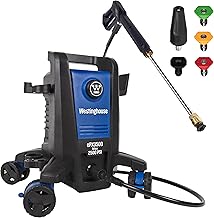
This is the deck-cleaning sweet spot — 2,500 PSI delivers more than enough force for annual deck restoration while staying safely within the damage threshold for most wood species. The onboard soap tank means you can lay down a deck cleaner, switch to a rinse nozzle, and finish without leaving the machine. The pro-style steel wand provides better directional control than plastic wands, which directly translates to fewer missed spots along board gaps and railing joints.
4200PSI Portable Power Washer (Light Green)
Where this unit earns its place is pure portability. It’s compact enough to carry up narrow deck stairs in one hand and set down right where you need it. The four quick-connect nozzles cover the full range from gentle rinse to focused blast. It won’t match a full-size unit’s sustained output on a large multi-level deck, but for smaller patios, balconies, and standard backyard decks it punches well above its size class.
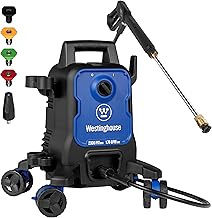
Westinghouse ePX3100
At 2,300 PSI this is arguably the most deck-appropriate unit in the entire roundup. That pressure level sits in the ideal zone for composite decking like Trex and Timbertech, where manufacturers explicitly warn against exceeding 2,500 PSI. The anti-tip design holds steady on wet boards, and the five-nozzle set means you have a dedicated fan pattern for deck surfaces without needing to buy extras. It handles the job without unnecessary overkill, and sometimes that restraint is exactly what your deck needs.
Frequently Asked Questions
Can I use a pressure washer on composite decking?
Yes, but pressure control is critical. Most composite decking manufacturers cap recommended pressure at 2,000–2,500 PSI. Exceeding that rating can void warranties and strip the protective cap, so choose a unit with a 40° nozzle or a model in the 2,100–2,300 PSI range. Always test on an inconspicuous area first.
What nozzle should I use for deck boards?
The 40° white nozzle is the safest default for deck cleaning — it fans water across a wider area, reducing the risk of gouging wood fibers. Use the 25° green nozzle only for stubborn stains or between board gaps where dirt packs in tightly. Avoid the 0° red nozzle on any wood surface entirely.
Do I need a gas or electric pressure washer for my deck?
Electric units are the better choice for most deck owners. They’re quieter, lighter, require no fuel mixing, and work near windows and enclosed porches without exhaust concerns. Gas units only make sense if you lack nearby electrical outlets or need sustained high-pressure output across multiple large structures.
How often should I pressure wash my deck?
Once a year is the practical standard for most climates — typically in spring before outdoor furniture season begins. In humid or heavily shaded areas with more mildew growth, twice annually may be warranted. Between washes, a simple broom sweep and occasional leaf removal prevent buildup from settling into the grain.
Final Thoughts
For most homeowners, the Westinghouse ePX3100 offers the best balance of deck-appropriate pressure, thoughtful features, and build quality without overspending. If you need extra reach and stability on a larger or uneven deck layout, the AIVOLT 4800PSI with its four-wheel base is a strong step up. And for pure versatility — deck days, driveway blasts, and car washes all in one package — the Westinghouse ePX3500 hits the performance sweet spot with room to spare.