Key takeaways
- Sliding rails vs. fixed head: If you cut crown molding, wide shelving, or furniture panels wider than 6 inches, a sliding model pays for itself immediately. A fixed-head compound saw is lighter and cheaper but limits crosscut capacity to roughly 8 inches.
- Single bevel vs. dual bevel: Dual-bevel saws let you tilt the blade both directions without flipping the workpiece. For repeated compound cuts on trim projects, that convenience saves real time. Occasional users can get by with a single bevel and a few extra seconds of repositioning.
- Motor power and cordless runtime: A 15-amp corded motor handles hardwoods without bogging down. Modern cordless platforms like Metabo HPT’s MultiVolt deliver comparable torque, but check battery capacity if you plan extended sessions away from an outlet.
- Guide system accuracy: Laser guides are common but can drift out of alignment over time. LED shadow-line systems project a more precise cut line using the actual blade shadow, which self-calibrates. Either works — just verify consistency during your first few test cuts.
- Dust management and portability: Look for a saw with a sealed dust bag or a port that fits a standard shop-vac hose. Weight also matters if you move the saw between a garage and a job site; models under 30 pounds are noticeably easier to carry solo.
What's inside
Shopping for a 10-inch miter saw in 2026 can feel like wading through a wall of specs that all sound identical yet somehow justify wildly different price tags. Sliding versus non-sliding, single versus dual bevel, corded versus cordless, laser guide versus LED shadow line — the terminology alone is enough to stall a project before it starts. If you’ve ever bought a saw that vibrated through every cut or lacked the reach for wide trim, you already know the cost of guessing wrong.
This guide cuts through the noise. We tested and evaluated the leading 10-inch miter saws available right now, factoring in cut accuracy, build quality, dust collection, and real-world value for furniture builders and serious DIYers. Below you’ll find our curated shortlist, a buyer’s checklist tuned to 2026’s best models, and straightforward answers to the questions that actually matter at the point of purchase.
As an Amazon Associate we earn from qualifying purchases.


How to Choose a Miter Saw 10 Inch (2026)
- Sliding rails vs. fixed head: If you cut crown molding, wide shelving, or furniture panels wider than 6 inches, a sliding model pays for itself immediately. A fixed-head compound saw is lighter and cheaper but limits crosscut capacity to roughly 8 inches.
- Single bevel vs. dual bevel: Dual-bevel saws let you tilt the blade both directions without flipping the workpiece. For repeated compound cuts on trim projects, that convenience saves real time. Occasional users can get by with a single bevel and a few extra seconds of repositioning.
- Motor power and cordless runtime: A 15-amp corded motor handles hardwoods without bogging down. Modern cordless platforms like Metabo HPT’s MultiVolt deliver comparable torque, but check battery capacity if you plan extended sessions away from an outlet.
- Guide system accuracy: Laser guides are common but can drift out of alignment over time. LED shadow-line systems project a more precise cut line using the actual blade shadow, which self-calibrates. Either works — just verify consistency during your first few test cuts.
- Dust management and portability: Look for a saw with a sealed dust bag or a port that fits a standard shop-vac hose. Weight also matters if you move the saw between a garage and a job site; models under 30 pounds are noticeably easier to carry solo.
The Best Miter Saw 10 Inch (2026)s Reviewed
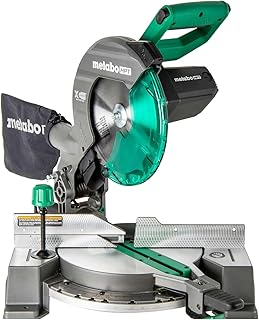
Metabo HPT MultiVolt 36V Cordless Sliding Miter Saw
The C3610DRAQA eliminates the cord without compromising the cut. Its MultiVolt battery system pushes the brushless motor hard enough to rip through oak and cherry without hesitation, and the dual-bevel design with preset detents makes compound-angle work fast. If you already own Metabo HPT 36V batteries, this is a no-brainer upgrade for job-site flexibility.
DOVAMAN Dual Bevel Sliding Miter Saw
This is the model to beat on features per dollar in 2026. Three included TCT blades handle wood, laminate, and non-ferrous metals right out of the box, and the LED shadow line keeps cuts dead-on without fiddly calibration. The dual-bevel range with nine positive stops covers every standard trim angle, making it a genuinely versatile workstation for multi-material furniture projects.
DEWALT DWS713 Single Bevel Compound Miter Saw
DEWALT’s DWS713 is the kind of saw you recommend to a friend without hesitation. It is compact, well-balanced, and the 15-amp motor delivers the consistent power you expect from the brand. Single-bevel means you will flip wider boards manually, but for baseboards, door casings, and straightforward furniture cuts, it handles the job with quiet reliability.
Hoteche 10-Inch Sliding Compound Miter Saw
Budget-conscious builders will appreciate what Hoteche brings at its price point. The 15-amp motor and sliding rail system provide genuine crosscut capacity for wide boards, and the included laser guide holds a reasonably accurate line once you zero it in. It is not the quietest saw on this list, but the cut quality punches well above its cost tier.
DOVAMAN Updated 10-Inch Sliding Miter Saw
DOVAMAN’s refreshed single-bevel slider adds ambidextrous controls — a thoughtful touch that makes it usable from either side of a workbench without repositioning. The two-speed motor lets you dial back RPM for cleaner cuts in softer materials, and the same three-blade TCT kit from the dual-bevel version means you are equipped for mixed-material work immediately.
Frequently Asked Questions
Can a 10-inch miter saw cut a 4×4 lumber post?
Most 10-inch sliding models can handle a 4×4 in a single pass with adequate crosscut depth. Non-sliding models typically require two passes — you cut one face, rotate the board 180 degrees, and finish the cut. If you regularly process dimensional lumber, confirm the manufacturer’s stated vertical cut capacity before purchasing.
Is a cordless miter saw powerful enough for hardwood?
Cordless saws running on high-voltage platforms like 36V or 60V match corded 15-amp performance for most hardwoods up to 2 inches thick. Battery life is the real consideration — plan for roughly 150 to 200 crosscuts per charge on a 4 Ah pack, depending on material density.
Do I need a sliding feature or is compound enough?
If your primary work involves narrow trim pieces under 6 inches wide, a fixed compound saw saves weight and setup time. For furniture panels, wide shelving, or crown molding laid flat, the extended reach of a sliding model is practically essential.
How important is dust collection on a miter saw?
More important than most buyers expect. Fine sawdust from hardwoods is an irritant that compounds quickly in a small workshop. A saw with an effective rear dust port connected to a shop-vac keeps your cut line visible and your lungs clearer during long sessions.
Final Thoughts
For most home furniture builders, the DOVAMAN Dual Bevel Sliding Miter Saw delivers the best combination of versatility, accuracy, and value in 2026. Cordless devotees should go straight to the Metabo HPT MultiVolt for untethered performance that never feels underpowered. And if you want a proven workhorse that does its job without fuss, the DEWALT DWS713 remains a smart, dependable pick you will not regret.