Key takeaways
- Seat Height: Match your stool to your counter, not your bar. Standard kitchen counters sit at 36 inches, so look for a 24-inch seat height. Going too tall or too short turns every meal into an arm workout.
- Footprint & Depth: In tight kitchens, saddle-style seats that are roughly 15–17 inches deep slide under the counter edge without blocking walkways. Measure the clearance you actually have, not the clearance you hope you have.
- Weight Capacity & Frame Material: Steel frames outlast hollow aluminum, especially if kids or heavier adults use them regularly. Anything rated below 250 pounds is a red flag for a household stool.
- Cushion & Cover Material: PU leather wipes clean in seconds and resists tomato sauce stains. Linen-look fabric looks warmer but demands more maintenance. Pick based on how honest you are about your cleanup habits.
- Assembly & Hardware Quality: A stool that takes ninety minutes to assemble with mismatched bolts will sit in a box for weeks. Favor designs with fewer than fifteen parts and clearly labeled hardware. Pre-drilled alignment helps enormously.
What's inside
Finding the right counter stool when your kitchen is barely bigger than a closet is one of those small-decision headaches that somehow eats an entire Saturday. You need something that actually fits between your island and the wall, looks decent on a video call, and doesn’t wobble when your eight-year-old climbs on it sideways. Most buyers either grab the cheapest set online and regret it, or overthink themselves into paralysis scrolling through hundreds of near-identical options.
This guide cuts through the noise. I’ve evaluated six top-rated counter stools on build quality, footprint, comfort during a real meal (not a two-minute test sit), and how they hold up after months of daily use. Whether you’re furnishing a studio apartment kitchenette or squeezing extra seating into a galley layout, here’s what actually works.
As an Amazon Associate we earn from qualifying purchases.



How to Choose Counter Stools for Small Spaces (2026)
- Seat Height: Match your stool to your counter, not your bar. Standard kitchen counters sit at 36 inches, so look for a 24-inch seat height. Going too tall or too short turns every meal into an arm workout.
- Footprint & Depth: In tight kitchens, saddle-style seats that are roughly 15–17 inches deep slide under the counter edge without blocking walkways. Measure the clearance you actually have, not the clearance you hope you have.
- Weight Capacity & Frame Material: Steel frames outlast hollow aluminum, especially if kids or heavier adults use them regularly. Anything rated below 250 pounds is a red flag for a household stool.
- Cushion & Cover Material: PU leather wipes clean in seconds and resists tomato sauce stains. Linen-look fabric looks warmer but demands more maintenance. Pick based on how honest you are about your cleanup habits.
- Assembly & Hardware Quality: A stool that takes ninety minutes to assemble with mismatched bolts will sit in a box for weeks. Favor designs with fewer than fifteen parts and clearly labeled hardware. Pre-drilled alignment helps enormously.
The Best Counter Stools for Small Spaces (2026) Reviewed
Sweetcrispy 24 Inch Saddle Bar Stools
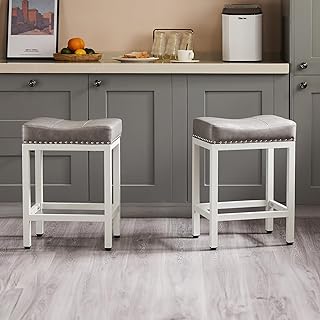
The Sweetcrispy set hits the sweet spot between price, durability, and a genuinely comfortable saddle seat. The PU leather holds up to spills without cracking, the metal base includes a built-in footrest that doesn’t feel like an afterthought, and the 17-inch seat depth tucks neatly under most standard counters. For a small apartment where stools need to disappear when you’re not using them, this pair is hard to beat.
HOOBRO Industrial Saddle Stools
HOOBRO’s rustic brown-and-black design gives you that farmhouse-industrial look without the farmhouse-industrial price tag. The 23.6-inch height slots perfectly under 36-inch counters, and the open metal frame keeps the visual weight low — important in a small room where bulky furniture closes in fast. Assembly is straightforward, and the footrests are welded rather than bolted, which means fewer loose screws over time.
Compact 24 Inch Faux Leather Bar Stools
These stools live up to their name. The narrow saddle seat and slim metal legs make them the smallest-profile option here, ideal for apartments where two stools technically fit but three absolutely do not. The brown faux leather adds warmth, and the advertised 15-minute assembly time is realistic if you’ve built anything before. They lack a backrest, so they’re better for quick breakfasts than long dinners.
Signature Design by Ashley Skempton
The Skempton set stands apart with its distressed wood frame and 18.5-inch foam-cushioned saddle seat — the thickest padding in this roundup. If you’re after a farmhouse aesthetic that doesn’t feel like a prop, Ashley’s build quality delivers. The footrest is positioned at a natural angle for most adults, and the solid frame construction supports steady seating without the slight flex you notice on cheaper metal alternatives.
Nalupatio Adjustable Swivel Bar Stools
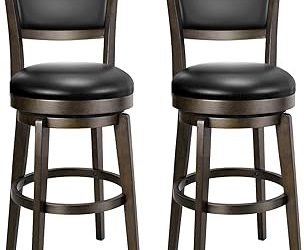
For anyone who wants flexibility, the Nalupatio stools offer adjustable height and 360-degree swivel — a rare combo at this price. The backrest makes longer sitting sessions genuinely comfortable, and the gas-lift mechanism feels smooth rather than stiff. The trade-off is a wider base that needs more floor clearance, so confirm your available space before ordering.
Frequently Asked Questions
What is the ideal counter stool height for a standard kitchen counter?
A 24-inch seat height pairs correctly with standard 36-inch kitchen counters, leaving roughly 10–12 inches of knee clearance. Always measure from your floor to the underside of your counter lip, not the top surface.
Can counter stools with no backrest cause discomfort?
For meals under 30 minutes, most people won’t notice the missing backrest. The saddle-seat design naturally encourages an upright posture. For extended seating, a stool with a backrest like the Nalupatio or the 26-inch barrel-style option is a better pick.
How much space do I need between each counter stool?
Plan for 26 to 30 inches of counter width per stool. Two stools need roughly 52–60 inches of clear counter edge. Squeezing three stools into a space meant for two defeats the purpose and creates elbow wars during meals.
Are PU leather counter stools durable enough for daily use?
Good PU leather handles daily sitting, spills, and cleaning well for three to five years before showing wear. It won’t peel or crack the way cheap vinyl does, but it does require occasional conditioning if the room gets direct sunlight.
Final Thoughts
For most small-space shoppers, the Sweetcrispy 24-inch stools deliver the best all-around value with comfort and durability that outlast their price point. If aesthetics matter most, the Ashley Skempton brings real character and superior cushioning. And for kitchens with odd dimensions or mixed-use needs, the Nalupatio adjustable swivel stools offer the versatility no fixed-height stool can match.