Key takeaways
- Cubic footage: Match capacity to household size. A couple can comfortably use 10–16 cu. ft., while families of four or more should aim for 17 cu. ft. or higher. Overspending on capacity you won’t fill wastes energy and kitchen real estate.
- Ice maker type: Built-in ice makers vary from basic tray-style units to in-door dispensers. Tray models are simpler and cheaper to repair, while in-door systems are more convenient but add a failure point. Check whether the ice maker is freestanding inside the freezer or molded into the door.
- Energy certification: An ENERGY STAR badge isn’t just a feel-good label — it typically means $30–$60 in annual electricity savings over a non-certified unit. Look for models with LED interior lighting and inverter compressors, both of which lower consumption.
- Frost-free operation: Manual defrost bottom freezers are cheaper upfront but demand periodic maintenance. Frost-free models use a heating cycle to prevent ice buildup, saving you from chipping away at frozen shelves every few months.
- Footprint and door swing: Measure your kitchen opening, including door swing clearance and the ability to pull the freezer drawer fully open. Some 31″ wide models claim “standard fit” but still need an extra inch on each side for ventilation.
What's inside
If you’ve ever stood in your kitchen wondering why you’re crouching down to dig through a bottom freezer drawer while the milk up top gets warm, you already understand the tension. Bottom freezer refrigerators promise a more ergonomic daily experience — fresh food at eye level — but finding one that also includes a built-in ice maker without sacrificing storage space or reliability can be a real headache. The market is flooded with models that look similar on paper yet differ wildly in build quality, energy draw, and noise level.
This guide cuts through the noise. We evaluated six popular bottom freezer refrigerators with integrated ice makers available in 2026 and narrowed the field to five standouts. Whether you need a compact unit for a galley kitchen or a full-size family refrigerator, the picks below are ranked on capacity efficiency, ice maker reliability, energy certification, and everyday usability — so you can stop scrolling and start chilling.
As an Amazon Associate we earn from qualifying purchases.


How to Choose a Bottom Freezer Refrigerator With Ice Maker (2026)
- Cubic footage: Match capacity to household size. A couple can comfortably use 10–16 cu. ft., while families of four or more should aim for 17 cu. ft. or higher. Overspending on capacity you won’t fill wastes energy and kitchen real estate.
- Ice maker type: Built-in ice makers vary from basic tray-style units to in-door dispensers. Tray models are simpler and cheaper to repair, while in-door systems are more convenient but add a failure point. Check whether the ice maker is freestanding inside the freezer or molded into the door.
- Energy certification: An ENERGY STAR badge isn’t just a feel-good label — it typically means $30–$60 in annual electricity savings over a non-certified unit. Look for models with LED interior lighting and inverter compressors, both of which lower consumption.
- Frost-free operation: Manual defrost bottom freezers are cheaper upfront but demand periodic maintenance. Frost-free models use a heating cycle to prevent ice buildup, saving you from chipping away at frozen shelves every few months.
- Footprint and door swing: Measure your kitchen opening, including door swing clearance and the ability to pull the freezer drawer fully open. Some 31″ wide models claim “standard fit” but still need an extra inch on each side for ventilation.
The Best Bottom Freezer Refrigerator With Ice Maker (2026)s Reviewed
BLACK+DECKER 16 Cu. Ft. French Door Refrigerator
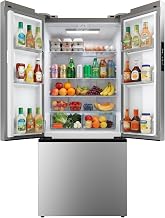
BLACK+DECKER’s 16 cu. ft. French door model hits a sweet spot for small-to-mid-size kitchens. The bottom-mount freezer drawer slides smoothly, the ice maker produces a steady stream of crescent cubes, and ENERGY STAR certification keeps the electric bill honest. Frost-free operation means zero defrost chores — a genuine quality-of-life win at this price tier.
Kenmore 22.3 cu. ft. 31″ Bottom Freezer
Kenmore’s 22.3 cu. ft. unit is the heavyweight of this roundup, both in storage and build quality. Fingerprint-resistant stainless steel keeps the exterior looking clean, while adjustable glass shelving and dual crisper drawers make the interior highly configurable. The LED lighting is bright without being harsh, and the ice maker keeps pace with a household of four or more.
Antarctic Star 17.5 Cu Ft French Door
The Antarctic Star stands out with its inverter compressor, which adjusts cooling power on the fly rather than cycling the motor on and off. That translates to quieter operation and longer compressor life. Multi-air flow keeps temperatures uniform across every shelf, and the built-in LED touch display gives you precise control. At 17.5 cu. ft., it’s roomy enough for most families without dominating a standard kitchen footprint.
Summit FFBF235PLIM 24″ Refrigerator
For tight spaces — apartments, studio kitchens, under-counter installations — Summit’s 24-inch model is the clear pick. At 10.8 cu. ft., it won’t compete on raw volume, but it packs a real ice maker into a genuinely compact chassis. The right-hand door swing is worth verifying against your layout, and the stainless steel look finish resists smudges surprisingly well for the price.
LRAIN 16 Cu. Ft. French Door Refrigerator
LRAIN’s 16 cu. ft. offering mirrors several specs found on pricier units — frost-free cooling, auto defrost, and a bottom-mount freezer with integrated ice maker — at a notably lower price point. Build quality is solid if not luxurious, making it a smart buy for renters or anyone outfitting a secondary kitchen or garage space where function matters more than finishes.
Frequently Asked Questions
Do bottom freezer refrigerators use more electricity?
Generally, no. Heat rises, so placing the freezer on the bottom is actually thermodynamically efficient. Most modern bottom freezer models with inverter compressors and ENERGY STAR ratings consume less energy than top freezer equivalents of similar size.
How often should a built-in ice maker be cleaned?
Plan on cleaning the ice maker every three to six months. Wipe the ice bin with a mild vinegar solution, check the water supply line for mineral buildup, and discard any ice that has absorbed freezer odors. Regular maintenance keeps ice tasting neutral and the mechanism running smoothly.
Can I disable the ice maker to save energy?
Most built-in ice makers can be switched off via a simple toggle inside the freezer. Disabling the ice maker when you don’t need ice can reduce energy consumption by a small but measurable margin and extends the life of the motor and water valve.
What is the average lifespan of a bottom freezer refrigerator?
With proper maintenance — condenser coil cleaning, door gasket checks, and ice maker upkeep — expect 12 to 18 years of service from a quality bottom freezer refrigerator. Inverter compressor models tend to land toward the upper end of that range.
Final Thoughts
If you’re choosing one model, the Kenmore 22.3 cu. ft. earns the top spot for its blend of generous capacity, fingerprint-resistant finish, and reliable ice maker performance. For smaller spaces, the Summit FFBF235PLIM proves that compact doesn’t have to mean compromised. And for budget-conscious buyers who still want modern features, the BLACK+DECKER 16 cu. ft. delivers the best overall value in this roundup. Measure your space, match the capacity to your household, and enjoy ice-cold water without the countertop clutter.