Key takeaways
- Airflow: Look at CFM at 90 PSI rather than peak PSI alone. Automotive spray guns commonly need a sustained supply, and a compressor with too little airflow will produce uneven coverage.
- Tank capacity: A larger tank gives you a buffer while spraying and reduces immediate cycling. For a full vehicle, a 20-gallon-plus tank is generally more comfortable than a small portable unit.
- Spray-gun match: HVLP guns can demand substantial airflow, while LVLP models are often easier for smaller compressors. Compare the gun’s stated CFM requirement with the compressor’s rated output.
- Moisture control: Condensation can spoil automotive paint. Use a regulator, water separator, and suitable inline filter, and drain the tank regularly—even with an oil-free compressor.
- Garage practicality: Noise, electrical requirements, wheels, hose storage, and duty cycle affect everyday usability. A compressor that is slightly less powerful but easier to live with may be the better home choice.
What's inside
Painting a car at home is less about finding the highest advertised PSI and more about delivering a steady stream of clean, dry air. A compressor that cycles constantly, struggles to keep up with a spray gun, or fills the garage with harsh noise can turn a weekend project into a frustrating one. Tank size, airflow, duty cycle, and moisture control all matter.
This guide focuses on practical home-garage use, from small touch-ups and panels to more demanding automotive spraying. We compare compact and mid-size compressors for their usable airflow, noise, portability, maintenance needs, and suitability for common HVLP or LVLP spray guns. Always check your spray gun’s CFM requirements before buying.
As an Amazon Associate we earn from qualifying purchases.


How to Choose an Air Compressor To Paint A Car (2026)
- Airflow: Look at CFM at 90 PSI rather than peak PSI alone. Automotive spray guns commonly need a sustained supply, and a compressor with too little airflow will produce uneven coverage.
- Tank capacity: A larger tank gives you a buffer while spraying and reduces immediate cycling. For a full vehicle, a 20-gallon-plus tank is generally more comfortable than a small portable unit.
- Spray-gun match: HVLP guns can demand substantial airflow, while LVLP models are often easier for smaller compressors. Compare the gun’s stated CFM requirement with the compressor’s rated output.
- Moisture control: Condensation can spoil automotive paint. Use a regulator, water separator, and suitable inline filter, and drain the tank regularly—even with an oil-free compressor.
- Garage practicality: Noise, electrical requirements, wheels, hose storage, and duty cycle affect everyday usability. A compressor that is slightly less powerful but easier to live with may be the better home choice.
The Best Air Compressor To Paint A Car (2026)s Reviewed
Klutch 29-Gallon Air Compressor
The Klutch 29-Gallon compressor is the strongest all-around option here for serious garage painting. Its 2.5 HP motor, 175 PSI maximum pressure, and 5.1 CFM at 90 PSI provide a useful combination of reserve capacity and working airflow, while the vertical tank saves floor space. It is still not a substitute for a professional shop compressor when spraying an entire vehicle continuously, but the large tank and quick-recovery design make it a sensible choice for panels, bumpers, wheels, and staged projects.
VEVOR 13-Gallon Air Compressor
With 4.6 SCFM at 90 PSI and a 125 PSI maximum, the VEVOR 13-Gallon model offers a practical middle ground for home automotive work. Its oil-free design reduces routine maintenance, and the listed 66dB operating level should be more tolerable in a residential garage than many traditional compressors. The tank is large enough for intermittent spraying, although users painting large sections should pause periodically and watch for pressure loss.
8.1-Gallon Ultra Quiet Air Compressor
This 8.1-gallon compressor is aimed at homeowners who need moderate airflow without bringing a very large tank into the garage. Its 1.5 HP motor, 4.52 CFM rating, and oil-free construction make it versatile for smaller spray jobs, trim work, woodworking, and pneumatic nails. The compact tank means it is better suited to touch-ups and individual panels than a complete respray, but its relatively quiet 70dB design is appealing for shared spaces.
8-Gallon Quiet Oil-Free Air Compressor
The 8-gallon quiet compressor is a convenient package for beginners because it includes an air hose and combines a 2 HP motor with 4.2 CFM and a 120 PSI maximum. Its 68dB rating is useful when you need to work near the house, while the oil-free pump keeps maintenance simple. Air capacity is limited for extended automotive spraying, so pair it with a low-CFM LVLP gun and plan your work in controlled sections.
MZB 6.4-Gallon Ultra Quiet Air Compressor
The MZB 6.4-gallon unit is the most compact practical choice in this group, with wheels, an oil-free pump, and a stated 70dB noise level. It can handle light spray painting, small repairs, trim, and general pneumatic tasks, but its smaller tank will require more frequent cycling. For occasional touch-ups or furniture and automotive-detailing projects, it offers approachable portability; for a full car, choose a larger compressor.
Frequently Asked Questions
What size air compressor do I need to paint a car?
For occasional panels and touch-ups, a compressor producing roughly 4 CFM at 90 PSI can work with an efficient LVLP gun. A larger tank—around 20 gallons or more—provides a smoother experience for broader sections and reduces cycling.
Can I paint a car with a portable tire inflator?
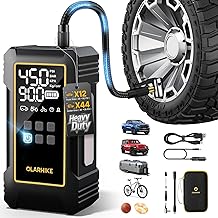
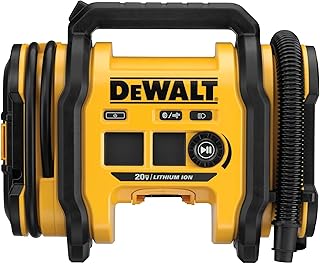
A compact inflator such as the DEWALT Tire Inflator Portable Air Compressor is excellent for tires and small inflation jobs, but it is not designed to supply a continuous spray gun. Its automatic shutoff and LED light are useful convenience features, yet automotive painting requires a tank compressor with substantially higher sustained airflow.
Is an oil-free compressor suitable for automotive paint?
Yes, an oil-free compressor can be suitable, especially for occasional home use. It does not eliminate moisture, however, so install a regulator and moisture separator, drain the tank, and use a clean air line and final inline filter before the spray gun.
Should I choose HVLP or LVLP for a smaller compressor?
LVLP guns generally demand less air and are often easier to match with compact compressors. HVLP can provide excellent transfer efficiency, but many models require more sustained CFM than a small home compressor can comfortably deliver.
Final Thoughts
The Klutch 29-Gallon is the best fit for demanding home-garage work, while the VEVOR 13-Gallon offers a strong balance of capacity, airflow, and manageable size. For quieter, occasional projects, the 8.1-Gallon Ultra Quiet model is a practical compromise—provided you match it with an efficient spray gun and use proper moisture filtration.