Key takeaways
- Keep a small “return” bin for tools that need to be put away after a project, then empty it at the end of the day.
- Store the most-used ratchet, bit set, tape measure, and screwdrivers where they can be reached without bending.
- Photograph each organized drawer after finishing; the image makes cleanup faster for every household user.
- Leave one partially open section for new tools instead of forcing additions into already crowded bins.
What's inside
A well-organized tool chest saves more time than a larger tool collection. When screwdrivers, sockets, fasteners, and measuring tools each have a predictable home, you can open a drawer, find what you need, and get back to the job without emptying the entire chest. Good organization also protects tools from scratches, keeps small parts from migrating between drawers, and makes it easier to notice what is missing.
This guide explains a practical way to arrange a tool chest for everyday home repairs. You’ll learn how to sort tools by task and frequency, choose trays and dividers that suit your drawers, handle sockets and loose hardware, and avoid common storage mistakes. The goal is not a showroom-perfect chest; it is a setup that remains usable after a busy weekend of projects.
As an Amazon Associate we earn from qualifying purchases.



1. Start With a Full Inventory
Take everything out before buying organizers. Group items by function: driving tools, pliers and cutters, wrenches, sockets, measuring tools, electrical supplies, fasteners, and specialty equipment. Set aside duplicates, damaged tools, and items that belong in another area. This first pass prevents you from filling valuable drawer space with things you rarely use.
Next, note the dimensions of each drawer, including usable height. A shallow drawer may accept low-profile trays but not tall cases or standing tools. Measure around drawer slides and internal dividers as well. If you are purchasing a new system, a modular option such as the Keter Stack N Rolling Tool Box Modular Storage System can be useful when a fixed chest is not large enough or when tools need to move around the house.
2. Arrange the Chest by Frequency and Weight
Place everyday tools in the most accessible drawers, usually at waist height. A practical top section might hold a tape measure, utility knife, pencils, screwdrivers, pliers, and a small adjustable wrench. Put heavier items lower down to improve stability and reduce strain on drawer slides. Infrequent specialty tools can occupy the bottom or a separate cabinet.
Organize by the way you work rather than by strict tool type. For example, a home-maintenance drawer could hold the tools used for hanging shelves, while a plumbing drawer might contain basin wrenches, thread seal tape, and replacement washers. If several people use the chest, broad categories with visible labels are usually easier to maintain than a highly detailed system.
3. Use Trays and Dividers That Fit the Drawer
Loose tools waste space because they overlap and shift whenever a drawer opens. Modular bins let you create sections around the tools you actually own. The A-LuGei 69-piece, five-size organizer is a sensible choice for mixed drawers with small hand tools, hardware, and accessories. Its range of bin sizes can help fill awkward gaps, though you should confirm the tray dimensions against your drawer before ordering.
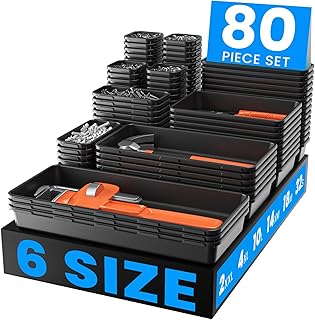
For a larger collection, the A-LUGEI six-size, 80-piece organizer is designed for a broader assortment and can suit a deep rolling chest or workbench drawer. A smaller setup may need less coverage: the A-LuGei 46-piece, five-size set can be more appropriate when you are organizing one or two compact drawers rather than an entire workshop.
Choose bins with enough wall height to contain items without hiding them. Avoid packing every compartment tightly; leave a little room for grasping tools and for future additions. If a tray slides when the drawer moves, add a thin non-slip liner or use removable adhesive strips carefully on clean surfaces.
4. Give Sockets and Small Parts Their Own System
Sockets are especially frustrating when stored loose. They roll, become separated from their ratchet, and are difficult to identify at a glance. A dedicated holder keeps sizes in sequence and makes missing pieces obvious. The EACELIY Magnetic Socket Organizer Set covers 1/2-inch, 1/4-inch, and 3/8-inch SAE and metric sockets, and its magnetic base can attach to a steel tool chest or cart. It holds sockets rather than supplying them, so check that your collection matches its intended capacity.
Store sockets with the drive size and measurement system clearly separated. Keep metric and SAE rows distinct, and arrange each from small to large. For screws, nails, anchors, washers, and spare nuts, use small lidded containers or labeled removable bins. A compartment that is too large encourages mixed hardware; a compartment that is too small becomes difficult to use.
5. Label for Maintenance, Not Decoration
Labels are most useful when they describe a category broad enough to remain accurate. “Wood screws,” “electrical,” and “hex keys” are better long-term labels than labels tied to one current project. Use large, readable text on the front edge of a bin or drawer. For identical organizers, a simple numbering system can work, provided you keep a small inventory list nearby.
After your first arrangement, close each drawer gently and check for interference. Nothing should scrape the drawer above it, catch on the slides, or prevent the chest from locking. A thicker tray system, such as the A-LuGei six-size extra-thick plastic set, may offer useful durability, but the extra material can reduce available height in very shallow drawers. Fit matters more than advertised capacity.
Tips
- Keep a small “return” bin for tools that need to be put away after a project, then empty it at the end of the day.
- Store the most-used ratchet, bit set, tape measure, and screwdrivers where they can be reached without bending.
- Photograph each organized drawer after finishing; the image makes cleanup faster for every household user.
- Leave one partially open section for new tools instead of forcing additions into already crowded bins.
Frequently Asked Questions
Should tools be stored by type or by project?
Use a combination. Keep related tools together, but give priority to common tasks and frequency of use. A dedicated drawer for everyday repairs is often more convenient than separating every screwdriver, wrench, and plier into different locations.
Are foam drawer inserts better than plastic bins?
Foam inserts look neat and hold tools securely, but they take longer to cut and are less adaptable when your collection changes. Plastic trays and dividers are easier to rearrange and generally work better for a growing household tool chest.
How much empty space should a drawer have?
Aim to leave roughly 10 to 20 percent open where possible. That space makes tools easier to lift out and gives you room for replacement items. A drawer packed edge to edge may hold more initially but will be harder to maintain.
What is the best way to organize a portable tool box?
Keep only essential, frequently used tools inside it and group them by task. Use compact removable bins for fasteners, place heavier tools at the bottom, and reserve a separate rolling system or chest for less frequently used equipment.
Conclusion
The best tool-chest organization is visible, flexible, and matched to the way your household works. Begin with an inventory, place frequent and heavy tools thoughtfully, then use correctly sized trays, socket holders, and labeled bins to stop clutter from returning. A few well-chosen organizers will usually improve access more than simply buying a larger chest.