Key takeaways
- Tooth count: Choose 32–40 teeth for faster rough work, 60 teeth for general-purpose cutting, and 80–120 teeth for especially clean crosscuts and finished furniture parts.
- Blade diameter: Match the blade diameter to your miter saw’s specification. A 10-inch saw generally takes a 10-inch blade, while a 12-inch model requires a 12-inch blade.
- Arbor size: Confirm the center-hole measurement before buying. Common sizes include 5/8 inch on 10-inch saws and 1 inch on many 12-inch saws.
- Tooth design: ATB teeth are well suited to wood crosscuts, while TCG designs can be useful for laminate, aluminum, and other materials when the blade is specifically rated for them.
- Cutting capacity: A high tooth count improves finish quality but usually cuts more slowly. For everyday projects, a balanced blade or multi-pack can be more useful than a dedicated ultra-fine blade.
What's inside
Best Saw Blade For Miter Saw (2026) starts with a simple truth: the blade supplied with a miter saw is not always the best choice for clean furniture work. A rough-cutting blade can leave torn veneer, fuzzy crosscuts, or edges that need extra sanding, while an ultra-fine blade may cut slowly or wear quickly when used on framing lumber.
This guide focuses on practical home and workshop use, from trim and shelving to cabinet panels and occasional repairs. We compare tooth counts, cutting behavior, material compatibility, and overall versatility so you can choose a blade that matches your saw and the finish you expect.
As an Amazon Associate we earn from qualifying purchases.


How to Choose a Saw Blade For Miter Saw (2026)
- Tooth count: Choose 32–40 teeth for faster rough work, 60 teeth for general-purpose cutting, and 80–120 teeth for especially clean crosscuts and finished furniture parts.
- Blade diameter: Match the blade diameter to your miter saw’s specification. A 10-inch saw generally takes a 10-inch blade, while a 12-inch model requires a 12-inch blade.
- Arbor size: Confirm the center-hole measurement before buying. Common sizes include 5/8 inch on 10-inch saws and 1 inch on many 12-inch saws.
- Tooth design: ATB teeth are well suited to wood crosscuts, while TCG designs can be useful for laminate, aluminum, and other materials when the blade is specifically rated for them.
- Cutting capacity: A high tooth count improves finish quality but usually cuts more slowly. For everyday projects, a balanced blade or multi-pack can be more useful than a dedicated ultra-fine blade.
The Best Saw Blade For Miter Saw (2026)s Reviewed
WEN BL1080 80-Tooth Ultra-Fine Finish Blade
The WEN BL1080 is a sensible choice for trim, picture frames, shelving, and other projects where a clean crosscut matters more than speed. Its carbide-tipped 80-tooth layout is designed for fine wood finishing and should suit homeowners who want a noticeable upgrade from a basic general-purpose blade.
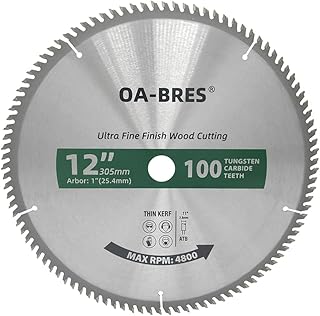
12-Inch 100-Tooth ATB TCT Ultra-Fine Finish Blade
This 12-inch blade is aimed at large miter saws and demanding finish work. The 100-tooth ATB pattern favors smooth cuts in wood, making it a strong fit for molding, furniture components, and painted or stained parts where minimizing tear-out saves preparation time.
KENDO 10-Inch 40T/60T Circular Saw Blade Set
KENDO’s two-blade set is the most flexible option for homeowners who do more than one type of project. The 40-tooth blade handles faster ripping and general work, while the 60-tooth blade is better suited to plywood, MDF, laminate, and cleaner crosscuts.
10-Inch 80-Tooth Fine-Finish Woodworking Blade
This 80-tooth blade is built for controlled, fine crosscutting in wood and is rated for speeds up to 7,000 RPM. It is a practical match for a 10-inch miter saw used on trim and furniture stock, particularly when a smooth edge is more important than making the fastest possible cut.
10-Inch 32T/60T/80T Three-Pack
The three-pack offers a useful spread of cutting styles: 32 teeth for framing and rough work, 60 teeth for everyday finish cuts, and 80 teeth for ultra-fine results. It is a good workshop starter set because you can choose the blade for the material instead of forcing one compromise blade to do everything.
Frequently Asked Questions
What tooth count is best for a miter saw?
For general household woodworking, 60 teeth is a dependable middle ground. Move to 80 or more teeth for trim, veneered panels, and visible furniture parts; choose fewer teeth when speed and rough cutting are the priority.
Can I use a table saw blade on a miter saw?
Often, yes, provided the diameter, arbor, kerf, and maximum RPM all match the miter saw. Always check the blade and saw manuals, and avoid any blade that is not approved for the saw’s operating speed or intended material.
Is a 100- or 120-tooth blade better for wood?
It can produce a very clean finish, especially on thin trim and delicate stock, but more teeth do not automatically mean better performance in every situation. These blades may cut more slowly and can be less suitable for thick lumber or fast production work.
How often should a miter saw blade be replaced?
Replace or sharpen it when cuts become rough, burning appears, the saw needs noticeably more force, or the blade no longer tracks cleanly. Carbide blades often benefit from professional sharpening rather than immediate disposal if the teeth are not damaged.
Final Thoughts
For the cleanest furniture and trim work, the WEN BL1080 80-tooth blade is a dependable all-around pick, while the 12-inch 100-tooth ATB blade is better for large saws and exceptionally smooth cuts. If versatility matters most, the KENDO 40T/60T set or the three-pack gives a home workshop more useful options than a single specialty blade.