Key takeaways
- Cutting capacity: A 10-inch blade and generous rip width provide more flexibility for sheet goods and furniture components, while an 8-1/4-inch saw is easier to carry and store.
- Stand and storage: A folding or wheeled stand makes a substantial difference when the saw must move between the garage, driveway, and storage area.
- Fence quality: Look for a fence that locks firmly and stays parallel to the blade. Reliable adjustments matter more than impressive maximum RPM figures.
- Safety features: A riving knife, blade guard, push stick, and accessible power switch are essential. Read the manual and use hearing and eye protection every time.
- Project fit: Match the saw to your materials. A full-size portable saw suits furniture lumber and plywood, while a miniature craft saw is intended for thin plastic, acrylic, PCB, or light hobby stock.
What's inside
Choosing a first table saw is less about chasing the biggest motor and more about finding a machine you can set up confidently, guide stock through without wrestling the fence, and store without turning the garage into a permanent workshop. Beginners often face a confusing mix of jobsite saws, folding stands, compact models, and low-cost benchtop tools that look similar on paper but feel very different in daily use.
This guide focuses on practical home-furniture projects such as shelving, cabinet parts, trim, and small outdoor builds. We weigh cutting capacity, portability, fence control, stand quality, safety-minded design, and the realities of limited workshop space so you can choose a starter saw that is useful now and not immediately outgrown.
As an Amazon Associate we earn from qualifying purchases.



How to Choose a Starter Table Saw (2026)
- Cutting capacity: A 10-inch blade and generous rip width provide more flexibility for sheet goods and furniture components, while an 8-1/4-inch saw is easier to carry and store.
- Stand and storage: A folding or wheeled stand makes a substantial difference when the saw must move between the garage, driveway, and storage area.
- Fence quality: Look for a fence that locks firmly and stays parallel to the blade. Reliable adjustments matter more than impressive maximum RPM figures.
- Safety features: A riving knife, blade guard, push stick, and accessible power switch are essential. Read the manual and use hearing and eye protection every time.
- Project fit: Match the saw to your materials. A full-size portable saw suits furniture lumber and plywood, while a miniature craft saw is intended for thin plastic, acrylic, PCB, or light hobby stock.
The Best Starter Table Saw (2026)s Reviewed
DEWALT DWE7491RS 10-Inch Table Saw
The DWE7491RS is the strongest all-around choice for a serious beginner who expects projects to grow. Its rolling stand is unusually convenient for a portable saw, and the 32-1/2-inch rip capacity gives you room to break down wider panels without immediately needing another tool. The fence is the standout feature: it adjusts smoothly and locks with reassuring solidity. It is heavier and more expensive than compact alternatives, but that added stability makes accurate work less frustrating.
SKIL TS6307-00 Table Saw with Folding Stand
SKIL’s 15-amp TS6307-00 offers a very approachable combination of price, portability, and useful capacity. The folding stand helps it earn its place in a shared garage, while the 10-inch blade is well suited to common furniture lumber and trim stock. It may not feel as refined as the DEWALT when ripping large panels all afternoon, yet it is a sensible starter for homeowners who want a capable saw without a professional-sized footprint.
Evolution R10TBLX Jobsite Table Saw
The Evolution R10TBLX is appealing for DIYers who value a well-equipped package. Its wheeled stand, zero-clearance throat plate, dado plate, precision fence, and 26-inch rip capacity give beginners useful accessories without requiring immediate upgrades. The 3-3/8-inch cutting depth is adequate for many home projects, though users tackling thick hardwood or frequent sheet-goods work may prefer the larger capacity and more established fence system of the DEWALT.
DEWALT DWE7485 Compact Portable Table Saw
The DWE7485 is a practical choice when storage and carrying weight matter more than maximum capacity. Its 8-1/4-inch blade keeps the saw compact while still handling a broad range of trim, shelving, and smaller furniture tasks. It is especially attractive for homeowners who move tools often or work in a tight garage. The trade-off is a narrower rip capacity, so plan on more careful panel breakdown for large plywood sheets.
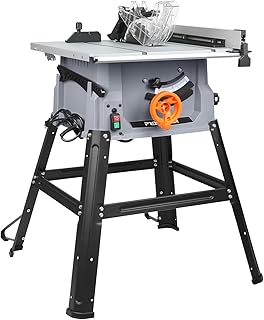
Prostormer 10-Inch Table Saw with Stand
Prostormer’s 10-inch model offers a straightforward entry point for occasional woodworking, with a stand, bevel adjustment, and a 15-amp motor aimed at general DIY use. It can make sense for simple decking, trim, and utility projects when the budget is tightly controlled. Buyers should keep expectations realistic: inspect the fence alignment and check every adjustment before cutting, because inexpensive saws can demand more setup and hands-on verification than premium portable models.
Frequently Asked Questions
Is a 10-inch table saw best for beginners?
Usually, yes. A 10-inch blade supports common replacement blades and handles standard construction lumber well. An 8-1/4-inch model can be the better beginner choice when portability, storage, or a smaller work area is the priority.
Can a starter table saw cut plywood?
Yes, but full sheets are awkward and potentially unstable on a portable table. Use proper support, a helper or outfeed arrangement, and break large panels down safely before bringing them to the saw whenever possible.
Do I need a folding stand?
Not necessarily, but it is one of the most useful convenience features for home workshops. A stand raises the saw to a workable height and makes setup more consistent; wheels are particularly helpful if the tool must be moved after every project.
Are mini table saws suitable for furniture making?
The 96W Mini Table Saw is better suited to light craft work involving thin wood, acrylic, plastic, or PCB material. It should not be treated as a substitute for a full-size portable table saw when cutting furniture components or substantial lumber.
Final Thoughts
For the most capable long-term starter, the DEWALT DWE7491RS is the leading pick. The SKIL TS6307-00 offers a balanced home-workshop value, while the compact DEWALT DWE7485 is the easier choice for tight storage and frequent carrying. Whichever model you choose, accurate setup, stable material support, and disciplined safety habits will matter as much as the saw itself.