Key takeaways
- Compatibility: Check your washer’s fitting size and style before buying. M22 connections can vary, and some machines need a 14 mm or 15 mm fitting, an adapter, or a quick-connect end.
- Pressure rating: Select a hose rated above your pressure washer’s maximum output. Extra capacity provides a useful safety margin, but a higher PSI rating does not automatically mean better flexibility.
- Length: A 50-foot hose suits most driveways, decks, vehicles, and small yards. Choose 100 feet when you want to avoid repeatedly moving the washer, provided you can manage the added weight.
- Construction: Rubber and steel-braided designs usually tolerate demanding work well, while lightweight polyurethane or hybrid jackets are easier to carry and less likely to mark surfaces.
- Handling: Look for swivel fittings, bend protectors, and a credible kink-resistant design. A hose that lays flat and coils without fighting you is more pleasant to use and simpler to store.
What's inside
Choosing a pressure washer hose sounds simple until the original line kinks every few feet, drags across furniture and flower beds, or develops a leak at the fitting. The wrong hose can make an otherwise capable washer feel awkward and can restrict your working range just when you are cleaning a patio, vehicle, fence, or outdoor cushions.
This guide focuses on the details that matter in everyday home use: flexibility, kink resistance, fittings, pressure capacity, length, temperature range, and how easily the hose stores. The recommendations below cover practical replacements for electric washers as well as longer, heavier-duty options for larger properties.
As an Amazon Associate we earn from qualifying purchases.


How to Choose a Pressure Washer Hose (2026)
- Compatibility: Check your washer’s fitting size and style before buying. M22 connections can vary, and some machines need a 14 mm or 15 mm fitting, an adapter, or a quick-connect end.
- Pressure rating: Select a hose rated above your pressure washer’s maximum output. Extra capacity provides a useful safety margin, but a higher PSI rating does not automatically mean better flexibility.
- Length: A 50-foot hose suits most driveways, decks, vehicles, and small yards. Choose 100 feet when you want to avoid repeatedly moving the washer, provided you can manage the added weight.
- Construction: Rubber and steel-braided designs usually tolerate demanding work well, while lightweight polyurethane or hybrid jackets are easier to carry and less likely to mark surfaces.
- Handling: Look for swivel fittings, bend protectors, and a credible kink-resistant design. A hose that lays flat and coils without fighting you is more pleasant to use and simpler to store.
The Best Pressure Washer Hoses (2026) Reviewed
UBERFLEX 50-Foot Kink-Resistant Hose
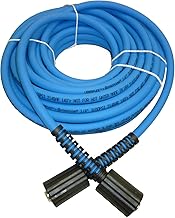
The UBERFLEX hose is a strong all-rounder for homeowners who want a manageable 50-foot replacement without excessive bulk. Its 3,100 PSI rating, flexible construction, and included 22 mm fittings make it well suited to many residential electric and gas pressure washers, while the made-in-USA construction adds confidence for regular use.
YAMATIC 3/8-Inch 4,000 PSI Hose
With a steel-braided rubber build and a 4,000 PSI rating, this YAMATIC is aimed at tougher cleaning jobs than a lightweight electric-washer hose. The 360-degree swivel quick connect can reduce twisting while you work, and its stated 15°F to 212°F water range gives it useful versatility for seasonal chores.
Flexzilla 50-Foot Replacement Hose
Flexzilla’s 1/4-inch hose is a practical choice when low weight and easy handling matter most. The bright ZillaGreen jacket is easy to spot around a busy driveway, while the no-kink design, 3,100 PSI rating, and M22 fittings make it a convenient replacement for many standard residential machines.
Simpson 100-Foot Monster Hose
The Simpson Monster hose is the pick for users who value reach over portability. Its 100-foot length and 4,500 PSI rating are helpful on larger properties, while dual steel braiding, a non-marring polyurethane jacket, and bend protectors are thoughtful touches for demanding cold-water cleaning. Expect more weight and storage space than with a 50-foot hose.
YAMATIC 50-Foot 3,200 PSI Hose
This compact YAMATIC replacement offers a useful balance for owners of popular Ryobi, Greenworks, Troy-Bilt, and Craftsman washers. The kink-resistant 1/4-inch hose has solid brass fittings and M22-14 mm female connections, so it is especially appealing when direct compatibility matters more than maximum pressure capacity.
Frequently Asked Questions
Can I use any pressure washer hose with my machine?
No. Confirm the fitting type, connection diameter, hose length, and pressure rating first. A hose may have the right PSI rating but still fail to connect properly without the correct adapter.
Is a 3/8-inch hose better than a 1/4-inch hose?
Not necessarily. A 3/8-inch hose can suit higher-flow, more powerful machines, while a 1/4-inch hose is usually lighter and easier to handle with many electric washers. Match the hose to the washer’s requirements rather than choosing by diameter alone.
Why does my pressure washer hose keep kinking?
Sharp bends, tight storage loops, twisting at the fittings, and a stiff jacket can all contribute. Before use, lay the hose out as straight as possible, avoid pulling the washer by the hose, and coil it loosely after draining the water.
How should I store a pressure washer hose?
Shut off the washer, release pressure, drain the hose, and inspect the fittings. Coil it in broad loops away from direct sunlight, freezing temperatures, chemicals, and sharp edges. Avoid leaving it crushed beneath equipment.
Final Thoughts
For most homes, the UBERFLEX 50-foot hose is a dependable blend of flexibility and everyday reach, while the Flexzilla is especially appealing when light handling is the priority. Choose the Simpson Monster for large properties and demanding work, or the fitting-focused YAMATIC 3,200 PSI model when straightforward replacement compatibility is most important.