Key takeaways
- Portability: A folding stand or compact body makes a major difference in a garage or shared workspace. Rolling wheels are especially helpful when the saw is stored against a wall.
- Fence and table: Look for a fence that locks firmly and adjusts smoothly. A reliable fence is more valuable than a small increase in motor speed because it supports safer, cleaner, repeatable cuts.
- Rip capacity: Choose enough capacity for your usual sheet goods and furniture parts. Around 24 to 32 inches is a useful range for many home workshops, while smaller saws suit narrower stock and limited space.
- Cutting control: Bevel adjustment, cutting depth, a clear scale, and accessible controls all reduce frustration. Dado compatibility can also matter if you build cabinets, bookcases, or joinery-heavy furniture.
- Workshop fit: Consider noise, dust collection, storage footprint, power requirements, and replacement parts before buying. A saw that fits your routine will get used more often than a larger model that is difficult to deploy.
What's inside
Buying a table saw for home projects is less about chasing the highest RPM and more about finding a machine you can set up confidently, guide accurately, and store without resenting it. A saw that is powerful on paper may still disappoint if its fence drifts, stand feels unstable, or dust collection leaves your workshop buried in chips.
This guide focuses on practical home use: furniture building, cabinet parts, shelving, trim, and general DIY work. We compare portability, rip capacity, setup, controls, cutting flexibility, and the everyday comfort details that matter when a project takes longer than expected. Always use the supplied guard and push tools, eye and hearing protection, and a suitable dust-collection setup.
As an Amazon Associate we earn from qualifying purchases.


How to Choose a Table Saw (2026)
- Portability: A folding stand or compact body makes a major difference in a garage or shared workspace. Rolling wheels are especially helpful when the saw is stored against a wall.
- Fence and table: Look for a fence that locks firmly and adjusts smoothly. A reliable fence is more valuable than a small increase in motor speed because it supports safer, cleaner, repeatable cuts.
- Rip capacity: Choose enough capacity for your usual sheet goods and furniture parts. Around 24 to 32 inches is a useful range for many home workshops, while smaller saws suit narrower stock and limited space.
- Cutting control: Bevel adjustment, cutting depth, a clear scale, and accessible controls all reduce frustration. Dado compatibility can also matter if you build cabinets, bookcases, or joinery-heavy furniture.
- Workshop fit: Consider noise, dust collection, storage footprint, power requirements, and replacement parts before buying. A saw that fits your routine will get used more often than a larger model that is difficult to deploy.
The Best Table Saw (2026)s Reviewed
DEWALT DWE7491RS Rolling Table Saw
The DEWALT DWE7491RS is the strongest all-around choice for homeowners who regularly break down plywood or build larger furniture. Its 32-1/2-inch rip capacity and rolling stand provide impressive reach without making setup feel like a two-person job. The rack-and-pinion fence is a standout feature: it makes small adjustments quick and helps keep the cut line dependable. It is substantial for a compact workshop, but the wheels make that extra size worthwhile.
SKIL TS6307-00 Portable Table Saw
The SKIL TS6307-00 offers a particularly approachable balance of capability and price for DIY users. Its folding stand simplifies storage, while the 10-inch blade and 15-amp motor provide plenty of capacity for common furniture materials. This is a sensible pick for a first serious table saw, especially when you need a freestanding setup rather than a benchtop unit. Check the fence alignment carefully during initial setup, then make a habit of verifying it before important cuts.
DEWALT DWE7485 Compact Jobsite Saw
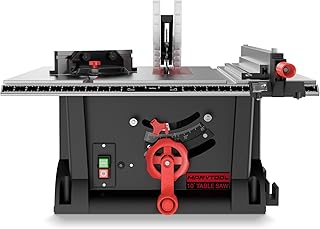
The DEWALT DWE7485 is the best fit for tight garages, apartment workshops, and users who prioritize easy lifting over maximum sheet-goods capacity. Its 8-1/4-inch blade keeps the saw compact while still handling a wide range of boards and furniture components. The rack-and-pinion fence gives it a more refined feel than many small saws, and the reduced footprint makes it simple to move between a workbench and storage shelf. Its smaller rip capacity is the trade-off.
Evolution R10TS Jobsite Table Saw
The Evolution R10TS is an appealing option for woodworkers who want useful extras in a portable format. The included zero-clearance throat plate and dado plate support more controlled work, while the 26-inch rip capacity is enough for many shelving and cabinet projects. Its precision fence and bevel range add versatility, although buyers should allow time for careful calibration. It makes the most sense for DIYers who expect to explore joinery rather than only make occasional straight cuts.
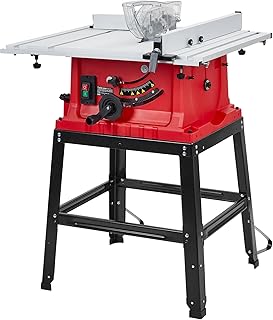
10-Inch Table Saw with Stand and Cover
This 10-inch, 15-amp model is aimed at budget-conscious users who want a complete package, including a stand and protective cover. Its advertised 36-inch table, adjustable depth, and 0-to-45-degree bevel range look attractive for general woodworking, metal, and plastic projects. With lesser-known saws, quality control and long-term support can vary more than with established brands, so inspect the fence, guard, and stand before use and confirm that replacement blades and parts are readily available.
Frequently Asked Questions
Is a table saw suitable for a beginner?
Yes, provided you begin with straight, manageable stock and learn the guard, riving knife, fence, and push-stick procedures before powering on. Practice setup and measurement first, and never rush a cut simply to finish a project.
What size table saw is best for furniture making?
A 10-inch saw is the most versatile choice for many home furniture projects. It offers useful cutting depth and broad blade availability, while a rip capacity near 24 to 32 inches handles many cabinet, shelving, and tabletop components.
Do I need a rolling stand?
Not necessarily, but it is highly valuable when the saw must be stored after each use. A stable folding stand can also improve working height and reduce back strain compared with using a saw directly on the floor or a makeshift surface.
How can I improve table-saw accuracy?
Calibrate the fence and blade alignment, keep the tabletop clean, use a sharp blade suited to the material, and support long boards with outfeed or side support. Measure the finished piece rather than relying only on the printed scale.
Final Thoughts
For the broadest home-furniture capability, the DEWALT DWE7491RS is the leading pick, particularly for frequent plywood work. The SKIL TS6307-00 is a practical value choice with a convenient folding stand, while the compact DEWALT DWE7485 is better for smaller workshops. Choose the model that matches your available space and typical stock, then invest equal attention in setup, support, and safe operating habits.