Our Top Picks
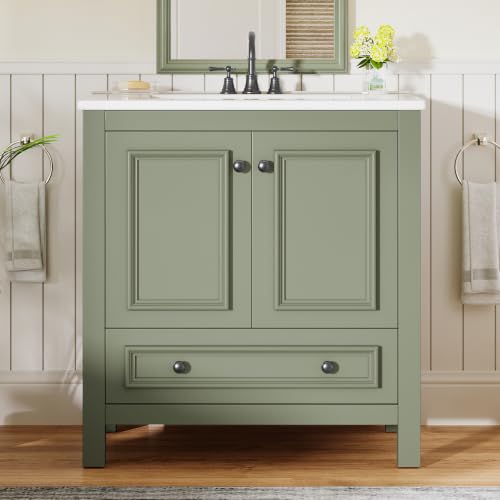 Tribesigns 30 Inch Modern Bathroom Vanity with Sink30 INCH22.05 x 47.24 x 34.65 inches89 poundsCheck on Amazon
 DELUXE LIVING 48 Inch Bathroom Vanity with Sink48 Inch19 x 49 x 34.5 inches212 poundsCheck on Amazon
For most households, a freestanding vanity with a solid-wood or plywood frame, a pre-drilled engineered-stone or ceramic top and soft-close doors is the safest all-round choice, while small powder rooms are better served by a slim pedestal or open-leg console and family bathrooms by a double-door or double-sink unit with closed storage. This guide explains how the main vanity types compare, which materials hold up to moisture, and how to match size and plumbing to your room before you buy.
Freestanding Vanities at a Glance
| Vanity type | Best for | Typical stated features | Limits |
|---|---|---|---|
| Single-sink cabinet with doors | Main bathrooms needing hidden storage | Solid wood or engineered-wood frame, one or two doors, often one drawer, pre-attached top and basin | Heavier to move; doors need clearance to open |
| Double-sink cabinet | Shared family or primary bathrooms | Wide frame, two basins, multiple drawers, often sold with matching mirror options | Needs a wide wall; two sets of plumbing |
| Slim or narrow cabinet | Powder rooms and guest baths | Shallower depth, compact width, single door | Limited counter space and storage |
| Open-leg console or furniture-style vanity | Airy, modern rooms | Metal or wood legs, lower shelf, visible floor | Less hidden storage; baskets are needed to hide clutter |
| Pedestal or console sink | Very tight spaces | Basin on a column or legs, minimal footprint | Almost no storage |
Why Freestanding Rather Than Wall-Mounted
A freestanding vanity rests on the floor, so the weight of the top, basin and contents is carried by the legs or base rather than by the wall. That makes installation simpler in older homes where the wall behind the vanity is not reinforced, and it is the usual choice when you are replacing an existing floor-standing cabinet and want the same plumbing rough-in. The trade-off is that the floor beneath the cabinet is harder to clean and any water leak can reach the base panel quickly. Wall-mounted units look lighter but require solid blocking in the wall, so they are a separate decision.
Tribesigns 30 Inch Modern Bathroom Vanity with Sink, Solid Wooden Frame | Freestanding Bathroom Vanities Cabinet Combo, Bathroom Sink Cabinet with 2 Doors and 1 Drawer
Chosen because it specifies Solid Wooden Frame and Freestanding Bathroom Vanities Cabinet Combo.
View on AmazonDELUXE LIVING 48 Inch Bathroom Vanity with Sink, Fully Assembled, Black | Freestanding Single Sink Bathroom Vanities with Soft Close Doors & Drawers, Carrara Stone Top & Backsplash, Adjustable Feet
Chosen because it specifies Fully Assembled and Black.
View on AmazonMaterials That Handle Bathroom Moisture
Solid wood
Makers of solid-wood vanities, commonly in oak, birch, poplar or acacia, typically describe them as sturdy and refinishable. Wood can swell if water sits on it, so look for a sealed finish on all faces, including the inside of the sink cabinet, and wipe splashes promptly.
Plywood and engineered wood
Plywood frames with a moisture-resistant veneer or laminate are a common mid-range construction. Reviewers generally favour plywood over particleboard or low-density fibreboard in bathrooms because it tolerates humidity better, though exposed cut edges should be sealed. Particleboard units are often the budget option; they can work in a rarely used powder room but are a weaker choice for a daily shower bathroom.
Tops: ceramic, engineered stone, marble and quartz
Integrated ceramic tops are the simplest to clean because there are no seams between the basin and the counter. Engineered-stone and quartz tops resist stains well and are widely sold on mid-range and premium vanities. Natural marble looks premium but is porous and can etch or stain, so makers recommend sealing and avoiding harsh cleaners. Whichever top you choose, read the faucet hole count in the maker’s listing: single-hole, three-hole 4-inch centreset and widespread layouts are not interchangeable.
Sizing, Fit and Plumbing Notes
- Width: Common stated widths run from compact units around 24 inches to double-sink units of 60 inches and more. Measure the wall and leave room for door swing and adjacent fixtures.
- Depth: Standard vanities are usually around 21 inches deep; slimmer versions exist for narrow rooms. Confirm that the toilet and doorway keep sensible clearance.
- Height: Many makers list roughly 32 to 36 inches including the top. Taller “comfort height” models suit adults who dislike bending.
- Plumbing position: Note where the drain and supply lines come out of the wall. Most cabinets have an open back or a cut-out; furniture-style vanities with a back panel may need holes drilled for the pipes.
- Drain and faucet: Many vanities are sold without a faucet, drain or P-trap. Read the box contents so you are not surprised.
- Assembly: Some units arrive fully assembled and heavy; others ship flat. Flat-pack models are easier to carry up stairs but depend on careful assembly for squareness.
Which Type Fits Which Buyer
Families with shared bathrooms
A double-sink unit with drawers lets two people use the room at once and keeps toiletries sorted. Drawers around the plumbing are usually cut away or U-shaped; confirm the usable depth in the maker’s description.
Small powder rooms and guest baths
A slim cabinet or a pedestal-style unit preserves floor space. If you need some storage, a narrow vanity with a single door and a wall shelf above gives more room than a bare pedestal.
Renters and cautious DIYers
A cabinet that matches the existing size and plumbing, with the sink and top already attached, means fewer plumbing changes. Many such units are built to sit in the footprint of a standard builder-grade vanity.
Style-led remodels
Furniture-style vanities with legs and a lower shelf suit modern or farmhouse looks. Reviewers note they show more floor and need tidy baskets, but they feel lighter in a small room.
Pick X If… Decision Table
| Pick this | If you want | Trade-off |
|---|---|---|
| Solid wood with sealed finish | Longest expected life and a refinishable frame | Higher tier; heavier; needs moisture care |
| Plywood with laminate or veneer | A balance of durability and cost in a mid-range tier | Edges must stay sealed |
| Engineered-wood budget unit | A guest bath with light use | Weaker against repeated water exposure |
| Ceramic integrated top | Easy cleaning with no seams | Fixed basin position and faucet layout |
| Quartz or engineered stone top | Stain resistance and a premium look | Heavier, often a higher tier |
| Open-leg furniture style | A light, modern look in a small room | Less enclosed storage |
| Double-sink cabinet | Two users at once | Needs a wide wall, more plumbing work |
Budget Tiers Explained
Budget tier: expect engineered-wood or particleboard construction, ceramic tops and simple hardware. These suit guest bathrooms and rentals. Seal any exposed edges and fix leaks quickly.
Mid-range tier: plywood or part-solid frames, soft-close hardware, engineered-stone or higher-quality ceramic tops and better finishes. This tier fits most family bathrooms.
Premium tier: solid-wood frames, natural or engineered stone, dovetailed drawers and custom sizes. It makes the most sense when you plan to keep the vanity through a long remodel cycle.
Care, Installation and Safety Notes
- Wipe splashes and standing water from the top and from the cabinet floor, and ventilate the room with an exhaust fan or an open window after showers.
- Use non-abrasive cleaners recommended in the maker’s care sheet, particularly on stone and painted finishes.
- Level the cabinet with shims and anchor it to the wall studs if the manual provides anchor points; this reduces tipping risk in homes with children.
- Seal the gap between the top and the wall with a suitable bathroom caulk to keep water out of the back edge.
- If supply lines, shut-off valves or the drain need replacing, hire a licensed plumber unless you are confident following the faucet and drain manuals. Electrical work for lights or outlets near water should be done by a qualified electrician.
Alternatives to Consider
- Wall-mounted floating vanity: opens up floor space and makes cleaning easy, but it needs a reinforced wall.
- Repurposed dresser or console: a stylish option when properly sealed, but it requires cutting for plumbing and extra waterproofing.
- Pedestal sink with separate storage: keeps the footprint small; add a cabinet or shelves elsewhere in the room.
Frequently Asked Questions
Is a freestanding vanity easier to install than a floating one?
Usually yes. A freestanding cabinet sits on the floor and mainly needs levelling, a secure wall anchor and plumbing hook-up. A floating vanity depends on strong blocking in the wall, so it often involves opening the wall first.
What size vanity should I buy?
Measure the available wall width and the distance to the toilet and door. Match the new cabinet to the existing plumbing rough-in where possible, and leave space for doors and drawers to open fully. Most makers list exact width, depth and height in their specifications.
Does the vanity usually include a faucet?
Often it does not. Many listings sell the cabinet and top only, so read the package contents and the faucet-hole layout so that the faucet you pick will fit.
Which material lasts longest in a humid bathroom?
Solid wood with a sealed finish and plywood with a moisture-resistant surface are generally considered more durable than particleboard. Whatever the material, prompt wiping and good ventilation extend its life.
Can I use a vanity with a marble top in a family bathroom?
You can, but marble is porous and can stain or etch. Makers advise sealing and avoiding acidic cleaners. Quartz or ceramic tops are lower-maintenance for busy households.
When should I call a plumber?
Call one if the supply lines or drain need to be moved, if shut-off valves are corroded, or if you see signs of an existing leak or water damage under the old cabinet. A mistake here can lead to costly damage.
More from Amazon
Programs that pair well with the guide above. Offers and eligibility are set by Amazon and may change.
Collect the home and kitchen items you want in one registry that guests can shop from.
Create a wedding registrySet up recurring deliveries of everyday items on eligible products. Terms and savings are set by Amazon.
Explore Subscribe & SaveFree shipping on eligible items, Prime Video and more. Eligible new members can start with a free trial.
Start a Prime free trialAudiobooks and podcasts to listen to on the go. Eligible new members can start with a free trial.
Try Audible freeAs an Amazon Associate we earn from qualifying purchases.