Our Top Picks
 INSINKERATOR BADGER 5 Garbage Disposal with Cord0.5 HP6.31 x 6.31 x 11.5 inches5 poundsCheck on Amazon
 InSinkErator Badger 1 Garbage Disposal with Power Cord1/3 HP6.31 x 6.31 x 11.38 inches5 poundsCheck on Amazon
The InSinkErator Evolution line suits most households that want a durable, quiet disposal, the Moen GX series suits buyers who want strong value with a long warranty, and the Waste King L-1001 suits budget-minded owners who want a reliable basic unit. Most 2026 reviews rank the Evolution as best overall, Moen GX as best value and Waste King as best budget, though Consumer Reports rates some of these differently. This guide compares those families and explains horsepower, feed type, sink fit, noise, installation and care.
Garbage Disposals at a Glance
| Model family | Best for | Reported or stated features | Limits |
|---|---|---|---|
| InSinkErator Evolution (0.75 HP and 1 HP) | Quiet, durable all-rounder | This Old House praises its durable build, powerful motor and protective liner; a noise-focused roundup picks the 1 HP as its top quiet model | Higher tier; power cord usually bought separately per one roundup |
| Moen GX Series (including GXS75C continuous feed, GXB75C batch feed) | Value and bone-grinding | Food Network picks the GX Host 3/4 HP for value; Consumer Reports lists the GXS75C with a 10-year warranty | Check mount compatibility with your sink |
| Waste King L-1001 | Budget | This Old House names it its budget pick | Higher-RPM motors can run slightly louder |
| Waste King L-8000TC | Affordable 1 HP | Called best affordable 1 HP option by one roundup | Basic insulation |
Reviewers disagree. Consumer Reports places the Evolution lower than most other outlets in its batch-feed category, while a number of sites rank it first. Read the original test pages and the maker’s specifications before deciding.
INSINKERATOR BADGER 5 Garbage Disposal with Cord, 1/2 HP Continuous Feed | BADGER Series, LIFT AND LATCH Technology, Power Cord Included, Septic Safe, 5-Year Limited Warranty, Compact Disposer
Chosen because it specifies 1/2 HP Continuous Feed and BADGER Series.
View on Amazon
InSinkErator Badger 5 Garbage Disposal, Badger Series 1/2 HP Continuous Feed Food Waste Disposer
Chosen because it specifies Badger Series 1/2 HP Continuous Feed Food Waste Disposer.
View on Amazon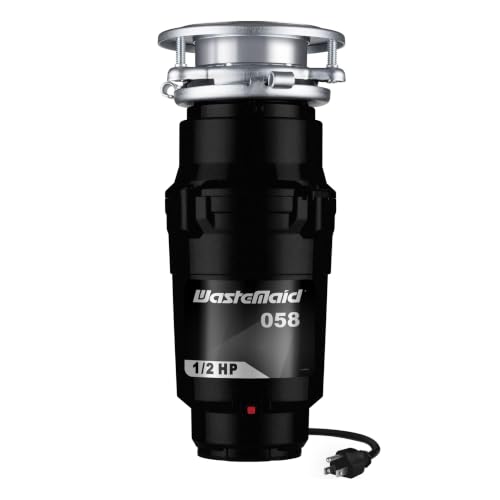
Waste Maid Garbage Disposal, Anti-Jam, Continuous Feed, 1/2 HP Economy | Quiet Stainless Steel Food Waste Grinding System with Power Cord, Fast Swap 3-Bolt Mount, 8-Yr Warranty 10-US-WM-058-3B
Chosen because it specifies Anti-Jam and Continuous Feed.
View on AmazonInSinkErator Badger 1 Garbage Disposal with Power Cord, Standard Series 1/3 HP Continuous Feed Food Waste Disposer, Badger 1 W/C
Chosen because it specifies Standard Series 1/3 HP Continuous Feed Food Waste Disposer and Badger 1 W/C.
View on AmazonKey Specs to Compare
Horsepower
Residential disposals commonly range from about one third to one horsepower. A three-quarter horsepower unit handles most family cooking waste, while one horsepower suits large households, frequent cooking and tougher scraps. Higher horsepower usually grinds faster and jams less, but it is also bigger and costs more.
Continuous feed vs batch feed
Continuous feed models run when you flip a wall switch, so you can feed scraps while the unit runs. Batch feed models run only when the stopper is in place and twisted, which many owners consider safer for homes with children. Moen’s GXS and GXB lines are examples of the two types in the same series.
Grind chamber and stage
Multi-stage grinders and corrosion-resistant chambers help with longevity. Makers describe stainless or galvanised components and anti-jam features. A protective liner or outer shell can reduce noise and, as one reviewer notes, add leak protection.
Noise insulation
Sound insulation is the main difference between mid-range and entry models. Permanent-magnet motors, which Waste King uses, spin faster and grind quickly but may produce more noise. If your kitchen is open to a living area, insulation is worth paying for.
Warranty
Consumer Reports lists a 10-year warranty on the Moen GXS75C. Warranty length varies across tiers, with entry models offering shorter terms. Read the terms for what is covered, such as in-home service or parts only.
Model Notes
InSinkErator Evolution
The Evolution is the usual best-overall pick. Reviews point to a durable build, a strong motor and quieter operation than basic models. A roundup selects the 1 HP as the best quiet model and another tester rates the 0.75 HP best for most households after three months of use. Plan for an additional power cord if your model is sold without one, according to one roundup.
Moen GX Series
The GX series is regularly named the value choice. Food Network calls out the 3/4 HP Host model, and Consumer Reports highlights the continuous-feed GXS75C for grinding bones and vegetables well, with the batch-feed GXB75C handling rib bones very well in its tests. Moen includes a cord in some packages, which one roundup notes as a small cost advantage.
Waste King L-1001 and L-8000TC
Waste King is the budget route. The L-1001 is This Old House’s budget pick, and the L-8000TC is a 1 HP model that one roundup calls the best affordable option. Expect a simpler build with less insulation. These suit rental properties or secondary kitchens.
Sink Fit and Installation
- Check the sink flange type. Most disposals fit standard 3.5 to 4.5 inch sink openings, but some sinks, such as those with thin stainless steel or certain composite materials, need the mount the maker specifies.
- Measure the clearance under the sink. Larger 1 HP units are taller, and a cabinet with a dishwasher drain or pipe may limit space.
- Connect the dishwasher drain properly by removing the knockout plug if a dishwasher will drain through the disposal.
- Electrical: most models need a nearby outlet or a hardwired connection. Wiring or a new circuit should be handled by a licensed electrician, and plumbing by a plumber if you are unsure.
- Septic systems: if you have a septic tank, ask the maker about septic-compatible options and consult a septic professional.
Pick This If…
| Your situation | Pick |
|---|---|
| Open-plan kitchen, wants low noise | InSinkErator Evolution 1 HP |
| Family kitchen, wants value and a long warranty | Moen GX 3/4 HP |
| Rental or secondary kitchen, tight budget | Waste King L-1001 |
| Large household that cooks a lot | 1 HP model such as Evolution or Waste King L-8000TC |
| Young children at home | Batch feed model like Moen GXB75C |
| Prefers quick on-off with a wall switch | Continuous feed model like Moen GXS75C |
Budget Tiers
Entry-level disposals, such as Waste King’s basic lines, offer a simple motor and limited insulation, suited to small households. Mid-range models like Moen GX and InSinkErator’s mid lines add better insulation, larger motors and longer warranties. Premium units such as Evolution models and higher HP versions provide the quietest, most durable performance. Consider the cost of installation and any extra parts such as a cord or flange kit in your total.
Use and Care
- Run cold water before, during and for about 15 to 30 seconds after grinding.
- Feed scraps gradually rather than all at once.
- Avoid grease, large bones, fibrous scraps like celery or corn husks in bulk, coffee grounds in quantity and starchy items like potato peels, which can clog drains, unless the maker says otherwise.
- Never put hands in a disposal. Use tongs for removing objects, and switch off power at the breaker first.
- If the unit jams, follow the manual: many have a reset button and a hex socket for manual rotation. Call a plumber if it keeps jamming or leaks.
- Clean with ice and citrus peel or a disposal cleaner suitable for the model; avoid harsh drain chemicals unless the maker permits them.
Alternatives
- A countertop food waste recycler or compost bin if you prefer not to use a disposal.
- A sink strainer with regular bin disposal for low-waste kitchens.
- Municipal organics collection where available.
- An under-sink dishwasher air gap or high loop check if your dishwasher drains poorly.
Buying Checklist
- Decide on continuous or batch feed.
- Match horsepower to household size and cooking habits.
- Confirm the mount fits your sink and the unit fits under it.
- Check whether a power cord, flange kit or dishwasher connection part is included.
- Compare insulation and noise descriptions from the maker.
- Compare warranty length and what it covers.
Installation cost is part of the decision. Replacing an existing disposal of the same size is usually simple, while a first-time installation may require a new outlet or switch, which a licensed electrician should handle. Keep the manual and the reset instructions where you can find them.
Finally, consider the sink itself. Double-bowl sinks often leave more room under the disposal, and a deeper cabinet gives space for a taller unit. If the cabinet is cramped, a compact model with the same horsepower may fit better than a larger one. Keep the original packaging and receipt in case a fit problem appears during installation.
Frequently Asked Questions
What horsepower do I need?
Three-quarter horsepower covers most households. Choose 1 HP for large families or frequent cooking, and a smaller motor only for light use. A bigger motor may also run more quietly if it is well insulated.
Is continuous feed or batch feed better?
Continuous feed is faster and convenient for busy kitchens. Batch feed only runs with the stopper in place, which many people prefer around children. Both can be good; choose based on safety preference and habits.
Can I install a disposal myself?
Many people do, with basic plumbing skills and the maker’s instructions. Electrical hookup should be done by a licensed electrician if you need new wiring. A plumber is advisable if your sink or drain setup is non-standard.
Which disposal is quietest?
One noise-focused roundup picked the InSinkErator Evolution 1 HP. Insulation and motor type drive noise, and entry-level units with permanent-magnet motors tend to be louder. Check the maker’s description of insulation.
What should not go down a disposal?
Grease, large bones, non-food items, and stringy or starchy scraps in large amounts. Follow your model’s guide for acceptable waste. Septic systems may have extra limits.
How long do disposals last?
Lifespan depends on use, model and care. Warranties range from short terms on basic units to long terms such as the 10 years listed for the Moen GXS75C. Replacement is usually due to leaks, motor failure or repeated jams.