Key takeaways
- Slat spacing: keep gaps at about 3 inches or less for foam and hybrid mattresses.
- Center support: queen and king frames both need a center rail with at least one leg, and king beds need more.
- Frame height: a surface height of 22 to 26 inches helps with getting in and out of bed.
- Headboard: a padded or upholstered headboard makes sitting up to read more comfortable and protects the wall.
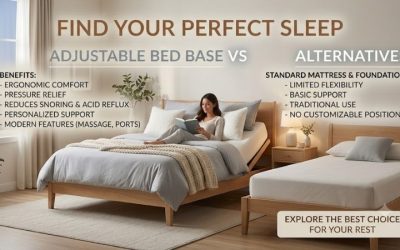
- Adjustable bases: a split king base lets each partner choose an incline, which helps if one of you snores or has acid reflux.
The best bed position for most married couples is a flexible one: start close in whatever position feels connected, then move to a comfortable back-to-back or side-by-side layout once you fall asleep. What makes any position work is not romance or rules but space, support and motion control. A couple needs about 30 inches of width each to sleep without bumping, a mattress that does not transmit one person’s turns to the other, and a firmness level that keeps both spines in line. This guide covers the common couple positions, what each one needs from the bed, which bed sizes fit, and seven mattresses that suit shared sleeping.
Common Couple Sleeping Positions and What Each Needs
| Position | How it looks | Best bed size | Main requirement |
|---|---|---|---|
| Spooning | Both on the same side, one behind the other | Queen or larger | Pressure relief for shoulders and hips; cool surface |
| Back-to-back touching | Backs or hips in contact | Queen | Good edge support so neither slides off |
| Back-to-back apart | Backs turned with a gap | Queen or king | Motion isolation so turning is not felt |
| Face to face | Side sleepers facing each other | Queen or king | Pillow height that supports the neck |
| Leg tangle | On backs with legs or feet crossing | Queen | Cooling mattress cover, breathable sheets |
| Head on chest | One person rests on the other’s chest or shoulder | Queen | Medium-firm surface so the pair does not roll together |
| Sprawled solo | Each person spreads on their own half | King | At least 38 inches per person |
Most couples use more than one of these in a night. That matters when choosing a bed, since a mattress that works for a spoon at 11 p.m. also has to work for a sprawl at 3 a.m. A shared bed should be judged on the worst-case moment, which is usually when one person gets up or turns over while the other is asleep.
How Much Bed Width Does a Couple Need?
Width per person is the first measurement to check. Sleep specialists and furniture planners use the idea that an adult needs a surface roughly as wide as a twin bed (38 inches) to move freely.
| Bed size | Dimensions (in) | Width per person | Fit for couples |
|---|---|---|---|
| Full | 54 x 75 | 27 | Tight; works for very small rooms |
| Queen | 60 x 80 | 30 | Standard; fine for spooning and back-to-back |
| California king | 72 x 84 | 36 | Good for a tall couple in a narrow room |
| King | 76 x 80 | 38 | Best for separate sleeping zones |
Queen is a sensible choice if you spend most nights touching or close, because you do not need separate zones. If one partner needs to leave early, rolls a lot, or runs warm, going up to a king usually does more for sleep than any other single change. The cost is room: a king needs a bedroom around 12 by 12 feet or larger, as described in a typical clearance plan of 24 to 30 inches of walkway on each side.
Match Your Position to Your Bed
If you spoon or cuddle
Spooning puts the weight of two bodies on the same area and increases heat. Look for a mattress with a good pressure-relief layer of foam or latex and a breathable cover. A medium-firm feel works for most couples because it supports hips while letting shoulders sink in a little. A surface that is too firm pushes against shoulders when you lie on your side, and one that is too soft will pull both of you into the center.
If you sleep back-to-back or apart
This is the layout where motion isolation matters most. When each person sleeps in their own zone, the mattress has to absorb movement rather than pass it along. All-foam and well-built hybrid designs with individually wrapped coils usually do this better than traditional connected coils.
If one of you sleeps hot
Temperature is a bigger cause of couple sleep conflict than firmness. Choose a hybrid or a mattress with a breathable top, pair it with cotton, linen or bamboo sheets, and consider a king so you have a gap between bodies. A ventilated frame with slats allows airflow under the mattress, unlike a solid platform.
If one of you gets up early or late
Edge support controls how stable the bed feels when someone sits on the side to put on shoes. A firm perimeter lets you use the whole surface, so a partner who sleeps near the edge does not feel like they will roll off.
If you have different firmness needs
Dual-firmness or split-king setups put two mattresses side by side on the same frame. They solve the problem of one partner needing a softer surface, though the center seam may be noticeable if you like to cuddle.
Decision Matrix: Situation to Setup
| Your situation | Choose | Why |
|---|---|---|
| Light sleeper, partner tosses and turns | All-foam or foam-heavy hybrid, king if possible | Dampens movement and adds distance |
| Both hot sleepers | Hybrid with breathable cover, 14-inch slatted frame | Airflow above and below |
| Heavier couple | Hybrid with strong coils and firm edge, high-capacity frame | Prevents sagging and edge collapse |
| Back pain on one side | Medium-firm hybrid, optional adjustable base | Keeps spine aligned, raises head or legs |
| Small bedroom | Queen with a low-profile frame | Saves floor space for nightstands |
| Different schedules | King or split king | Fewer wake-ups from movement |
7 Mattresses That Suit Shared Sleeping
These beds come up often in couple-focused buying guides and have published construction details. Specifications change by model year, so confirm firmness options and dimensions on the maker site.
1. Nectar Luxe Memory Foam
Type: all-foam with a lofty comfort stack. Strength: motion isolation, which is why it is a recurring choice for partners who disturb each other. Who it is for: side sleepers and couples who prefer a hugging feel.
Pros: strong motion isolation and pressure relief. Cons: foam can feel warm to some sleepers, and edge support is softer than a coil-heavy hybrid.
2. Helix Midnight Luxe
Type: hybrid with foam layers over individually wrapped coils. Strength: a hybrid that keeps good motion control while adding bounce and airflow. Who it is for: side sleepers, and couples who want a hybrid with a plush top.
Pros: balanced feel, better airflow than all-foam, strong pressure relief. Cons: the feel leans plush, so sleepers who want a very firm surface may prefer another model in the range.
3. Saatva Classic
Type: innerspring hybrid with a coil-on-coil construction and a reinforced edge. Strength: edge support and a traditional feel, with multiple firmness and height choices. Who it is for: heavier couples, people who sit on the edge of the bed, and anyone who dislikes a sinking feel.
Pros: exceptional edge support and a resilient feel. Cons: motion isolation is weaker than foam-heavy beds, so a restless partner is more likely to be felt.
4. Tempur-Pedic Tempur-Adapt
Type: all-foam with a dense memory foam layer. Strength: slow, contouring response that absorbs movement. Who it is for: couples with joint pain or a partner who moves often.
Pros: excellent motion absorption and pressure relief. Cons: the slow response makes changing positions harder for some sleepers, and it can sleep warmer than hybrids.
5. Leesa Sapira Hybrid
Type: hybrid with foam layers over pocketed coils, about 11 inches tall. Strength: a medium feel and good motion control for a hybrid. Who it is for: couples with mixed sleeping positions who want a middle-of-the-road feel.
Pros: medium feel that suits most positions, coil support for combination sleepers. Cons: offered in one firmness level, so those at either extreme may need another model.
6. Casper Dream Hybrid
Type: hybrid with memory foam over zoned support and coils, about 11.5 inches tall. Strength: buoyant feel with foam that dampens motion. Who it is for: couples who like a mix of cushioning and bounce.
Pros: good balance of pressure relief and responsiveness, and moderate motion isolation. Cons: some heavier sleepers may prefer a firmer base, and the foam layers hold some heat.
7. Purple RestorePlus Hybrid
Type: hybrid with a gel-grid comfort layer over coils. Strength: airflow and a quick, responsive feel. Who it is for: hot sleepers and couples who change positions often.
Pros: cooling, easy to move on, and strong support. Cons: the grid feel is unusual and motion transfer can vary by model, so it suits couples who care more about heat than isolation.
Firmness, Weight and Body Type in a Shared Bed
Couples rarely match in height, weight or preferred firmness, and the mattress has to serve both. Firmness is usually described on a 1 to 10 scale, where 5 to 6 is medium and 6 to 7 is medium-firm. Body weight changes how that number feels: a lighter sleeper sinks less and may find a medium-firm bed hard, while a heavier sleeper sinks more and may find the same bed soft. The table below shows how to choose when the two of you are different.
| Combined situation | Suggested feel | Construction to look for |
|---|---|---|
| Both under about 150 lb | Medium to medium-soft | Foam or hybrid with 3 to 4 in of comfort layers |
| One lighter, one heavier by 60 lb or more | Medium to medium-firm | Hybrid with pocketed coils and a reinforced edge |
| Both over about 230 lb | Medium-firm to firm | Thick hybrid, 12 in or taller, with high-density foam |
| Side sleeper plus back sleeper | Medium | Zoned support or a pillow-top for shoulders |
| Stomach sleeper plus side sleeper | Medium-firm | Support that keeps hips from sinking |
If neither compromise works, a split king with two different mattress halves is the cleaner answer. Each half sits on a twin XL deck, measures 38 by 80 inches, and can have its own firmness. The seam between the two halves is the cost: it can feel noticeable in the middle if you like to sleep close, which a topper that spans both halves will soften.
Why Motion Isolation Matters More Than Most Couples Expect
Motion transfer is the sensation of the bed moving when your partner shifts. People turn over between 10 and 30 times a night on average, so even a small amount of transfer adds up to many tiny awakenings, most of which you will not remember. Foam absorbs motion by compressing locally, so the disturbance fades before it travels. Traditional connected coils pass movement across the whole surface like a trampoline. Pocketed coils sit in individual fabric sleeves and move independently, which is why a hybrid with foam on top and pocketed coils underneath can approach the performance of an all-foam bed while keeping better airflow and edge support.
A quick home check works well in a store or during a trial period: place a full glass of water on one side, then have your partner roll across the other half of the bed. If the water barely moves, the isolation is strong. Remember that the frame matters too, since a creaky frame or a loose slat adds noise that no mattress can hide.
Getting a Mattress Trial Right as a Couple
Most online mattress makers offer a trial period of 100 nights or more, and the first few weeks often feel unusual because your body is adjusting. A fair trial for a couple has a plan.
- Give it at least 30 nights. Bodies need time to adapt to a new surface, particularly when moving from a soft to a firm bed.
- Sleep in your normal positions. Do not try to lie still on your back to make the bed look good.
- Keep a short log. Note when either of you wakes up, why, and where you feel pain in the morning.
- Use your usual pillows and sheets. New bedding changes temperature and cushioning and confuses the result.
- Check the frame. A mattress that feels wrong may simply need better slat spacing or a center support.
- Read the return terms before you buy. Some makers need the mattress to be returned in a certain condition or charge a fee for pickup.
Frame and Foundation Matters
The same mattress behaves differently on different supports. A frame with widely spaced slats lets foam sag, a bouncy frame transfers movement, and a bed that is too small makes every position feel crowded.
- Slat spacing: keep gaps at about 3 inches or less for foam and hybrid mattresses.
- Center support: queen and king frames both need a center rail with at least one leg, and king beds need more.
- Frame height: a surface height of 22 to 26 inches helps with getting in and out of bed.
- Headboard: a padded or upholstered headboard makes sitting up to read more comfortable and protects the wall.
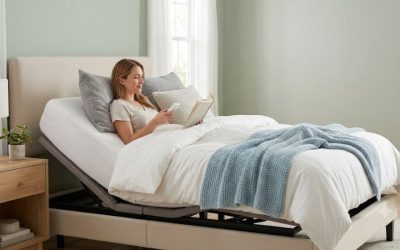
- Adjustable bases: a split king base lets each partner choose an incline, which helps if one of you snores or has acid reflux.
Pillows, Bedding and Layout for Better Shared Sleep
The mattress is only part of the setup. Small changes to pillows and bedding often fix complaints that couples blame on position.
| Problem | Fix | Detail |
|---|---|---|
| Blanket tug-of-war | Two comforters or a king-size layer | Each person controls their own warmth |
| Neck pain on the side | Pillow loft that matches shoulder width | Wider shoulders need a thicker pillow, usually 5 to 6 inches |
| Hip pain in spooning | Thin pillow between knees | Keeps the hips level |
| Heat in the center | Percale or linen sheets | Crisp weaves breathe better than sateen |
| Edge roll-off | Mattress with firm perimeter | Or move up from a full to a queen |
| Partner snoring | Slight incline from an adjustable base | Reduces airway collapse for some sleepers |
Placement counts too. Put the bed so both partners can get out without climbing over a wall or a dresser, and leave at least 24 inches on each side. A couple who sleeps with one side against a wall will always have a trapped partner, which causes late-night wake-ups every time someone needs the bathroom.
When Separate Sleep Setups Make Sense
Many married couples now use separate bedding even when they share a bed. Two duvets, two pillows, or a split king with two different firmness levels give each person control without ending the closeness of a shared bed. Where one partner has chronic snoring, shift work, or a medical device, a separate room for some nights can be a practical decision rather than a sign of trouble, and many couples find they sleep better and connect better as a result.
Common Questions
Is it better to sleep close or apart?
Neither is wrong. Closeness at bedtime and space during the night works for many couples, and the right bed size lets you choose either. If you wake often because of your partner, extra distance helps more than any position rule.
Is a queen big enough for a married couple?
For many, yes. It gives each person 30 inches. If you want a gap in the middle or share the bed with children or pets, a king is the better fit.
Which mattress is best for couples with different weights?
A hybrid with individually wrapped coils and a firm edge supports both bodies, while a zoned or dual-firmness design can help if the weight difference is large.
Does the position change the mattress I need?
Side sleeping needs more pressure relief at shoulders and hips. Back sleeping needs firmer lumbar support. A medium-firm mattress works for combination positions, which is why it is the common couple default.
Bottom Line
Pick a bed size first: queen for couples who sleep close, king for couples who need space. Then match the mattress to the biggest complaint: foam or foam-heavy hybrids for motion, coil-based hybrids for edge support and heat, and a medium-firm feel for mixed positions. Add a slatted, well-supported frame, breathable bedding, and enough room to walk around the bed on both sides. Then let your sleeping position change through the night without the bed getting in the way.