Key takeaways
- Tooth Count: Ripping blades typically range from 24 to 40 teeth. Lower tooth counts clear chips aggressively for fast cuts in thick stock; higher counts leave a smoother edge that may need less cleanup on the jointer.
- Kerf Width: Thin-kerf blades remove less material per pass and put less strain on your motor, making them ideal for 1-to-1½ HP contractor saws. Full-kerf blades resist deflection better and stay truer on heavier cabinet saws.
- Carbide Grade and Tip Geometry: Microgrind or precision-ground carbide lasts longer between sharpenings and leaves a noticeably cleaner surface, especially in dense hardwoods like maple or cherry.
- Arbor Size and Diameter Match: Verify your saw’s arbor — most 10-inch saws use a 5/8-inch bore — and confirm the blade diameter is a true fit. An 8¼-inch blade won’t work on a 10-inch saw without an adapter.
- Intended Use and Pack Value: If you crosscut frequently alongside ripping, a multi-pack with complementary blades can save money. Dedicated rippers, however, are optimized for a single job and often outperform combo sets at that task.
What's inside
Shopping for a rip blade is one of those deceptively simple tasks that sends most woodworkers down a rabbit hole of kerf thicknesses, tooth counts, and competing claims about “glue-line” quality. The truth is, a blade designed specifically for ripping cuts through hardwood and sheet goods faster, cleaner, and with far less burning than a general-purpose blade ever will — but choosing the wrong one wastes material and ruins edges you’ll have to sand or joint later.
This guide distills the key specs and real-world performance of five popular rip blades — from budget-friendly multi-packs to premium carbide options — so you can match the right blade to your saw, your material, and the kind of furniture work you actually do in your shop.
As an Amazon Associate we earn from qualifying purchases.

How to Choose a Table Saw Rip Blade (2026)
- Tooth Count: Ripping blades typically range from 24 to 40 teeth. Lower tooth counts clear chips aggressively for fast cuts in thick stock; higher counts leave a smoother edge that may need less cleanup on the jointer.
- Kerf Width: Thin-kerf blades remove less material per pass and put less strain on your motor, making them ideal for 1-to-1½ HP contractor saws. Full-kerf blades resist deflection better and stay truer on heavier cabinet saws.
- Carbide Grade and Tip Geometry: Microgrind or precision-ground carbide lasts longer between sharpenings and leaves a noticeably cleaner surface, especially in dense hardwoods like maple or cherry.
- Arbor Size and Diameter Match: Verify your saw’s arbor — most 10-inch saws use a 5/8-inch bore — and confirm the blade diameter is a true fit. An 8¼-inch blade won’t work on a 10-inch saw without an adapter.
- Intended Use and Pack Value: If you crosscut frequently alongside ripping, a multi-pack with complementary blades can save money. Dedicated rippers, however, are optimized for a single job and often outperform combo sets at that task.
The Best Table Saw Rip Blades (2026) Reviewed
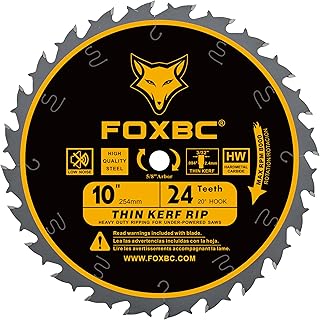
FOXBC 10-Inch 24-Tooth Thin Kerf Rip Blade
The FOXBC ripping blade is a no-nonsense thin-kerf workhorse built for contractor and jobsite saws that struggle with full-kerf loads. Its 24 flat-top teeth clear waste quickly, and the thin profile means less tearout on the offcut side — a real advantage when you’re ripping cabinet-grade plywood for furniture panels.
Amana Tool 610301 Glue Line Ripping Blade
Amana’s glue-line blade lives up to its name: the 30-tooth TCG grind with a 22-degree bevel produces an edge smooth enough to glue up panel joints without running them through a jointer first. It’s a premium pick for serious furniture makers who value time savings at every stage of the build.
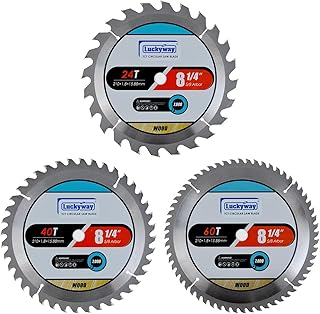
Luckyway 8¼-Inch 3-Pack
This Luckyway set bundles a 24T framing blade, a 40T rip/cross-cut blade, and a 60T finish blade, giving smaller saws a versatile lineup at a fraction of what three separate blades would cost. The 40T ripping blade handles most furniture-grade lumber well, though you’ll notice slightly more sanding on end-grain rip cuts compared to a dedicated 24T ripper.
ANGELSWORD 10-Inch 2-Pack
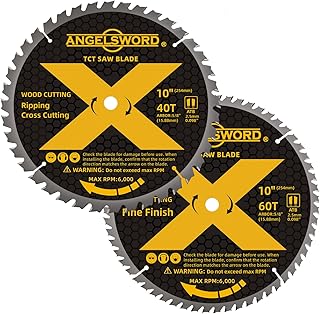
The ANGELSWORD 10-inch pair pairs a 40T general-purpose blade with a 60T finish blade, aimed at woodworkers who split their time between ripping and crosscutting. The 40T blade leaves a cleaner surface than typical 24T rippers, which suits projects where visible rip cuts end up in the final piece without further machining.
ANGELSWORD 8¼-Inch 3-Pack
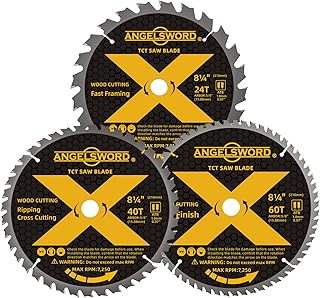
Similar to its 10-inch sibling brand, this ANGELSWORD 3-pack gives portable and benchtop saw owners a 24T framing, 40T rip, and 60T finish blade in one purchase. It’s a practical starting set for home hobbyists building simple furniture — bookshelves, coffee tables, workshop jigs — who aren’t yet ready to invest in premium individual blades.
Frequently Asked Questions
Can I use a general-purpose blade for ripping instead of a dedicated rip blade?
You can, but you’ll trade speed and cut quality. General-purpose blades are ground for both ripping and crosscutting, which means they don’t clear chips as aggressively on long rip cuts. Expect more burning on hardwoods and a rougher edge that demands extra jointing or sanding.
What’s the difference between thin kerf and full kerf for ripping?
Thin-kerf blades (roughly 1/16 inch) remove less material and need less motor power, so they’re favored on lower-horsepower saws. Full-kerf blades (roughly 1/8 inch) are stiffer and more resistant to blade deflection, which matters when you’re ripping thick, dense hardwoods on a powerful cabinet saw.
How often should I sharpen or replace my rip blade?
With quality carbide, a rip blade used in a home shop will typically stay sharp for several hundred board feet of ripping. Signs it’s time to sharpen or replace include visible burn marks on the wood, increased feed resistance, and a rough or fuzzy edge on freshly cut stock.
Is a 24-tooth or 40-tooth blade better for ripping furniture lumber?
A 24-tooth blade is the traditional choice for fast, aggressive ripping in thick stock, while a 40-tooth blade leaves a smoother finish at the cost of slightly slower feed speed. If you have a jointer or planer downstream, the 24-tooth blade is efficient; if the rip edge is going straight into glue-up or final assembly, the 40-tooth option saves you a step.
Final Thoughts
For dedicated ripping on a budget, the FOXBC 10-inch thin kerf offers strong performance without straining smaller saws. Woodworkers chasing glue-line quality on every rip cut should look at the Amana Tool 610301, which genuinely eliminates the jointer step on panel glue-ups. And for anyone starting out on a compact saw, the Luckyway 8¼-inch 3-pack delivers solid value across multiple cutting tasks while you figure out which specialty blades you’ll eventually want to buy individually.