Key takeaways
- Damp rated — safe under a roof or covered structure where rain won’t hit it directly. Most indoor-outdoor fans land here.
- Wet rated — built to endure direct rain, snow, and coastal moisture. The WINGBO 48″ holds a full wet rating with waterproof ABS blades.
- Indoor only — even if it looks industrial, it may lack the sealed motor housing and corrosion-resistant finishes outdoor use demands.
What's inside
Picking an outdoor ceiling fan is one of those upgrades that quietly changes how much time you actually spend on your porch, patio, or deck. A good one cuts through summer heat, keeps bugs at bay, and holds up through rain and humidity without turning into a maintenance headache. A bad one wobbles, rusts, and collects dust you’d rather not think about.
In this guide we’ll walk through the exact specs and features that separate a reliable outdoor fan from a disappointing impulse buy. You’ll learn how to match fan size to your space, understand weather ratings, compare motor types, and figure out whether you really need lights, app control, or smart-home integration. By the end you’ll be ready to pick the right fan with confidence.
As an Amazon Associate we earn from qualifying purchases.




Start With Size: Match the Fan to Your Space
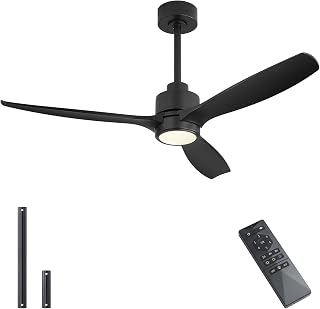
Diameter matters more than most people realize. For a small covered porch or gazebo under 100 square feet, a compact fan like the addlon 20″ Caged Fan or WINGBO 48″ will move air efficiently without overpowering the room. For a standard patio or deck running 150 to 300 square feet, look at mid-range options around 52 inches, such as a solid-wood 52″ BLDC model that pairs a rustic aesthetic with serious airflow. When you’re covering a large open area—a covered patio, detached garage, or commercial space—step up to 65 or 72 inches. The Minislak 72″ and the Ohniyou 60″ Industrial both push serious air across wide footprints. The general rule: every foot of fan diameter covers roughly 35 to 40 square feet of living space.
Understand Weather Ratings Before You Buy
Not every “outdoor” fan is equally tough. The industry breaks it into three tiers:
- Damp rated — safe under a roof or covered structure where rain won’t hit it directly. Most indoor-outdoor fans land here.
- Wet rated — built to endure direct rain, snow, and coastal moisture. The WINGBO 48″ holds a full wet rating with waterproof ABS blades.
- Indoor only — even if it looks industrial, it may lack the sealed motor housing and corrosion-resistant finishes outdoor use demands.
Always verify the rating rather than assuming. A damp-rated fan on an uncovered deck will eventually pay you back with a seized motor and flaking finish.
Motor Type Determines Noise, Efficiency, and Longevity
Most fans you’ll encounter use one of two motor technologies. Traditional AC motors are cheaper upfront but draw more power and tend to produce a low hum at higher speeds. DC motors—found in the Ohniyou 60″, the WINGBO 48″, and the Minislak 72″—use up to 70% less electricity, run whisper-quiet (the Ohniyou hits just 35 dB), and typically offer more speed settings for finer control. Newer BLDC (brushless DC) motors, as seen in the 52″ solid-wood model, add the benefit of zero brush wear, meaning longer life with virtually no maintenance. If you plan to run your fan daily through a five-month summer, the efficiency savings alone justify the step up to DC.
Lights, Smart Control, and Convenience Features
Figure out what you actually need. A fan with no light—like the Minislak 72″ or the Ohniyou 60″—keeps the profile slim and avoids attracting insects to a porch. If you do want integrated lighting, look for 3CCT (three color-temperature) and dimming capability so you can shift from bright task light to warm ambiance. The 65″ smart fan with Alexa integration lets you voice-control speed and lights from across the yard, while the addlon 20″ caged fan bundles a remote, timer, and reversible motor into a compact plug-in design you can hang from a gazebo hook without hardwiring. Decide which conveniences matter to you and avoid paying for features you’ll never use.
Installation Realities: Ceiling Height and Mounting
Most outdoor ceilings sit between 8 and 10 feet. For comfortable airflow, the fan blades should hang at least 7 feet above the floor and ideally 8 to 9 feet on a patio where people are standing. If your ceiling exceeds 10 feet, a downrod extension keeps the fan in the effective airflow zone rather than losing it near the ceiling. Also check whether the fan supports standard junction-box mounting or needs a specialized bracket. A plug-in model like the addlon sidesteps the wiring question entirely, which is handy for temporary structures or renters.
Tips
- Measure your space first. Hold a yardstick at arm’s length to visualize blade span against your ceiling area before ordering.
- Use the remote. Ceiling-mounted remotes and handheld controllers let you adjust speed without leaving your chair—program your preferred setting and leave it.
- Clean blades seasonally. Even outdoor-rated fans collect pollen and salt spray. A damp cloth wipe-down at the start and end of each season keeps airflow strong.
- Run it in reverse during cooler months. A clockwise spin pushes warm air back down from the ceiling, extending your patio season into fall.
Frequently Asked Questions
Can I install an outdoor ceiling fan on an uncovered patio?
Only if the fan carries a wet rating. Damp-rated fans are designed for sheltered locations. An uncovered patio exposes the motor to direct rain, humidity swings, and potentially salt air in coastal areas, all of which demand a fully wet-rated unit with sealed motor housing and rust-resistant hardware.
How much airflow do I actually need?
For comfortable outdoor cooling, aim for at least 3,000 to 5,000 CFM (cubic feet per minute) for a medium patio. The Ohniyou 60″ industrial fan delivers around 6,800 CFM, which covers a large space with ease. For a small porch, 2,000 to 3,000 CFM is plenty.
Are DC motors worth the price premium?
For an outdoor fan you’ll run regularly, yes. DC motors consume significantly less electricity, produce less noise, and offer more speed settings. Over several summers the energy savings can offset the higher initial cost, and the quieter operation makes a noticeable difference during evening use.
Do I need a professional electrician to install a ceiling fan?
If you’re replacing an existing ceiling fan or light fixture and your electrical box is fan-rated, a confident DIYer can handle it. If you’re adding a new circuit, running new wiring, or unsure about your ceiling box, hire a licensed electrician. An under-mounted fan is a safety hazard.
Conclusion
The best outdoor ceiling fan for your space comes down to matching the right diameter and weather rating to your specific area, choosing a motor type that fits your noise tolerance and energy expectations, and selecting only the convenience features you’ll genuinely use every week. Get those three things right and you’ll have a fan that works hard, stays quiet, and lasts for years.