Key takeaways
- Foot placement: Most modern TVs have feet near the outer edges, spaced almost as wide as the screen. Check the TV’s “stand width” or footprint spec, not just the diagonal. Some models offer adjustable feet that can move inward.
- Pedestal bases: TVs with a single center stand need only ~20–26 inches of surface width, which is how a 46-inch set can sit on a 40-inch stand — the panel overhangs the sides slightly but stays stable.
A 40 inch wide TV stand comfortably fits TVs up to about 43 inches — the point where a TV’s actual width (~38 inches) still leaves a small safety margin on each side. It can stretch to a 45–46 inch set only if that TV uses a center pedestal base rather than feet at the corners. Below is how the sizing math works, plus the height, distance, and storage details that decide whether a 40-inch stand is right for your room.
What TV Size Actually Fits a 40 Inch Wide Stand
TV sizes are measured diagonally, but what matters on a stand is the TV’s true width — the diagonal number is always bigger. A good rule: the stand should be at least as wide as the TV, ideally 2–4 inches wider so nothing hangs over the edge.
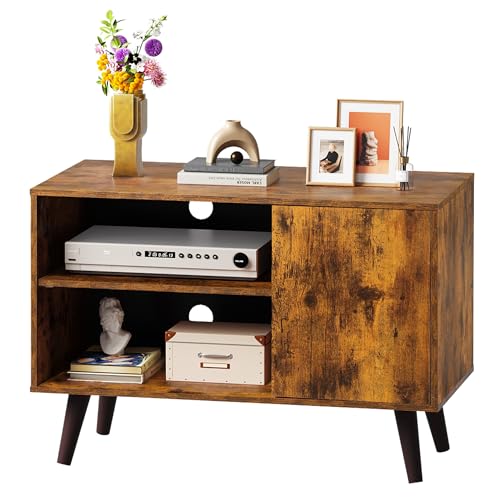
WLIVE TV Stand for 40 Inch TVs, Small Entertainment Center with Storage Cabinet, Mid-Century Modern TV Stands for Living Room and Bedroom, 32" TV Console, Brown
Chosen because it specifies Small Entertainment Center with Storage Cabinet and Mid-Century Modern TV Stands for Living Room and Bedroom.
View on Amazon| TV size (diagonal) | Typical actual width | Fits a 40″ stand? |
|---|---|---|
| 32 inch | ~29 in | Yes — lots of margin |
| 40 inch | ~35.5 in | Yes — ~2 in per side |
| 43 inch | ~38 in | Yes — ~1 in per side (snug but fine) |
| 45–46 inch | ~40–41 in | Only with a center pedestal base |
| 48–50 inch | ~42.5–44.5 in | No — overhang and foot spacing won’t fit |
Two things catch buyers off guard:
- Foot placement: Most modern TVs have feet near the outer edges, spaced almost as wide as the screen. Check the TV’s “stand width” or footprint spec, not just the diagonal. Some models offer adjustable feet that can move inward.
- Pedestal bases: TVs with a single center stand need only ~20–26 inches of surface width, which is how a 46-inch set can sit on a 40-inch stand — the panel overhangs the sides slightly but stays stable.
Weight is rarely the limiting factor. A 43-inch TV typically weighs 15–25 lbs, while most stands in this size are rated for 50–100 lbs on top. Always confirm the manufacturer’s top-surface rating if you’re pairing it with heavier gear.
40 vs 36 vs 42 Inch Wide Stands: Which Width for Which Room
If you’re still deciding between sizes, here’s how the three most common widths in this range compare:
| Stand width | Max comfortable TV size | Typical use |
|---|---|---|
| 36 inch wide TV stand | ~40 inch | Small bedrooms, dorm rooms, corner setups |
| 40 inch wide TV stand | ~43 inch | Apartments, bedrooms, secondary living rooms |
| 42 inch wide TV stand | ~46–48 inch | Living rooms where a 48″ set is the target |
A 36 inch wide TV stand works if you’re pairing it with a 40-inch screen or smaller — beyond that, corner feet won’t sit safely on the surface. A 42 inch wide TV stand buys you headroom for a 46–48 inch TV and typically adds a third shelf bay. The 40-inch size is the sweet spot for small spaces: it’s narrow enough to fit between a bed frame and a wall or inside an alcove, but wide enough for the 43-inch class TVs that dominate the under-$400 market.
Stand Height and Viewing Distance: Getting the Geometry Right
The goal is simple: the center of the screen should sit near your seated eye level. For most adults on a standard sofa, that’s roughly 42 inches from the floor. A 43-inch TV is about 22 inches tall, so its center lands ~11 inches below the top edge — meaning a stand around 20–24 inches tall puts the screen center right in the 40–44 inch zone.
- Living room seating: 20–24 inch stand height is the safe target.
- Bedroom viewing: Lying in bed raises your eye line to ~44–50 inches, so a taller console (26–30 inches) or a dresser-height stand works better. In a 10×12 ft bedroom, that usually means 6–8 feet of viewing distance — comfortable for a 40–43 inch screen.
- Viewing distance for 4K: The comfortable range is roughly 1.5–2.5× the diagonal. For a 43-inch TV that’s about 5.5–9 feet; closer than ~3.5 feet and you’ll see pixels.
Placement details that matter in tight rooms:
- Leave 2–3 inches behind the stand for cables and ventilation.
- Keep a 30–36 inch walkway in front if the stand faces a bed or sits on a traffic path.
- If you plan a soundbar, remember many full-size bars are 36–42 inches wide — a 36-inch bar fits cleanly on a 40-inch stand, while anything wider will overhang or need wall mounting.
- Corner placement works, but angle the stand so the screen faces the main seat; a 40-inch unit fits walls as short as ~4 feet once you leave breathing room.
Storage Capacity: What a 40 Inch Stand Actually Holds
In this width, expect one of three layouts: two open shelves side by side, a center open bay flanked by two cabinets, or two closed doors hiding adjustable shelving. Interior bay widths typically run 17–20 inches each — enough for a game console laid flat, a cable box, or a row of media, but not a full-size AV receiver stacked with gear.
- Open shelving: Best for consoles that need airflow; leave 3–4 inches of clearance above each device for heat.
- Closed cabinets: Better for small apartments where visual clutter multiplies fast; adjustable shelves add flexibility for taller items.
- Drawers: Rarer at this width but useful in bedrooms for remotes, controllers, and accessories.
Materials and Construction Trade-Offs
| Material | Typical price range | Strengths | Watch out for |
|---|---|---|---|
| Solid wood | $300–$700 | Heaviest, most durable, can be refinished | Hard to move; overkill for renters |
| Engineered wood / MDF + laminate | $80–$250 | Affordable, consistent finish, widely available | Cam locks loosen over repeat moves; swells if wet |
| Metal frame + wood shelves | $150–$400 | Rigid, lighter than solid wood, modern look | Open design shows cables and dust |
| Tempered glass + metal | $100–$300 | Slim profile, easy to wipe down | Shows fingerprints; check per-shelf weight ratings |
Match the Stand to Your Situation
| Your situation | Best pick |
|---|---|
| Studio / small apartment living room | 40″ stand, 20–24″ tall, closed cabinets to hide clutter |
| Bedroom, watching from bed | 40″ stand, 26–30″ tall or dresser-height unit |
| Renter who moves often | Metal-frame or lightweight engineered wood under ~55 lbs |
| Kids or pets | Low, wide, heavy stand + included anti-tip strap anchored to wall |
| Plan to wall-mount the TV anyway | Low-profile stand used purely for console and media storage |
Assembly and Moving Realities
Flat-pack stands in this size arrive in a box roughly 45 × 18 × 6 inches weighing 50–80 lbs — it fits through any standard 30-inch doorway but is a two-person carry up stairs. Budget 1–2 hours to assemble. The parts that wear first are cam-lock fasteners (they loosen if the unit is moved without being emptied) and shelf pegs under heavy loads. Solid-wood and welded metal units largely skip these failure points, which is the honest trade-off for their higher price and weight. Whatever you buy, use the included anti-tip hardware — a 40-inch-wide base is stable front-to-back but a climbing toddler changes the math.
Brands like IKEA, Sauder, Walker Edison, and Ameriwood all sell stands in the 36–42 inch range, mostly in engineered wood or metal-frame builds at $80–$300. At this size the differences are less about brand and more about construction type, top weight rating, and whether the storage layout matches your gear.
Frequently Asked Questions
Can a 40 inch wide stand hold a 50 inch TV?
Not safely in most cases. A 50-inch TV is ~44 inches wide with feet near the corners, so the feet won’t sit on the surface. The only exception is a TV with a narrow center pedestal base — even then, the panel overhangs 2+ inches per side and tip-over risk rises.
Is a 40 inch TV stand big enough for a bedroom?
Yes — it’s arguably the ideal bedroom size. It pairs with the 40–43 inch TVs most people use in bedrooms, fits walls too short for wider consoles, and in a 10×12 ft room it leaves proper walking clearance at the foot of the bed.
Should the stand be wider than the TV?
Ideally yes, by 2–4 inches total. Equal width is acceptable; narrower only works with pedestal-base TVs. Beyond stability, a wider stand looks proportionally better and leaves room for speakers or decor beside the screen.
What about a 36 or 42 inch wide stand instead?
Choose a 36 inch wide TV stand if your TV is 40 inches or smaller or the wall space is very tight. Step up to a 42 inch wide TV stand if you already own (or plan to buy) a 46–48 inch TV — the extra two inches gives corner feet a proper landing zone.